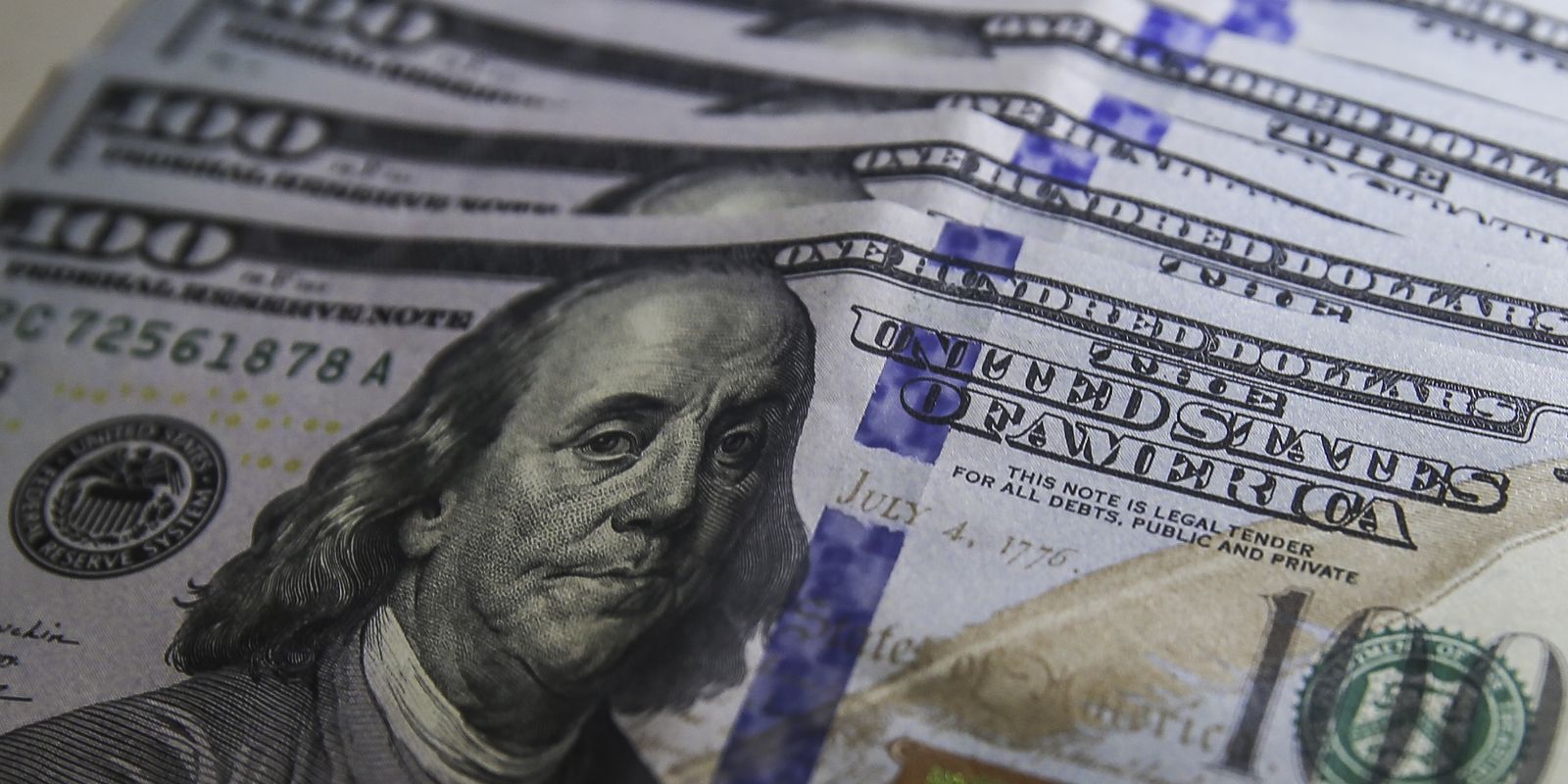
In another day of pressure from the domestic and international market, the stock market once again broke a record and approached 149 thousand points. The dollar rose for the first time after three consecutive falls and approached R$5.40.
The Ibovespa index, from B3, closed this Thursday (30) at 148,780 points, an increase of 0.1%. The stock market started the day falling, but recovered at the end of the morning and operated close to stability for the rest of the day.
This was the seventh consecutive increase in the main Brazilian stock market index. In the last seven trading sessions, Ibovespa has accumulated gains of 3.23%.
The relief in the stock market was not repeated in the exchange rate. The commercial dollar closed this Thursday sold at R$5.38, up R$0.022 (+0.42%). The price reached R$5.39 around 10:10 am, but slowed down during the day.
The US currency rose 1.09% in October, but fell 0.21% in the week. In 2025, the currency accumulates a drop of 12.95%.
Caution
Both internal and external factors interfered in the market. Abroad, the caution following the president of the Federal Reserve (Fed, Central Bank of the United States), Jerome Powell, caused the dollar to rise across the planet. After the meeting on Wednesday (29), in which the body reduced US basic interest rates by 0.25 percentage points, Powell said a new cut in December was not confirmed.
High interest rates in advanced economies encourage capital flight from emerging economies, such as Brazil. Caution with the Fed overshadowed the outcome of the meeting between the presidents of the United States, Donald Trump, and China, Xi Jingping. The meeting ended with the announcement of an agreement on rare earths.
Caged
In Brazil, the publication of the Caged results, which pointed out the creation of 213 thousand jobs formal work formalities in September, influenced the market. Despite job openings falling 15.6% compared to September last year, the indicator was higher than investors expected.
After the Caged numbers, the stock market lost 149 thousand points. This is because the performance of the job market increases expectations that the Central Bank (BC) will delay the start of cutting the Selic Rate (basic interest rates for the economy) in Brazil. Higher interest rates encourage the migration of riskier investments from the stock market to fixed income, such as National Treasury bonds.
* with information from Reuters