In the midst of the food shortage and the energy crisis that prevails on the Island, the little given to athletes would seem like an incentive.
LIMA, Peru – When the enthusiasm of the fans for the 64th National Baseball Series still resonates in Cuba, authorities of the Castro regime rewarded outstanding baseball players in said competition with coal, fans and a few other basic items.
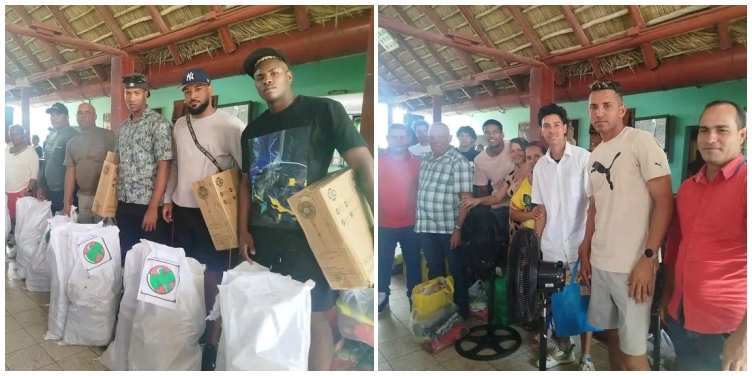
The recognition, intended for the players of the Leñadores de Las Tunas team, was delivered in an official ceremony thanks to the participation of the municipal government of several territories.
“Las Tunas developed its emulation check to encourage its outstanding Lumberjacks in the 64 SNB, the Municipalities of Amancio, Colombia, Majibacoa and Jesús Menéndez played a leading role in the encouragement of players and other outstanding members in the stage,” reports the Facebook page of Yoel to Strike.
In images included in the publication, several of the baseball players appear along with the “stimuli” they gave away. Most received a bag of charcoal and a fan, while others also took pictures next to rice cookers, bags of soft drinks, and other essential supplies.
In the middle of the food shortage and the energy crisis that prevails on the Island, the few items given to athletes are intended to be an incentive. Electrical blackouts, high prices and poor accessibility to food have made the lives of Cubans increasingly difficult.
A recent study by the independent observatory Food Monitor Program (FMP) warns of greater food precariousness in Cuba and places a minimally healthy diet out of the reach of most households. According to FMP, two adults living in Havana, for example, “would need at least 41,735 pesos to cover a barely sufficient diet. This figure is equivalent to almost 20 minimum wages or two years of minimum pensions according to official income in the country.”
Since its beginning last August, the 64th National Baseball Series has had an eventful development. Several game cancellations have been motivated by problems such as lack of fuel, influence of rain and meteorological events (Hurricane Melissa), and more recently the epidemiological situation.