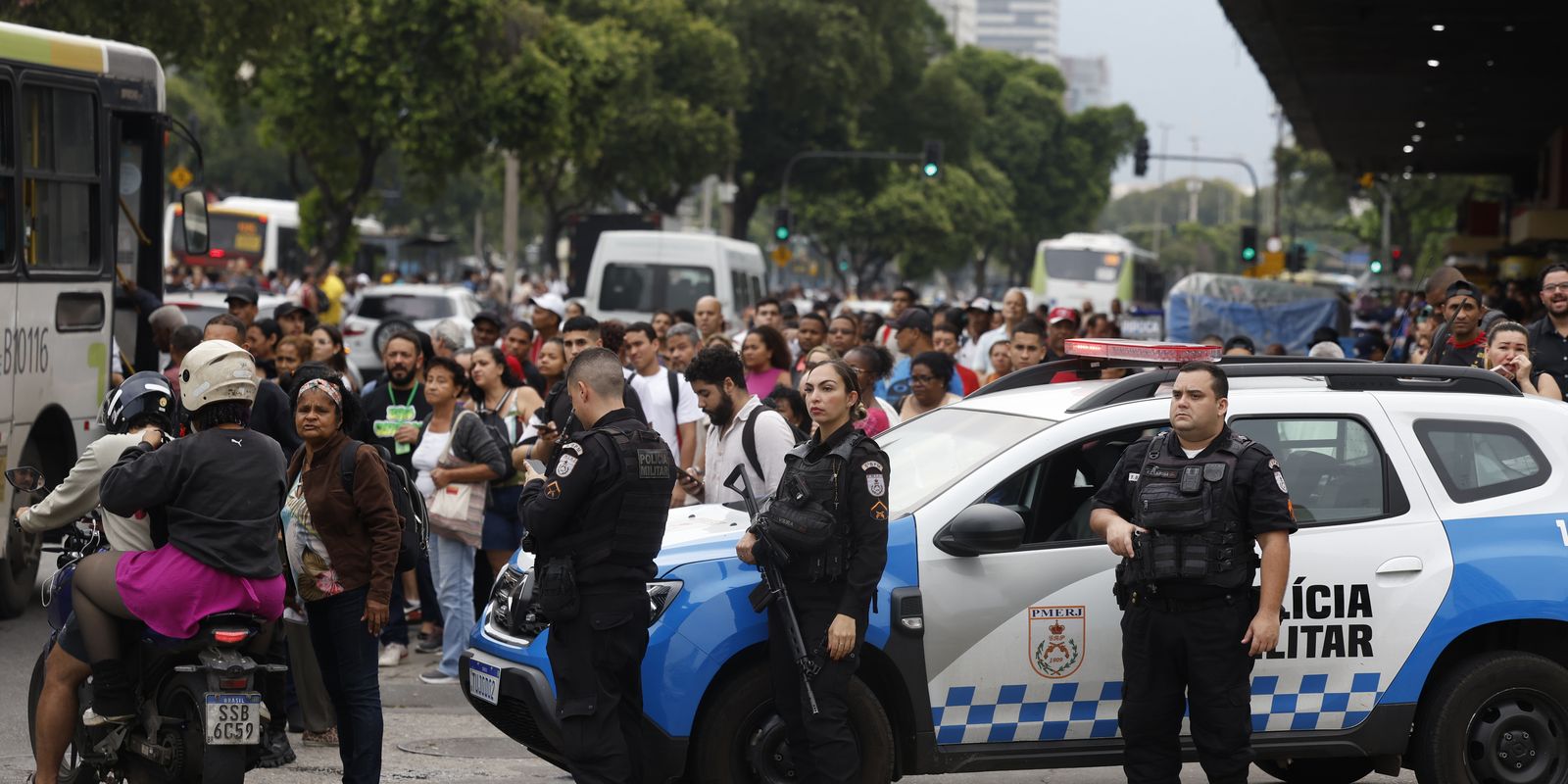
THE Governor of Rio de Janeiro, Claudio Castro, reported this Monday (17) to Minister Alexandre de Moraes, of the Federal Supreme Court (STF), that the images from body cameras used by military and civilian police officers who participated in Operation Containment were preserved.
The information was sent to the Supreme Court before the end of the deadline given by the minister for the state government to provide clarifications on the operation, which killed 121 people on October 28th. The deadline ends today.
According to the governor, the cameras were used by 60 police officers, and recordings from these equipment were saved. However, part of the equipment failed, which caused 30 cameras to become inoperable.
“The images from the cameras used by the civil and military police were duly preserved. Within the scope of the Civil Police, all recordings made during the operation were classified in Evidence mode, ensuring their full preservation for the contractual period. The Military Police, through its internal affairs department, requested the Infrastructure and Technology Directorate to adopt the necessary technical measures to preserve all images captured by the Portable Operational Cameras (COPs) during the operation”, stated Castro.
The governor also informed that he will send copies of the autopsy reports of those killed in the operation to the Court. Data transmission will be done via a VPN (private network) due to the “sensitive content” of the documents.
On the 3rd of this month, the Rio government sent Moraes 18 clarifications about the operation.
Alexandre de Moraes is the temporary rapporteur of the process known as ADPF das Favelas – Claim of Non-compliance with Fundamental Precept (ADPF) No. 635. In the action, the Court has already determined several measures to reduce lethality during operations in communities in Rio de Janeiro.
“Watershed”
In the document sent to the Court, the Rio government argues that carrying out Operation Containment must be recognized as a “public policy of institutional defense”.
The state prosecutor’s office says that the operation was a necessary and proportional institutional response to combat drug trafficking in Complexo da Penha and the result of the investigative work of the Civil Police and the Public Ministry.
“More than a police action, Operation Containment must be recognized as a public policy of institutional, legal and social defense, conceived under parameters of strategic intelligence, state responsibility and democratic control, symbolizing a milestone of resistance, courage and effectiveness in combating organized crime”, says the report.
The Rio government also classified the operation as a “watershed” in the fight against crime.
“Operation Containment represents a watershed in the qualified fight against organized crime, demonstrating that the presence of the State is permanent, police action is technical and controlled, and the institutional commitment to social peace is non-negotiable”, concluded the document.