Imagine crops being grown in the same space as forests. To make it even more evident, it could be a corn plantation located in the shade of a Brazil nut tree, for example.
This combination of agricultural production with environmental preservation has been highlighted by climate experts and environmental activists as ideal for helping planet Earth recover from the damage caused by human action, which is reflected in the climate in the form of extreme events, such as torrential rains and droughts.
This “marriage”, which is, in fact, a model of fair and sustainable land use, is called “agroforestry”.
This system, which seeks to optimize open land and transform monoculture techniques into biodiverse forests, is today considered one of the main bets for mitigating the effects of climate change on Earth.
The proposal is for an agriculture not based on pesticides and chemicals, but based on ecology itself, taking into account the existence of pests, but also the balance and logic of nature. Hence, the combination of smaller plants – such as food plants – with larger trees with deep roots, to provide shade and water, whenever necessary.
In response to this combination, there is a decrease in the emission of Carbon Dioxide (CO₂) in the atmosphere – the layer that protects the planet from solar radiation and helps to balance the temperature. CO₂ makes up gases that worsen the greenhouse effect, one of the causes of global warming. The math is simple – the more living trees, the more carbon absorption by plants and the less harmful gas sent into the atmosphere.
Agroforestry
In a podcast interview SOS! Earth Calling!Moisés Savian, agronomist and secretary of the Ministry of Agrarian Development, said that the idea of agroforestry is to act on two fronts: in mitigating and adapting to the effects of climate change.
“When I’m reducing carbon emissions, I’m mitigating. If, for example, I have a thin pasture and I set up an agroforest, I’m going to bring to the surface the carbon that is excessive in the atmosphere (the carbon is absorbed by the plants). If I have a corn crop that can’t last long without rain – given the water crisis – and I add this crop to the forest, which has shade and deep roots, the corn will benefit from capturing water from a chestnut tree, for example”, he explains.
The production is a co-production of Brazilian Communication Company (EBC) and the Oswaldo Cruz Foundation (Fiocruz).
Savian also remembers that the logic of agroforestry goes further by combining the planet’s issues with income generation and food production, a powerful tool against hunger in the world.
The idea of productive forests has gained popularity in recent weeks, during the plenaries and meetings of COP 30, held in Belém (PA). But this is the ancestral path that has been pointed out in recent years by climate experts, as already mentioned in an interview climatologist Carlos Nobre to the podcast.
“The indigenous people arrived in the Amazon 12, 14 thousand years ago, and they have always used knowledge very well for everything, for their health, for food, for transport, for biodiversity products. The indigenous people have used and still use more than 2,300 biodiversity products, for example, 250 edible fruits, 1,450 medicinal plants. They learned to live very well with the forest”, he said.
Although it is an ancient technique, Floresta em Pé, even in short steps, has gained ground among volunteering in Brazil and around the world.
Exchange of Knowledge
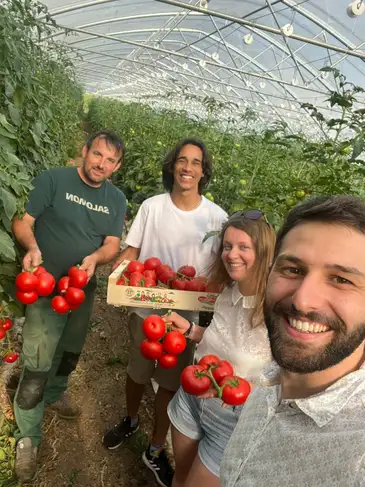
Student Yago Fagundes participated in an immersion project in France. Photo: Yago Fagundes/Disclosure
In Botuporã, a city in Bahia with around 11 thousand inhabitants and located around 700 kilometers from Salvador, an international cooperation project has encouraged residents and young leaders to understand the importance of combining agriculture and ecology.
The municipality is part of a consortium, started in 2021, with communities from France located in the Northern Alsace region.
According to the project’s creator, mayor of the French city of Eschbach – which has less than a thousand inhabitants -, Hervé Tritschberger, the idea came about after discussions with the Botuporense city hall to value farmers, rural producers and train young volunteers to exchange knowledge about sustainability.
It was this international cooperation that, two years ago, led young law student Yago Fagundes to immerse himself in agroecology in French lands and, later, to apply it in Brazil.
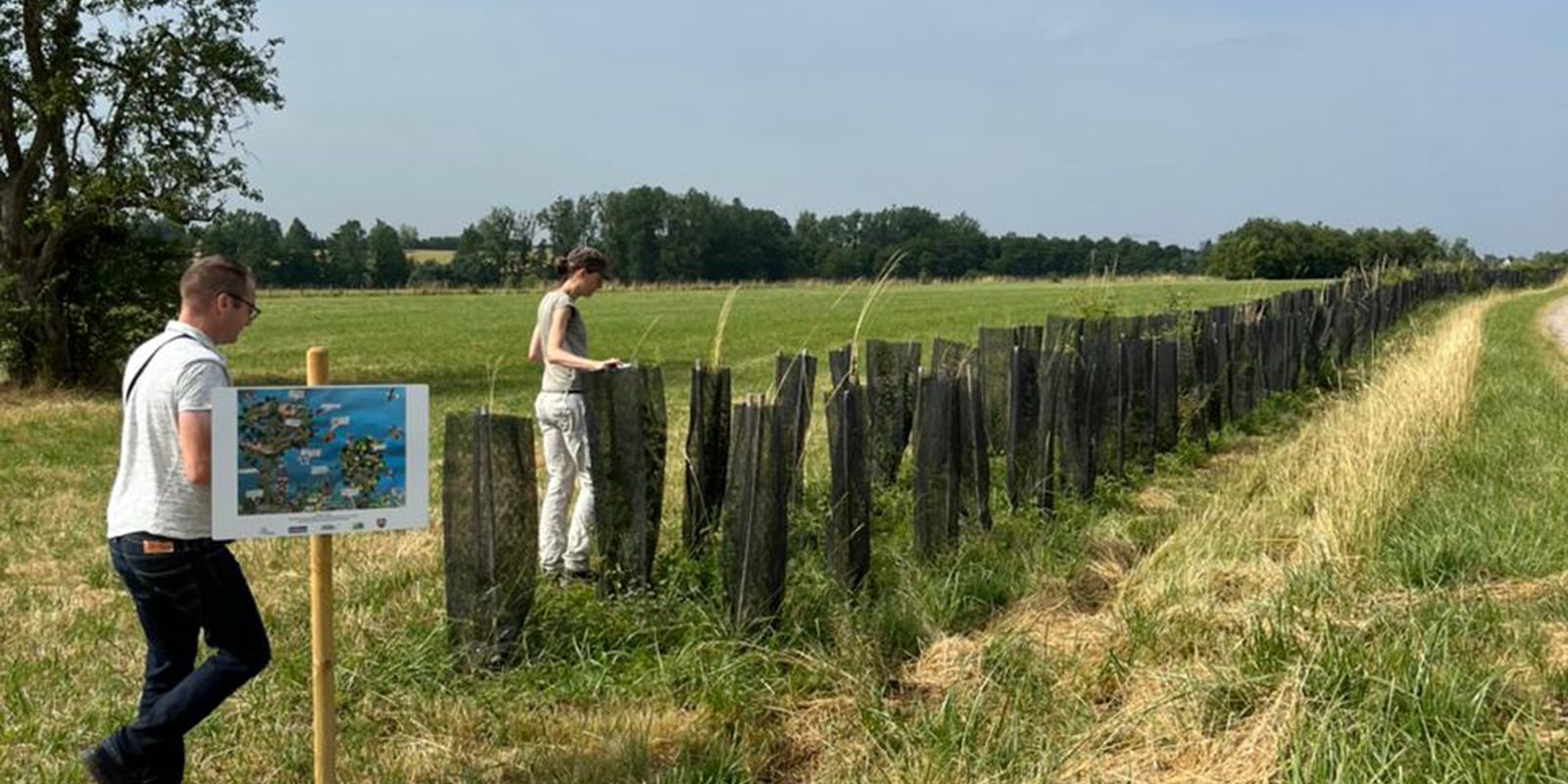
“The experience in Brazil has been one of rural empowerment. We received, for example, French experts who trained our farmers in the production of Tomme de Vache cheese (cow’s milk cheese, in free translation), using an ancient recipe in a sustainable way. In France, I experienced this practice up close, I lived with farmers with the ‘BIO’ seal and I actively participated in the construction of hedges and planting projects in schools, crucial elements for biodiversity”, recalls Yago.
The 20-year-old student says that despite the language challenge, the international experience made him reflect on resilience, including caring for the planet.
“Agroecology is fundamental to combating climate change. It uses the web of volunteering to create international solidarity that strengthens the planet. It works by making the soil a carbon sink, increasing its organic matter and its capacity to retain water, which protects communities from droughts and extreme events”, he explains.
In return, two French volunteers spent eight months in Botuporã to learn organic farming techniques.
“Brazil and France do not have the same challenges, but we have the same objectives, which is to work towards sustainable development. The paradox of European countries is that they do not want to produce food with pesticides, but consume them through imports. Based on this exchange, it is necessary to rethink this validation and train farmers in this healthier and more sustainable way”, says the French mayor.
As a result of the experience, a book was published with the consolidation of the main exchanges, made available free of charge and presented during the Festival Nosso Futuroheld at the beginning of this month, in Salvador.
Environmental and planetary awareness
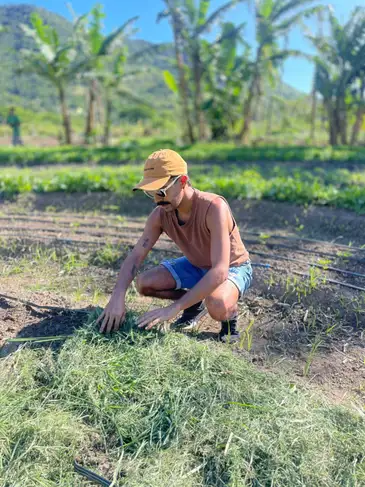
William Torres is a fan of planting vegetables and legumes in his own backyard Photo: William Torres/Disclosure
The exchange of knowledge can go far beyond geographic borders, Brazil-France. It can be passed from father to son, among friends, from grandmother to grandson, as was the case with socio-environmental journalist and scientific popularizer William Torres.
A resident of Rio de Janeiro, he says he is a fan of planting vegetables and legumes in his own backyard, as a sustainable and healthy practice.
“My first reference in agroecology was my paternal grandmother and great-grandmother’s backyard, when I was still very young and, at that time, I had no idea of the preciousness that was within my reach, much less did I know the term. Today, of course, I understand that agroecology goes far beyond pesticide-free foods, but it also encompasses the subjective aspects of our lives and the fertilizer of our roots: the territory, tradition and ancestral wisdom”, he reports.
Torres also says that the environmental stance reflects values such as responsible and collective environmental awareness, in addition to socio-environmental justice.
“It is on this path that I recover part of my history, my deep relationship with nature, my sense of community, my need to fight for life on Earth and preserve it”, he concludes.
And even in isolation, he understands that there is no magic formula for individually facing the climate crisis.
“When it comes to combating the effects of the climate crisis that we are going through, there is no scale that says which is the most important action in this process, after all, every attitude that aims to counter the exploitative logic of agribusiness is a revolutionary act. Therefore, any individual action that seeks to escape the logic of profit is always valid”, he concludes.
Examples from Brazil
Still closely following the outcome of COP 30, the Secretary of Land Governance and Territorial and Socio-Environmental Development of the Ministry of Agrarian Development, Moisés Savian, says that the meeting has been a great opportunity to show the world what Brazil has donethe.
“The COP was very positive for Brazil, we presented our agenda for productive forests to the world. In addition to maintaining, we will expand the area of forest coverage to generate income and food”, he says.
For him, it is essential to think about a food production system that is resilient to adverse events, such as droughts and extreme rains.
“I think Brazil’s future is to advance in resilient, low-carbon, biodiverse agriculture, agroecological agriculture in degraded areas. We have a lot of degraded area in Brazil. We have a lot of underutilized pasture. These are areas that are not producing food and are not serving the ecological issue either. By the way, the government has brought up the idea of productive agroforestry forests – moving forward with biodiverse production, of agroforestry in these areas that have already been deforested, from a perspective of restoration, but a productive restoration.”, he says.
Savian also advocates financial incentives from more developed countries and, internally, agricultural credit to enable small farmers and rural producers to learn and use sustainable food production techniques. However, he draws attention to a still challenging point: winning the pockets and hearts of consumers.
“Because we have it today, a lot of people are counting their money to get through the month. Some other people can pay a little more for a product that is different. We met with an international supermarket chain. And they are creating a shelf called ‘forest products’. So, what was the challenge they had? Often, in the retail market, they will need 30 days, 60 days to pay. The farmer cannot wait that long. And this chain is paying in advance”, says Savian.
According to him, it is initiatives like this that can have a more important effect – in addition to the mobilization of government and producers, which is to include the consumer market as a driving force behind the sustainable economy, production resulting from agroforestry.
For Savian, the Standing Forest can be part of the solution to the climate emergency situation that the planet is experiencing.
“I believe that it is this ‘remedy’ that can be used together with forest restoration, combating deforestation, and more intense livestock farming, in order to better occupy the space that already exists, without cutting down more trees. It is not a medicine that you will take intravenously and resolve overnight, but it is a kind of homeopathic dose – taken in small quantities, but continuously”, he concludes.
*The journalist attended the Nosso Futuro Festival at the invitation of the French Institute