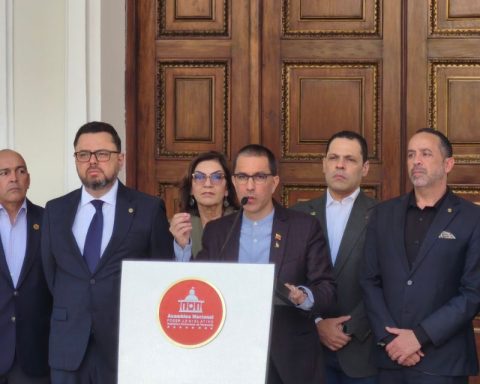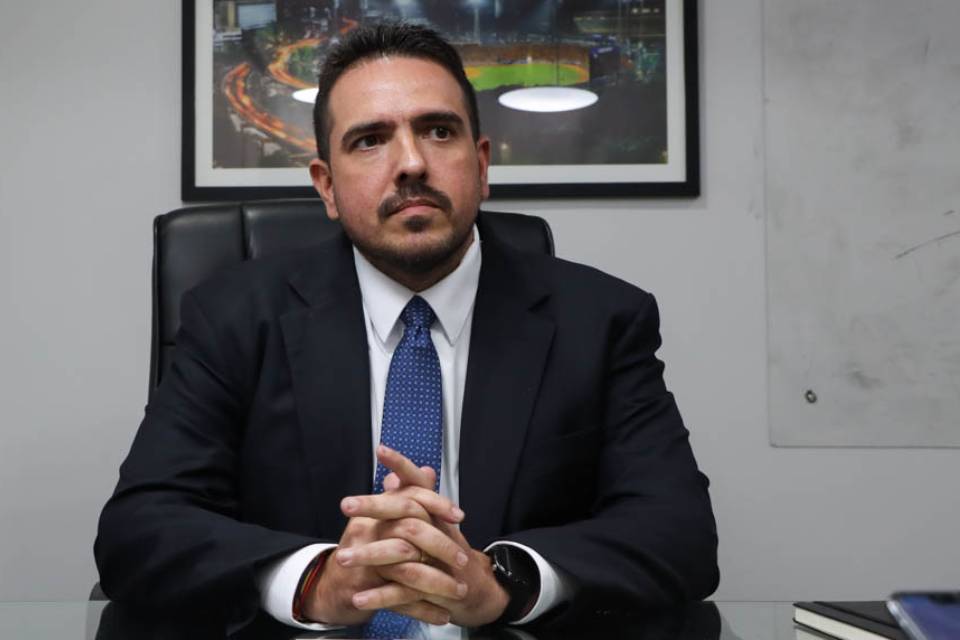
Deputy Stalin González (Un Nuevo Tiempo) believes that an opportunity has opened in Venezuela to redirect politics towards democratic scenarios after the attack by the United States and the capture of Nicolás Maduro. But he expects more than words from the national Executive while he hopes that the opposition can meet again
In Stalin González’s phone there is Jorge Rodríguez’s number. He is one of the few opposition politicians to whom the president of parliament does take a call. The UNT deputy, part of the bench of 12 parliamentarians of the Freedom Parliamentary Group, has become a hinge for understanding with Chavismo in crucial moments, a necessary leash with those who do not stop controlling power without democratic opening.
Now he cautiously attends to what Delcy Rodríguez has called a “new political moment”is known to be still far from a transition and points to the need for a consensus after the capture of Nicolás Maduro by the United States, which it claims “moved the political floor of the country.” While she hopes that the opposition sector led by María Corina Machado begins to answer the phones, she highlights that the economic discussion that has begun may fall short if it is not accompanied by institutional reconstruction.
His bench has not yet received the proposal to reform the Hydrocarbons Law announced by Delcy Rodríguez in front of the camerasbut he anticipates that new investments and funds must include more transparency. “It is true what the president in charge said that with the sanctions it was very difficult to grow the oil industry, but it is obvious that the last five PDVSA directors have ended up investigated for corruption and most of them imprisoned.”
Stalin González, during the interview in Night D of SuchWhichdetails how the country’s energy management could be redefined, recalls the gaseous hydrocarbon law as a framework to take into consideration, and warns of opportunities to discuss.
–What signs do you see that “a new political moment” has begun, as Delcy Rodríguez announced?
–We think it’s good that he said it, but for that we should live in a democratic country where different ways of thinking can be expressed. Let’s hope those words become reality. As Henrique Capriles said at the press conference, we have been through two weeks and two ordinary sessions of the National Assembly. I think there is not enough time to have a better analysis.
–Is it possible to achieve democracy, peace, coexistence, democracy with Chavismo?
–The country demands that the Constitution be complied with, which establishes the model of democracy that we must have in the country. During these 15 days there has been talk of economic reform, but there is no way for the economy to work if there are no solid institutions. The issue is how we are reconnecting with that social pact and can build a real coexistence in Venezuela, each with their own point of view.
–The current AN also has a crisis of confidence, where the very legitimacy of the deputies has been questioned.
–The votes of the 2025 election were published. How the D’Hont method was applied is an issue that the CNE never clarified and had to explain. It is certainly an Assembly for which very few people voted as a result of what had happened on July 28. Now, how does the Assembly build legitimacy? Touching on the issues that really matter to people: wages, economy, democracy, re-institutionalization. January 3 completely shook the political floor of the country, and now there is an opportunity to meet again.
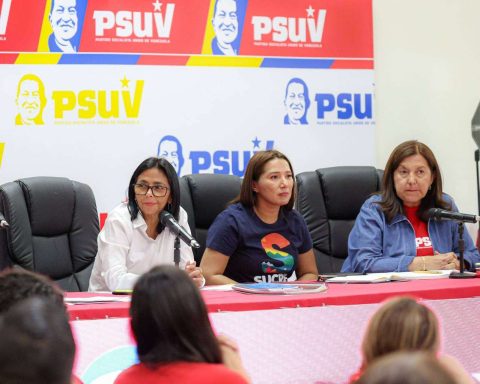
–How to adapt this parliament, which does not represent the real portrait of the country with 90% control of the PSUV, to this new reality?
–We always said it: one cannot abandon the spaces and here a decision was made to abandon everything (with abstention) and the consequence is that today that parliament does not reflect the country. The discussions that will come will be in that Assembly, in the institutions that are in the country. That makes us rethink the way we see politics. Within parliament the way to reflect the country is by exhausting the debate. If the PSUV believes that it is going to impose everything with a steamroller, including economic changes, it will always have the problem of trust.
–Henrique Capriles said that the conditions are not in place for elections in the short term. Because?
–The election is not the ultimate goal of an agreement, but is in the middle of the process. You have to build the path to get to the election and get all parties to recognize the result and live together after it. We have never had that discussion.
–What are the bricks of that path?
–The first is an institutional issue. And it is not just the CNE, we must talk about the TSJ and the rest of the institutions. Then there is the building of trust between the parties, and that the greatest number of political actors can participate. That is not decreed. What happened on January 3 should make us all think, especially those in power because part of what is happening to us is that they did not listen to the people and they continue not to do so.
–Where to start building that path from the National Assembly? Will a new prosecutor, a new TSJ, a new CNE be appointed? Will the hate law be repealed?
–The first thing is that there has to be political will to change this. Without that, it is very difficult to move forward. There is a legal framework that was put together to persecute dissent, and that has to be reviewed. But institutions are not changed by decree, a political consensus needs to be built to renew them. I don’t think we’re there yet.
–What role should María Corina Machado and the opposition not represented in parliament play?
–Here everyone has to be part of the reconstruction of Venezuela. I talk to everyone. I speak with the government and with anyone in the opposition. But you also have to be willing to talk and build. Here it is not about who believes they are right, but about having the political will to build a solution.
–It is one thing to be willing to talk and another thing to pick up the phone and call.
–I have done it and from there to here they never respond. Politics is talking. Whoever wants to do politics without speaking, then he is not doing politics but something else.
–Have you had the opportunity to exert any type of pressure or influence the release of political prisoners?
–We welcome the fact that there are releases and we hope that this continues to advance. We believe it is a step in the right direction. It seems to us that it could be much faster. When it was proposed to go to Miraflores with the AN commission, my position was that if we went to those meetings it was to do something for the people. We decided to choose the topic of political prisoners. To avoid discussions about lists, I called Foro Penal and met with them in Caracas. I asked them to help us and they gave us the list. That was the list I submitted, with 836 people. Many people deprived of liberty do not have a private defense, they have been held incommunicado and have not had a fair trial. That does not correspond with the law or the Constitution. We welcome the government’s decision to release prisoners, that includes the president in charge, Jorge Rodríguez and the Minister of the Interior who, if he did not agree, many of these things would not have happened.
–Do you think that pressure from the United States has anything to do with the decisions to release political prisoners, does the government speak of a unilateral decision?
–I believe that both things are true. There was a process from before, because some releases began on December 23. I don’t know if the number expanded after the pressure. What is evident is that the events of January 3 changed the situation in the country and led to the search for spaces for detente.
–In this new reality, where it seems that many decisions are made between Miraflores and the White House, what role does the average citizen play?
–The reconstruction of Venezuela cannot be unilateral. What is viable here is that all sectors of the country can participate in the change. We said it on January 5: we want to be the voice of those who are not in the Assembly, we want to be the voice of those who are not heard and build bridges.
–Can we expect interpellations or investigations in parliament about what happened on January 3? Can the Defense Commission summon the military high command? There are many doubts about the anti-aircraft defenses, the reported deaths, the presence of Cubans in presidential security.
–Evidently there are many doubts and many unanswered questions about what happened on January 3. But we have only been sworn in for two weeks and only two ordinary sessions. What should happen, from the parliamentary mechanics, is that the reports and accounts of each ministry reach the Assembly, and from there the comptrollership is exercised. There are mechanisms: interpellations, appearances, parliamentary questions. I’m not going to get ahead of myself. What is clear is that the country deserves transparency about what happened, both in the use of resources and in the facts.
–Did January 3 shock the opposition or Chavismo more?
–It is an event that will remain in our memory. It completely changed the rules, not only in Venezuela but also in international law. It was a scenario that some had in mind, but it was the least likely. Nobody expected it to happen that way. It completely moved Venezuelan politics. There are sectors that still do not understand what is happening and an effort must be made to understand how this is being seen from within power.
The full interview in Night D You can listen to it here:
*Journalism in Venezuela is carried out in a hostile environment for the press with dozens of legal instruments in place to punish the word, especially the laws “against hate”, “against fascism” and “against the blockade.” This content was written taking into consideration the threats and limits that, consequently, have been imposed on the dissemination of information from within the country.
Post Views: 85