Víctor Cumpa, head of community and institutional relations of Cerro Prieto: “We have to grow hand in hand with the surrounding communities”
Cerro Prieto is a business group whose field of action is the planting and export of avocados, blueberries and asparagus, mainly to the markets of the United States, Europe and Asia.
We chat with Víctor Cumpa, head of community and institutional relations of the company, who shares his experiences in the subject of sustainability and the social contribution of Cerro Prieto through the investment mechanism works by taxes (Oxi).
How does Cerro Prieto work the issue of sustainability and its strategies to contribute to society?
As a company we have a very strong policy in the subject of sustainability, focused on education, health and care of water resource. Not only are we a company that exports quality food for the world, but we also provide quality opportunities for families, for our surrounding communities. In Pico Campaign we get to work up to twelve thousand workers per season.
Why are they betting on the Oxi investment mode?
Within our sustainability strategy we have articulated work through this mechanism developed by the Government to make investments more efficient, inviting private companies to participate in the execution of public works for the benefit of communities. We have developed education and water resource care projects. Now we are about to finish a water and sanitation project.
What works do they promote in terms of education?
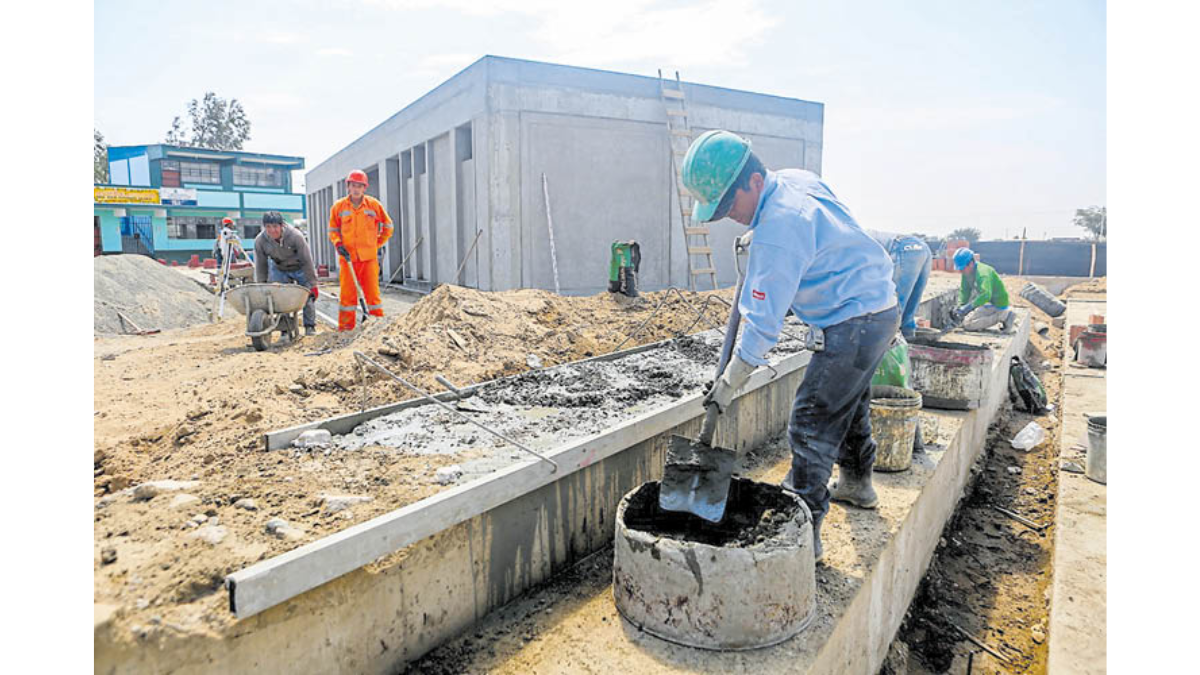
In 2019 we started the Oxi path. The first project that was executed was the improvement of the infrastructure of the Clementina Peralta Educational Center of Acuña, which belongs to the community of Esperanza, Pacanga district. This project was executed in alliance with Proinversion and the Municipality of Pacanga, in the province of Chepén, La Libertad. Psychomotor classrooms, computer rooms, canteens, equipped classrooms, the entire quality education system for children were implemented. This allowed not only to improve school, but also the quality of community education, which is a rural area. This investment had a cost of two million six hundred soles and was the first tax for taxes that we developed in our area of influence. In 2020, a second project came with the Municipality of Pueblo Nuevo, in the Los Parks Educational Institution, where infrastructure was also improved with an investment of two million four hundred thousand soles. Thanks to this work, the student population of 40 children to more than 100 children in the area increased.
What has been the total impact of these works?
We evaluate year to year how they impact not only the quantity, but on the quality, which is the most important thing with an adequate infrastructure. Since 2020, which both schools began to work at 100%, we have managed to impact more than 500 children in these rural areas. It is important to emphasize that there has been an impact not only social, but also economic in families, because many of the parents were looking for a better school and sent their children out of the community paying mobility to receive a better education in other areas far away from Nueva Esperanza, for example. We are aware that, if the company grows, we have to grow hand in hand with the surrounding communities. This type of works also has an impact on the self -esteem of children and their families, because they have a modern school that has nothing to envy to that of cities.
In addition to the works in education, there were other edges …
Yes, one of the sustainability pillars is the care of water resource. We have carried out a project with the Regional Government of La Libertad, the Board of Users of the Jequetepeque Valley, the Guadalupe Users Commission and Proinversion: the coating of the El Tambo and Molino channel, which has 10 km and which was previously a rustic channel. This is a project with an investment of more than eight million soles and has allowed to improve the optimization of 99%water resource. In this project we have had a triple impact: social, economic and environmental. Before, when the rustic channel was without coating, 50% of water was lost due to the filtration issue. So, we have managed to have a positive impact saving water. We optimize water at 99.9% and that 1% that is lost is due to the issue of evaporation. In addition, for the water to arrive from the first kilometer to the tenth it took two days; Today it takes a maximum of an hour. This is a great impact on more than 460 hectares of cultivation.
What other investments through OXI have been working?
Our company is very interested in continuing to contribute through this mechanism. We are constantly articulating with local and regional governments to continue identifying projects within sustainability pillars. The issue of education is basic for development. In health, if we do not have a healthy community, we will not be able to have a population that can work with us. The care of the water resource is vital because it is increasingly scarce. We work very hand with agriculture for the improvement of hydraulic infrastructure, training and programs in schools to educate students in the field of water care.
You can see the full interview here:
A successful execution model in favor of the development of Peru
Implemented since 2008, through Law No. 29230, the mechanism works by taxes (OXI) has consolidated as a key tool for the closure of infrastructure gaps and the improvement of public services in Peru.
As is known, this public investment modality allows private companies to finance projects on account of their income tax. To date, it has achieved the award of 675 projects for an amount greater than the S/12,000 million, promoting vital sectors for the development of the country.
In this sense, the Private Investment Promotion Agency (Proinversion) plays a fundamental role in strengthening the capacities of officials and articulating with the private sector for the materialization of these initiatives. Thanks to the update of regional and local public public investment certificates (CIPRL), public entities – regional, local and universities governments – potentially have S/46,185 million for the execution of future projects under this modality.
How works for tax works?
The work scheme is simple. Private companies advance the payment of their income tax to directly finance and execute public investment projects prioritized by subnational governments and entities of the national government. Once the work or progress of the project is completed, the public treasure reimburses the amount invested to the company through certificates (CIPRL or CIPGG) that can be used to pay their tax. Subsequently, public entities return to the public treasure the financed amount.
This mechanism not only accelerates the execution of projects, but also encourages more efficient and transparent management by involving the private sector in the supervision and delivery of the works. Eligible projects cover crucial functions such as health, education, tourism, agricultural, public order and security, and include maintenance.
A path with clear rules
For public entities, the process implies identifying projects of their interest that are in harmony with development plans and have technical viability. Then, they must obtain the favorable opinion of the Ministry of Economy and Finance (MEF) on the budget capacity.
The private sector, meanwhile, can also propose projects. To do this, they must submit a letter of intention to the public entity detailing the proposal, the estimated cost and support of its relevance. Once the proposal is accepted, the private company is responsible for developing the pre -investment study, which is evaluated by the competent authorities. It is crucial that the proposed projects do not overlap with initiatives already in progress or in formulation, and that they do not exclusively benefit the proponent company.
The success of tax works in Peru has generated interest in other countries in the region as an innovative model for infrastructure investment. The constant update of its regulations and the process of proinversion in the dissemination and training of the mechanism ensure its sustainability and expansion.
The articulation between the public and private sectors through OXI represents a unique opportunity to accelerate the development that Peru needs so much.