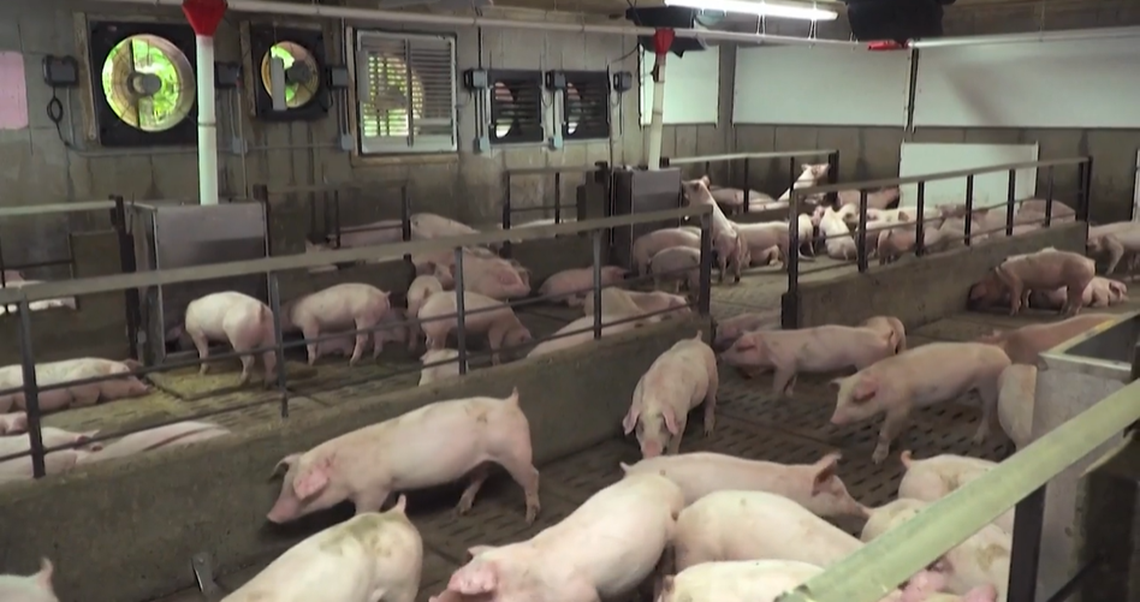
The Spanish Government provisionally suspended the sale of pork meat and products to Cuba and 39 other countries after detecting two cases of African swine fever in wild boars in the province of Barcelona.
Although temporary, the measure comes in the midst of an economic crisis marked by a shortage of foreign currency, low national production and the persistent impact of United States sanctions.
The island, like other destinations, falls within the veto of the import of fresh meat, sausages, hams, fat, viscera, semen, piglets and feed of Spanish pork origin, according to reports The Vanguard.
China, the main buyer with 540 thousand tons and 1.1 billion euros in 2024, only applied the veto to meat from the affected province, while other countries such as Russia, Brazil, Canada, the United States, Japan, Mexico and Venezuela apply the total restriction until Spain delimits the infected zone.
According to The VanguardSpain exports more than 8 billion euros annually in pork, of which China represents a key part by absorbing less in-demand cuts such as bones and viscera.
Now, the media indicates, operators who sell to regionalized markets must add extra health guarantees.
national production
In the last five years, pork has become impossible for the Cuban table, enveloped in inflation that has tripled prices on the island since 2020. The combination of the covid-19 pandemic, the tightening of US sanctions since the first Administration of Donald Trump (2017-2021) and the failed national economic and monetary policies have aggravated the structural problems of the Cuban economy.
Of a total of 14 thousand pork producers in Cuba, only 1,400 maintained their agreements with the national industry in 2022, a drastic reduction of 90%, according to a Cuban television report.
A year earlier, in 2021, the Minister of Agriculture Idael Pérez, pointed out that the country had about 96 thousand pig breeders, of which only 26 thousand remained in 2024 and “not in good condition.”
At the end of 2020, only 93,400 tons of pork were recorded in band delivered to the industry, in accordance with the Statistical Yearbook of the ONEI. But the worst came in four years, when production in this line decreased even more (more than 85%); In 2023, the lowest figure in the last 15 years was recorded, with 13,300 tons.
If in 2020 the economist Juan Triana referred prices between 40 and 50 pesos per pound—and in that pre-Ordination context it was already unaffordable for quite a few—the publication on Minimum and maximum prices of varieties (August 2024)from the ONEI, places between 600 and 700 pesos per pound in most of the country’s provinces, and up to 850 in Havana.
Among the causes of this precipitous fall in national production, the Government places the international economic crisis, which has impacted the rise in raw materials, the cost of maritime transportation and the lack of fuel.
Agricultural and food exports from the US to Cuba grow by 34% in July 2025
At least from the United States, exports of agricultural and food products to Cuba last July registered an increase of 34.6% compared to the same month of the previous year, reaching 42.3 million dollars, according to official figures. The data represents an increase compared to the 31.4 million reported in July 2024 and the 32.3 million in 2023, he said. Cubatrade.
According to the United Nations, Cuba imports 80% of what it consumes. The Government has also indicated that it dedicates more than 2,000 million a year to bringing from abroad the products that it includes, heavily subsidized, in the supply book.
In addition, the shortage of basic goods in the formal market has skyrocketed prices in the informal market, something to which the collapse of the peso and the arrival of small private companies have contributed.