Havana/The Ministry of Foreign Affairs of Spain published a health alert this Friday stating that “Cuba is currently suffering from a serious epidemic, with simultaneous outbreaks of various viral diseases transmitted by mosquitoes.” Consequently, it is recommended to refrain from traveling to the Island if you are not vaccinated against chikungunya, dengue and hepatitis A.”
This warning comes at the worst possible moment for the Cuban Government, in the middle of the high tourism season and about to end a catastrophic year in which the number of international travelers will not reach not even half of the four million registered in 2016.
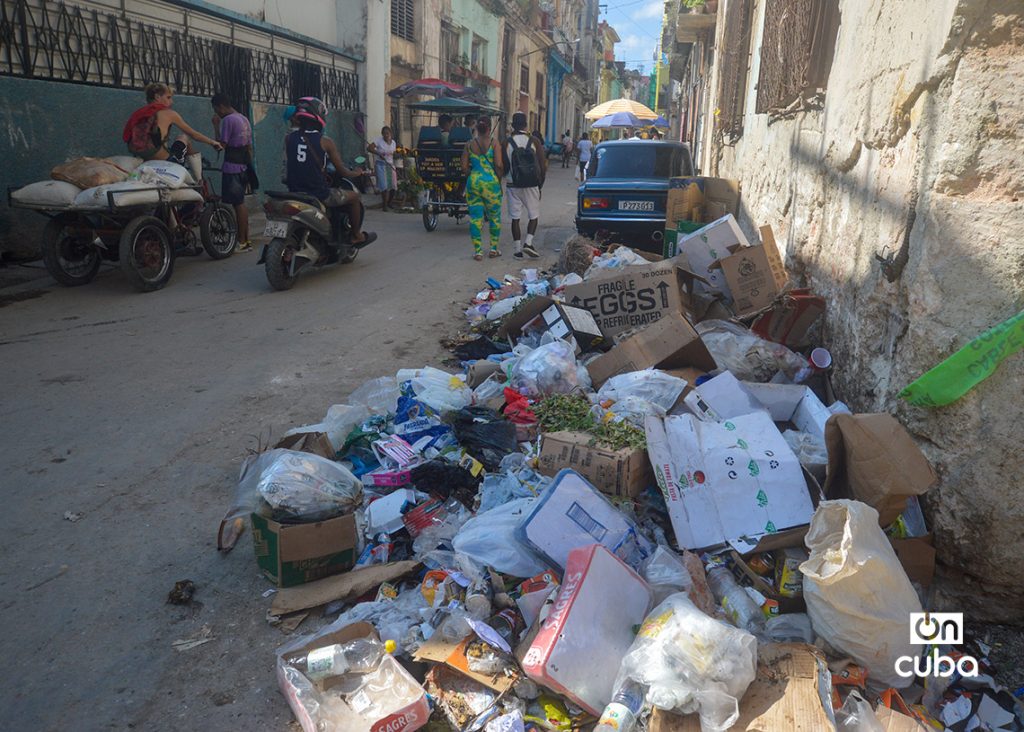
The new indications from Madrid were released this Wednesday, after verifying that the situation in Cuba has worsened significantly. The accumulation of garbage and the increasing number of hours without electricity – two factors that directly impact hygienic conditions – explain, according to sources consulted by Digital Confidentialupdating the alert.
According to the most recent data from the National Office of Statistics and Information (Onei), between January and September 2025, 36,788 Spanish tourists traveled to Cuba, which represents a drop of 27.1% compared to the same period in 2024. Canada – traditionally the main sending market to Cuba – has also drastically reduced its presence on the Island during this year. In the first seven months of 2025, Canadian tourists who traveled to Cuba totaled 478,388, a figure lower than the 622,204 registered in the same period of 2024.
The regime turned the tourism industry into its economic totem and its riskiest bet
The health emergency that now drives away tourists is a direct result of the abandonment of basic services. And that abandonment, in turn, comes from a investment policy which for years privileged tourism over agriculture, energy, health and infrastructure.
During the last decade, the regime turned the tourism industry into its economic totem and its riskiest bet. The result in 2025 is empty luxury hotels in cities where water can take up to weeks to arrive, beach destinations with more rooms than food in the markets and a health system without staff, resources or supplies.
Official investment figures until 2024 confirm this. While agriculture received just 3% of the total and public health a meager 1.9%, hotels and restaurants absorbed 10.8%, and the so-called “business services, real estate and rental activities” – a category where a good part of hotel spending is grouped – accounted for a large 26.6%. That is, more than a third of the national investment was destined to build or remodel tourism infrastructure.
The paradox is that, just now that Spain recommends getting vaccinated before visiting the Island and even bringing a complete first aid kit because hospitals lack medicines, the Cuban Government seems to have discovered – late, very late – that perhaps I had to invest more in basic services.
Cuban authorities can prevent you from leaving the country if there is an outstanding medical bill.
Data from January to October 2025 shows a turnaround. The amounts allocated to tourism decrease to 5.2% and the real estate-business sector drops to 17.1%, while the supply of essential services for the general population – electricity, gas and water – jumps from 12.6% to 36.7%, becoming the main recipient of investments. Transportation – key to moving goods and people in a semi-paralyzed country – also grows from 8.5% to 10.7%.
But the inevitable question is: will this change be enough at this point? Because the figures also reveal what the Government still does not make a priority. In 2025, investments in agriculture – the basis of food security – represent only 2.1% of the total, in 2024. Education falls to 0.4%, science and innovation also to 0.4%, and public health to 1.3%, percentages that are barely enough to keep buildings standing, much less to modernize or supply them.
The Government of Spain also warns travelers that, although Cuban health personnel are usually competent, “medical facilities suffer from a serious lack of supplies” and are far from Spanish standards. In addition, it points out that foreigners are obliged to pay for any care immediately and that the Cuban authorities can prevent them from leaving the country if there is an outstanding medical bill. The alert adds the need to carry bottled water due to the risk of Hepatitis A.
Today, with several countries – including the United States, Russia and Mexico – advising to think twice before traveling to Cuba, the regime is trying to correct course. But investments are like economic cycles, their effects take years to be noticed. What was stopped funding in 2015 or 2018 is what is now exploding in the form of blackouts, epidemics and shortages. And what begins to be financed in 2025 may arrive too late to prevent the Island from continuing to lose – among many other things – one of its main sources of foreign currency.