Madrid/The center of Cuba will finally have a new Spanish consular headquarters. six years later After the announcement that Camagüey would host the second consulate of Spain on the Island, the Government of Pedro Sánchez finally approved this Tuesday in the Council of Ministers the Royal Decree by which the agency is created, essential to serve the growing number of citizens with Spanish passports who live on the Island.
“The main objective is that this new Consulate General promotes better attention to the Spanish community in the central and eastern region of the country, since Havana is located near the western end of Cuba, while the Spanish community is spread throughout the Island, which has a limited communications and transportation network, and there is also a notable presence of Spanish tourism in the eastern part of the country,” reads the Royal Decree.
The text adds that with this measure “the attention to Spaniards residing and visiting the Island will be improved, given that this will complement the work and capabilities of the Consulate General of Spain in Havana, which faces a growing number of registered people and a growing demand for visas, among other consular procedures.”
The initiative to create a new Spanish consulate came to the Government in the last legislature, when Josep Borrell – then Minister of Foreign Affairs and later European Chancellor – received a budget to increase the number of delegations in the countries with the greatest workload, since, during the years of the crisis, this type of work was paralyzed. The Spanish Foreign Ministry then announced its intention to strengthen the capacity of Havana, Caracas, Buenos Aires, London and Edinburgh, mainly.
The pandemic came to change everything and the consular headquarters project in Camagüey had been frozen, also generating an especially complicated situation for the needs of Cuban applicants of Spanish nationality in accordance with the Democratic Memory Law (LMD). Since its approval, They total more than 600,000 the people who have formally presented their application and made the request for an appointment on the Island, completely exceeding the capabilities of the Havana Embassy.
Although the problem has been widespread, since the rule has allowed more than 3.2 million people to apply for Spanish nationality in all authorized offices in the world, there have been countries with particular complexities. This has been the case of Cuba, where an overwhelming demand has been combined – it is the second country in number of applicants, only behind Argentina, with one million, but at least three consulates – with excessively precarious means. The poor state of telecommunications makes operations difficult on-line and the terrible transportation –and economic– situation further complicates serving the public.
The situation reached such levels that the Spanish Government even tried to set up mobile offices, but according to the Minister of Territorial Policy and Democratic MemoryÁngel Víctor Torres, it was not possible. Although he did not give details, it was interpreted from his words that the shortage of vehicles and, above all, fuel, complicated the deployment.
Last November, a few days after closing the application period, the General Council of Spanish Citizenship Abroad (Cgcee) warned that it could take years for many Cubans to obtain citizenship because the staff is insufficient to meet the demand – although a temporary reinforcement has been hired and some officials have been enabled to help clearing up procedures – and asked the Government for urgent intervention to permanently increase staff, as well as services and consular offices, some of them very in need of reform and rehabilitation works.
The president of the Cgcee, Violeta Alonso, brought a plan of proposals to Pedro Sánchez in a meeting held on December 5, in which she expressed to the President of the Government the “need to reinforce consular resources and expedite the processing of LMD files.” According to the organization, the needs of the consulates will not only increase due to the processing of nationality, but as the number of Spaniards increases exponentially, there will be more and more procedures to manage, from the issuance of passports to birth certificates, marriage or death certificates. “It’s not just about expanding the workforce, but in many cases more physical space is needed,” said Alonso.
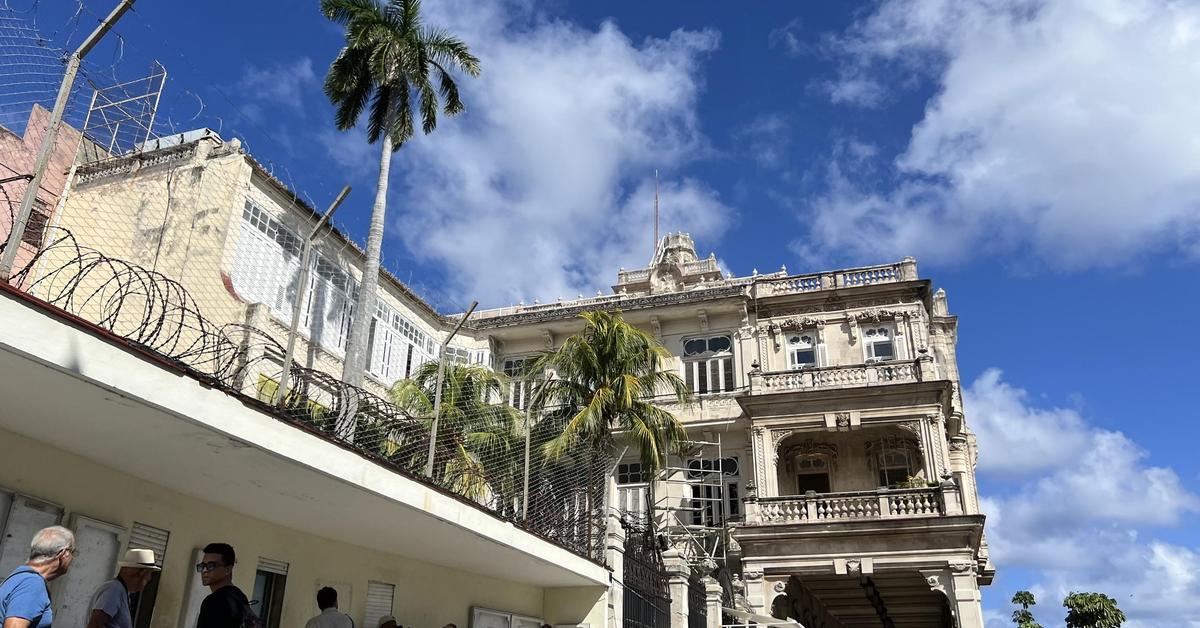
Until now, Spain has three honorary vice-consulates in Cuba, whose functions are much more limited, particularly in matters related to travel documents, Consular Registration Registration or Consular Civil Registry. One of them is in Santa Clara, another in Santiago de Cuba and the last in Camagüey, which will now move to a higher rank, although it has not been specified if it is at its current address at 360 Artola Street, between Capdevila and J. Agüero.
“Our honorary vice consulates are a very important help for us and our citizens. They can guide whoever requests it about the procedures at this Consulate General,” warns the page of the Ministry of Foreign Affairs, an important fact, since the start date of operations with the new rank of the Camagüey consulate is still unknown.