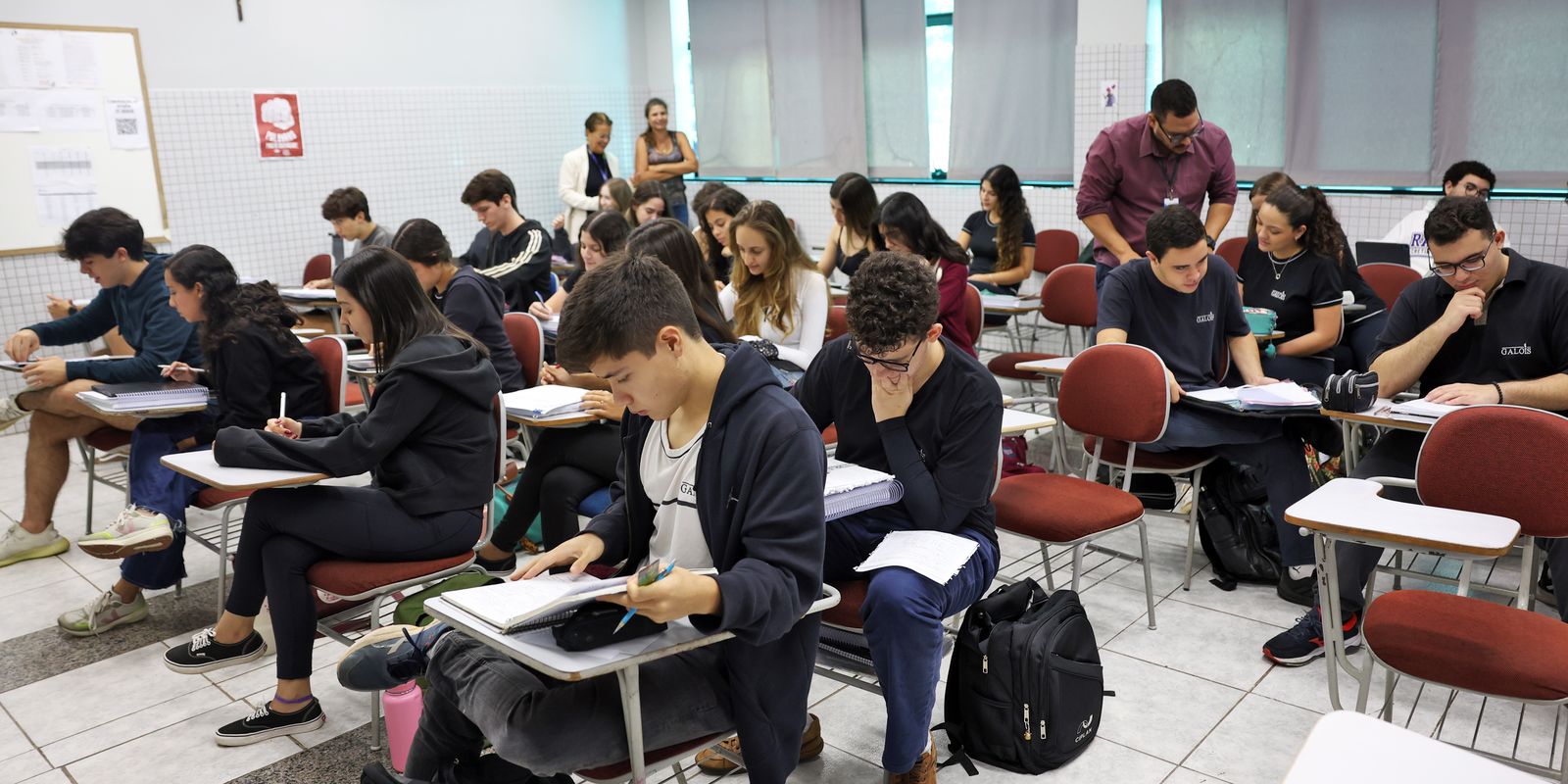
The Government of the State of São Paulo proposed a change of ICMS resources distribution criteria to the municipalities. According to a proposal sent to the Legislative Assembly, the indicators focused on quality, with goals for improving annual grades from the Municipality’s average grade in the state examination of the network, the São Paulo school performance assessment system (SARESP) will have greater weight. 
Student grades should compose 80% of the evaluation grade. According to the proposal of the executive of São Paulo, the rest of the grade will be formed by the socioeconomic condition of the students, the number of units operating full time and how much the network of the municipality approached or exceeded the goal of quality of education, also based on SARESP.
The total amount under discussion is about R $ 800 million, or 13% of the amount collected with the Tax on Operations related to the Circulation of Goods (ICMS) in the State. Currently, half of this amount is distributed according to the size of the municipalities, which the folder defends, in the justification of the PL, which is a measure that promotes inequality.
The base law that regulates this distribution is from 1981, having undergone changes over these four decades, the last in 2022.
The new calculation formula considers the improvement in indicators related to the evolution in educational quality, such as literacy at the right age, improved learning in the early years, increased approval rates, increased percentage of students enrolled in integral education and increased equity, based on the socioeconomic level indicator (ISE).
“All measures were designed for a gradual transition between 2026 and 2028, ensuring that the municipalities are not harmed by the new law and do not have their budgets compromised abruptly,” explains the justification of the project, which is not yet expected to be discussed by the commissions or the plenary of the State Legislative Assembly.
“The initiative is inspired by good practices adopted by states such as Ceará and aims to stimulate the continuous improvement of municipal education networks, focusing on concrete results, especially in literacy in the right age, learning in the early years and full time expansion – without prejudice to the autonomy of federated entities,” explains State Secretary of Education, Renato Feder.
The Union of State Teachers of São Paulo (Apeoesp) still studies the proposal, but criticizes SARESP and its use to distribute resources, such as the annual financial bonus to teachers, since the creation of the exam. The criticism is shared by opposition deputies, especially regarding the use of the system for distribution of resources.