Analysts and experts warn that Chavismo uses the concept of sovereignty as a shield for authoritarian practices. Political scientist Guillermo Tell Aveledo emphasizes that it is not a blank check. Former diplomat Werner Corrales warns that it cannot be used to defend the Maduro government. and constitutionalist Nelson Chitty La Roche highlights that Miraflores uses the concept to govern without interference
Venezuela Time
To defend itself and reject the foreign policy of the United States towards Venezuela, as well as the military deployment that has been taking place in the Caribbean Sea for more than three and a half months, the administration of Nicolás Maduro incessantly invokes national sovereignty and that the principle of non-interference in the internal affairs of the countries be enforced.
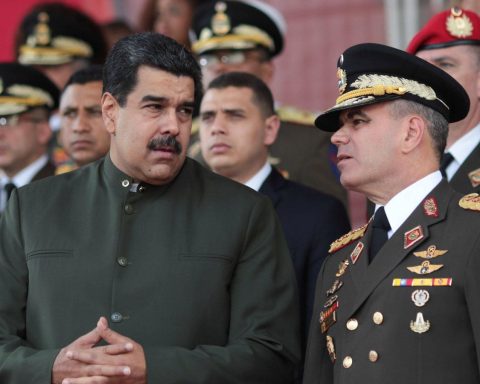
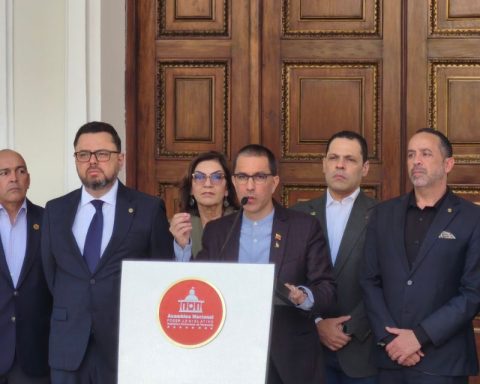
Maduro and senior officials such as the president of the National Assembly (AN), Jorge Rodríguez, and the Minister of the Interior and Justice, Diosdado Cabello, openly denounce that the objective of the White House is to provoke a change of government in Venezuela, with the “excuse” of fighting drug trafficking, and then, they say, appropriate natural resources such as oil.
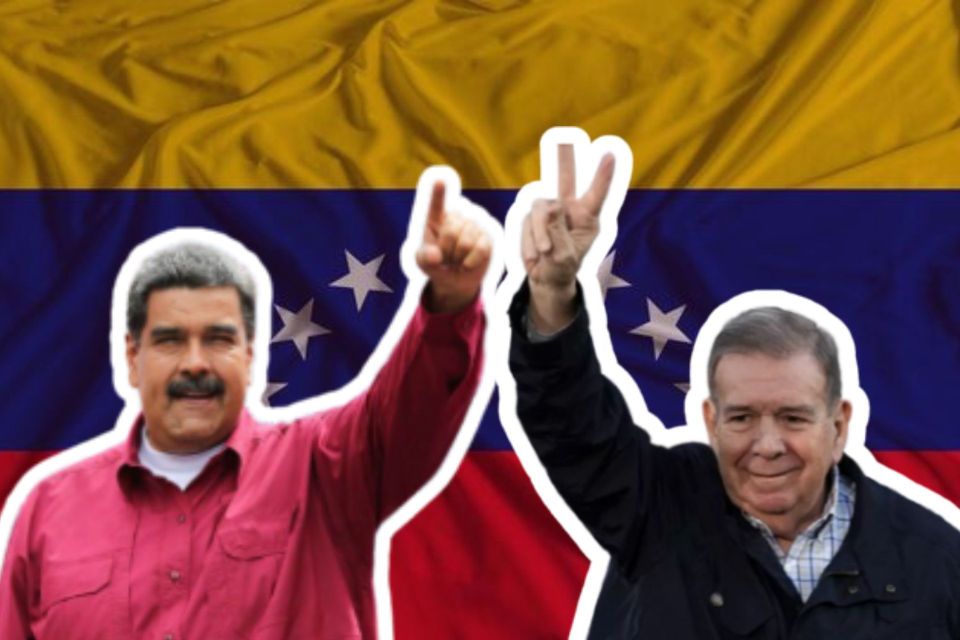
During a interview with the media D.W.Edmundo González Urrutia argued that appealing to sovereignty or multilateralism cannot serve as an “excuse to tolerate a dictatorship” that has destroyed institutions, annulled political rights, persecuted dissent and plunged millions of Venezuelans into poverty and exile.
“The defense of sovereignty only makes sense when it is based on the free will of citizens, not on the indefinite permanence of an illegitimate power. Our fight is for a democratic, free and fully sovereign Venezuela, not subordinated to ideological alliances or current interests,” he stressed.
Regarding the use given to the concept of sovereignty in the context of military tensions between Venezuela and the United States, analysts and experts consulted give their opinion. On the Miraflores side, the term is coined as a “shield” for its excesses, while the opposition rejects its use as a blank check to justify the permanence of an illegitimate government because it does not emanate from the popular will of July 28, 2024.
Who violates sovereignty?
“The concept of sovereignty has a notable polysemic breadth. For the State, and that is why Maduro invokes it, it is the right to govern without interference of any kind, in simple terms. But González Urrutia uses the word to refer to the right of the people to give themselves the government they want. It is about electoral sovereignty,” is the first reading by constitutional lawyer Nelson Chitty La Roche.
The professor at the Faculty of Political and Legal Sciences of the Central University of Venezuela (UCV) points out that they are different uses, although they are presented as related. He also explains that one thing is the sovereignty of the Venezuelan State (exclusive right to exercise power within the limits of its jurisdiction), whoever rules, and another “the perceptible illegitimacy of origin and performance of those who govern the country”, for having ignored the popular will of July 28, 2024.
*Read also: Trump’s National Security Strategy revives the Monroe Doctrine for Latin America
Article 5 of the Venezuelan Constitution establishes that “Sovereignty resides non-transferably in the people, who exercise it directly in the manner provided for in this Constitution and in the law and indirectly through suffrage, by the organs that exercise Public Power. The organs of the State emanate from popular sovereignty and are subject to it.”
“To be objective, in a deliberately broad sense, each side is unaware of sovereignty. The United States is unaware of sovereignty, the Venezuelan State and Maduro and the PSUV are unaware of our sovereignty as a people through voting,” the jurist noted.
In her manifesto for freedom, released on November 18, opposition leader María Corina Machado expresses that “In a free Republic, the only sovereign is the people” and that popular sovereignty and national sovereignty “are inalienable.”
“Sovereignty as a shield”
For political scientist Guillermo Tell Aveledo, Chavismo, like powers such as Russia and China, appeals to the concept of sovereignty to reject criticism from the international community regarding its authoritarian practices.
“On the one hand, there is the traditional or state conception born with the absolute State centuries ago. Here, sovereignty is understood as the full autonomy and supremacy of the State within its territory, protecting it from external interference. This is the vision to which the ruling party appeals: it uses sovereignty as a shield, an insurmountable internal jurisdiction to reject criticism or sanctions, assimilating the State to the government in power,” said the also university professor.
*Read also: Pronouncements and punctual assistance: what Maduro can expect from his allies
But this conception, he warned, came into tension with popular sovereignty since the emergence of the liberal State, which is why the Venezuelan Constitution is clear in its article 5, while in article 2 it grants preeminence to Human Rights and grants constitutional hierarchy to international treaties in its article 22.
“Here lies Edmundo González’s point: sovereignty is not a blank check for the ruler. When a regime uses the sovereignty of the State to violate popular sovereignty (the vote) or human rights, it is emptying the concept of content. As González points out, sovereignty cannot be invoked to tolerate a dictatorship, because the legitimacy of that State depends on the authorization of its population. We are seeing a defensive use of international law by global authoritarianisms. Powers such as China or Russia actively promote a notion of suprastate sovereignty to protect itself from criticism,” Aveledo emphasized.
Hence, he warned, great skepticism is generated about the effectiveness of the current international system, which is often, he stated, paralyzed and unable to respond to regimes that use “institutional forms to shield repressive measures.”
At the end of 2024, the AN sanctioned the Organic Law Liberator Simón Bolívar against the Imperialist Blockade and in Defense of the Bolivarian Republic of Venezuela to punish with political disqualification for up to 60 years and prison sentences for up to 30 years against those who Chavismo considers to be in violation of article 130 of the Constitution (duty to defend the homeland and protect sovereignty) by promoting or requesting international sanctions or invasions of the national territory.
Recently, both Maduro and Cabello asked the Judiciary strip away nationality to opponents such as Leopoldo López and Yon Goicoechea, for supporting US actions.
The State is legitimate, the government is not
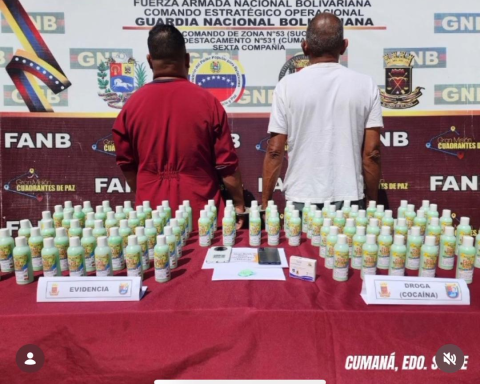
La Roche, along with former diplomat Werner Corrales, agrees with allegations from the European Union and the United Nations, based on international law, according to which Washington has gone too far and committed crimes such as extrajudicial executions in international waters of the Caribbean and the Pacific, against people on board vessels accused of transporting drugs.
To date, at least 22 vessels have been sunk and 83 crew members have died during the air-naval operation ordered by President Trump.
Corrales also warns that if an intervention by the US army in Venezuelan territory were to materialize, it would be a violation of the sovereignty of the State and that in fact, he stated, it is already being violated because one State, in this case Venezuela, is under threat from another, which is the United States.
“Sovereignty belongs to the State and the concept cannot be used to defend a government that is not legitimate of origin, so any international action must be taken against those who exercise power illegitimately under the charges of which they are accused and that are documented in international organizations such as the UN, because the nation is legitimate, the State is legitimate,” he stressed.
The UN Charter in its article 2 states that members must refrain from resorting to the threat or use of force against the territorial integrity or political independence of any State. It also refers to the principle of non-interference in the internal affairs of a State by the UN, but does not exclude coercive measures that include the use of force, prescribed in Article VII (use of force to preserve peace).
“The government, according to international organizations, systematically violates human rights; it is investigated for crimes against humanity. Government agents have been linked to drug trafficking and international guerrilla movements, but this does not justify any action by Trump, such as invading Venezuelan territory,” says Corrales.
This December 2, Trump expressed after a meeting with his Cabinet, that any country, not just Venezuela, that produces and traffics drugs to the United States “is subject to attack” and warned that such operations against drug trafficking-related targets will begin very soon. He did not specify dates or locations.
“By land it’s much easier. We know where the bad guys live, and that’s what we’re going to do,” he said.
Inoperative multilateralism
Miraflores has also appealed to regional multilateralism to intercede in the face of US threats, but these mechanisms have not gone beyond denouncing the violation of international law due to attacks on vessels used for the alleged transfer of drugs.
Colombia, which Trump also threatened with ground attacks for having “entire cocaine factories,” has proposed elections and an agreed upon “shared transition” between the government and opposition, while the president of Brazil, Lula Da Silva, has offered to speak with Trump to contribute to de-escalating tensions. For González Urrutia, solidarity between governments cannot be above solidarity with suffering people.
Analysts agree on the “failure” of this multilateralism due to loss of credibility of the actors and “fear” of the US, although Corrales spoke of a card that should have been played first in the UN before opting for military threats from another country.
“The region’s traditional multilateral schemes have proven ineffective and the emerging ones were created by Venezuela and others to bypass external supervision. Only internal concessions, which with generous patriotism privilege the country’s security before those of its political leadership, could make sense,” Aveledo said.
Corrales questions that the opposition leadership has not promoted before the UN, through countries allied to the democratic cause, an operation in Venezuela to protect the population from human rights violations and drug trafficking. He admitted that it was most likely that Russia would assert its veto power before the Security Council, but that from there, another more consensual route could have been drawn.
“Going headlong with Trump is not the solution, if Maduro leaves due to a foreign invasion the cost would be very high and could leave wounds that are difficult to heal. Will Venezuela be governable after something like this? My answer is no, it is better that Maduro leaves of his own free will as a result of some negotiation or is allowed to flee,” he said.
This December 12, Pope Leo XIV expressed that dialogue or even “economic pressure” is better than attacking Venezuela, if what you want is political change.
*Journalism in Venezuela is carried out in a hostile environment for the press with dozens of legal instruments in place to punish the word, especially the laws “against hate”, “against fascism” and “against the blockade.” This content was written taking into consideration the threats and limits that, consequently, have been imposed on the dissemination of information from within the country.
Post Views: 129