Madrid/Mortality due to arbovirus in Cuba amounts to 8,700 people according to statistical calculations by the Cuban Observatory of Citizen Audit (Ocac) and Cuba Siglo 21, released this Monday in a report on the health collapse on the Island. The report contains data until mid-December, which is why it states that its data is 185 times higher than the data of the Ministry of Public Health, which had then announced 47 deaths. With current figures (55), the unofficial amount is 158 times greater than the official one.
The document is based on official data to create the account. According to the health authorities of the Island, around 30% of the population has been infectedwhich means 2.9 million people affected in a population of 9.7 million inhabitants, which is the official base of the National Office of Statistics and Information (Onei). The lethality of chikungunya is low under normal conditions, around 1 death per 1,000. In this situation, which Ocac calls ‘Scenario A’, 2,900 Cubans would have died. However, this would be the development of the epidemic in countries with good health care.
There are two other scenarios that the report contemplates, one would be that of moderate lethality (B) in which it is considered that the Island may be. It is the one that would have a health system with limited clinical care, hospital saturation and high prevalence of comorbidities. In these contexts, mortality can be around 0.3% or 0.5%, which would mean between 8,700 and 14,500 deaths, depending on severity.
The moderate lethality is the one in which it is considered that the Island may be, which would have a health system with limited clinical care, hospital saturation and high prevalence of comorbidities.
Finally, there would be a case of high lethality (Scenario C), rare and for very vulnerable subgroups or collapsed systems, in which mortality would reach 1%, 29,000 people in a population like that of Cuba. “This scenario represents a limit of high epidemiological severity, which may be indicative not of the intrinsic lethality of the virus, but of the limitations of the health system to respond to a large-scale epidemic,” the document states.
The Ocac considers that the Island is in a scenario B, which could leave the figure at 8,700 – with the most moderate lethality. However, the report contemplates that, even if Cuba were in better conditions than assumed – scenario A –, there would have been 2,900 deaths, which is 61 times more than the 47 recognized by the Ministry of Public Health at that time.
However, one of the report’s inaccuracies is not separating the two diseases that, in principle, are causing mortality. The base of 30% of the infected population is an estimate offered by the director of Epidemiology, Francisco Durán, who then referred to “nonspecific febrile syndromes” and did not differentiate the type of virus. In that television intervention, the doctor assured that there was no “new” disease circulating on the Island, and that these cases were dengue and chikungunya.
Currently, according to official data, there are 37 deaths from complications in the second and 18 from dengue, a much more lethal disease to which the same accounts cannot be applied. Since Durán did not offer the percentage of those infected with each of the diseases, it is impossible to make an accurate count.
Among the criticisms that appear in the report, this is one of them: the lack of transparency. He attributes to her the long time it took to inform the population of the seriousness of an issue that had been reported on social networks and the independent press since the summer. The sick multiplied in a perfect breeding ground: blackouts that prevented protection against mosquitoes, breeding sites due to accumulations of water, lack of garbage collection and absence of an anti-vector campaign due to limitations in supplies and human resources.
The report emphasizes that the current health crisis is a direct consequence of bad “political decisions sustained for years that have systematically weakened the State’s ability to protect the life and health of its population.” Among them, he cites the disinvestment in Health (approximately 2%), compared to the enormous percentage of state money that was going to tourism (around 36%), in charge of the military conglomerate Gaesa.
Among them, he cites the disinvestment in Health (approximately 2%), compared to the enormous percentage of state money that was going to tourism (around 36%).
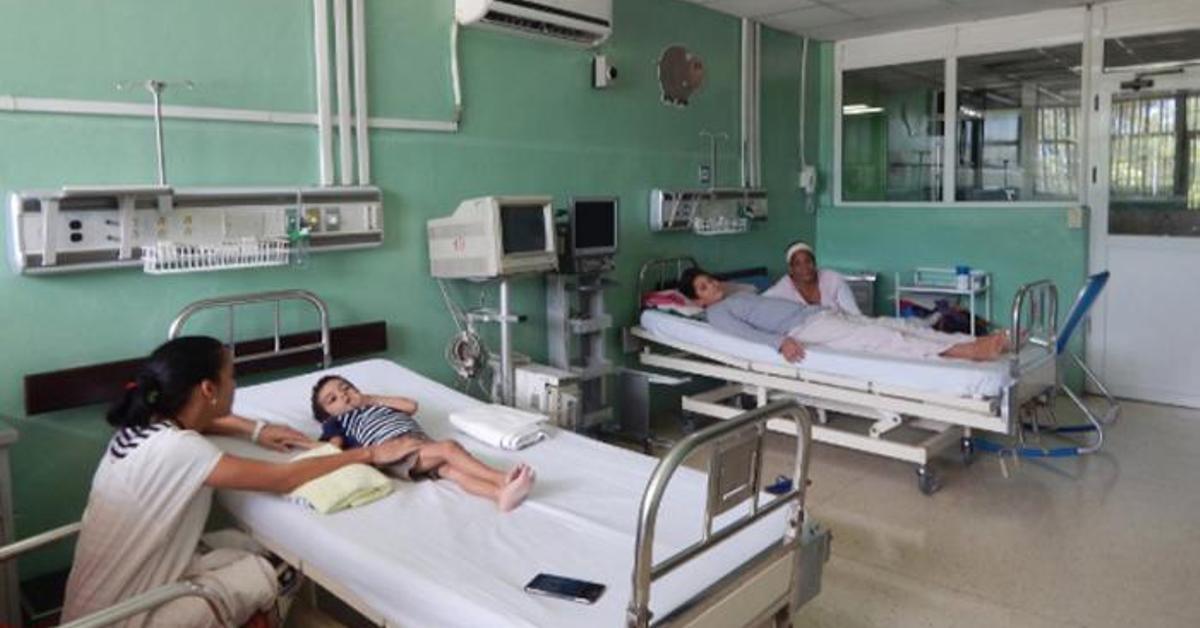
This situation has left medical personnel at a minimum, which between 2021 and 2024 lost a whopping 30,767 professionals. In addition, since 2019 there are 7,144 fewer beds in hospitals. The report also includes data from the report of missing medicines from BioCubaFarma, until January 2025, where the absence of 255 drugs of the 395 that the company delivers to the national system was established. Besides, authorities stated last week that the basic table is made up of 651 medications, of which 62% are produced in the country, while the remaining 38% are imported. Of the latter, at least 60% are not available.
“For the Cuban Citizen Audit Observatory, the health collapse constitutes a form of structural violence exercised from power. Keeping millions of people in conditions of malnutrition, health defenselessness and permanent exposure to epidemiological risks is not an accident, but the consequence of a governance model that has stopped prioritizing basic human well-being,” the document states, adding that profound structural changes and an independent evaluation of the situation are needed.