The SNTP recalled that the Minister of the Interior, Diosdado Cabello, made reference to Venevisión last Wednesday, after reviewing the statements of the opposition leader María Corina Machado, after meeting with the Secretary of State of the United States, Marco Rubio
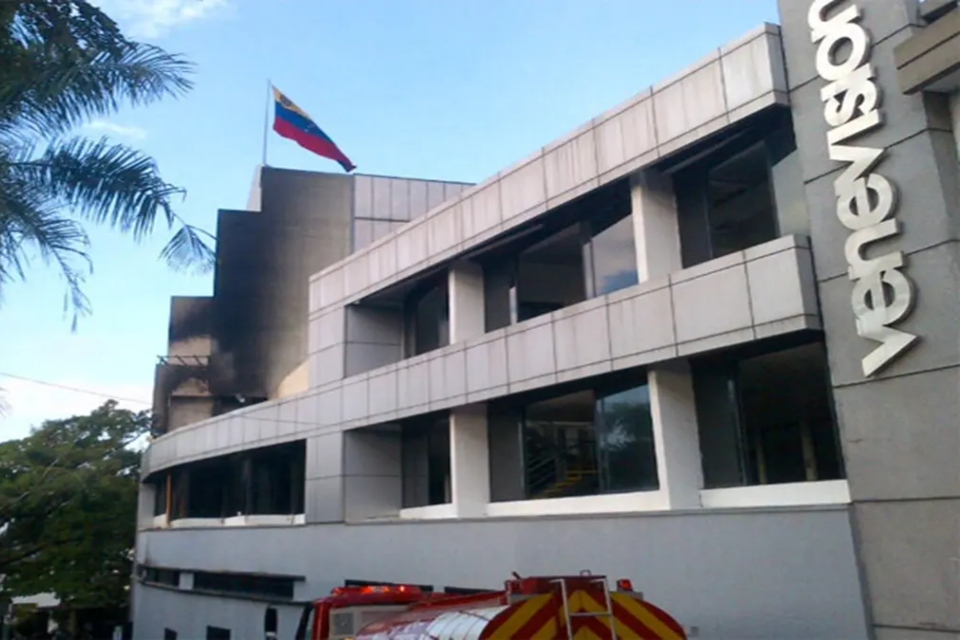
The National Union of Press Workers (SNTP) of Venezuela denounced this Saturday the 31st that the private channel Venevisión was removed from the open digital television system (TDA) and satellite television (FTA), which affects “many users” in the country.
On social networks, the SNTP explained that the TDA system is implemented by the state-owned Cantv, while the FTA is managed by the National Telecommunications Commission (Conatel). These are “test mechanisms” that “allow better definition and modernization of national TV.”
“With the suppression of the Venevisión signal in these systems, especially the FTA, many users in different regions of the country were left without watching the channel because the cable companies that operate in those places took the satellite signal,” the union organization warned.
In addition, he shared a video in which two journalists from the channel inform the audience that for “reasons unknown to them,” the Venevisión signal has not been present in these systems since January 29.
#SNTPAlert | Venevisión denounced this #30Jan that its signal was taken from the grid of national channels that are offered for free on the open digital television system (TDA) and satellite television (FTA).
These are digital solution systems implemented by Cantv, in… pic.twitter.com/4Cd7ERUulz
— SNTP (@sntpvenezuela) January 31, 2026
The SNTP recalled that the Minister of the Interior, Diosdado Cabello, made reference to Venevisión last Wednesday, after reviewing the statements of the opposition leader María Corina Machado, after meeting with the Secretary of State of the United States, Marco Rubio.
Hair, in your program ‘With the hammer giving’read a letter from the so-called “cooperating patriots” that read: “listen to me Venevisión, listen there: Without media stridency, his figure is diluted. Without headlines, it simply disappears,” in reference to the Nobel Prize winner.
After Cabello’s threat, the National College of Journalists expressed his rejection “of the pressures and threats from high officials against Venevisión.”
In a message on social networks, they emphasized that information is a right guaranteed in the Constitution, so “threatening a media outlet for doing its job and putting pressure on self-censorship to prevail” violates constitutional rights.
*Journalism in Venezuela is carried out in a hostile environment for the press with dozens of legal instruments in place to punish the word, especially the laws “against hate”, “against fascism” and “against the blockade.” This content was written taking into consideration the threats and limits that, consequently, have been imposed on the dissemination of information from within the country.
Post Views: 28