Colombia not only stands out for its large cities and traditional tourist destinations, it is also home to small towns with less than a thousand inhabitants that preserve their history, culture and tranquility intact.
News Colombia.
Far from noise and mass tourism, there are tiny towns in Colombia that surprise with their beauty, heritage and quality of life. From Santander to Boyacá and Antioquia, these destinations offer unique landscapes,
Also read:
Colombia is a country full of contrasts, cultural diversity and surprising landscapes. Beyond the big cities and traditional tourist destinations, there are small towns in Colombia with less than a thousand inhabitants that preserve calm, history and an authentic beauty that makes them unique.
These municipalities, little known and with a low urban population, are ideal for those seeking quiet tourism, contact with nature and genuine cultural experiences.
Below, we present a tour of some of the smallest towns in Colombia that deserve to be on your travel list.
Jordán, Santander: the smallest town in Colombia
Located three hours from Bucaramanga, Jordan, Santanderis considered the smallest town in Colombia. Its urban area has barely 54 inhabitantsdistributed in 36 houses and more than 10 families. This municipality is nestled in the majestic Chicamocha Canyonsurrounded by the river of the same name.
One of its main attractions is the Lengerke Suspension Bridgebuilt in 1864 and recognized as the first toll in the country. Furthermore, Jordan is the gateway to the historic Royal Road of Bucaramangaa stone path ideal for lovers of hiking and history.

Tutazá, Boyacá: colonial architecture and indigenous heritage
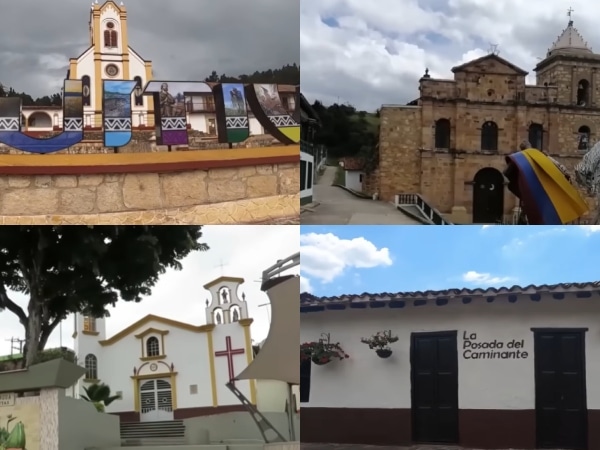
With about 260 inhabitants in its urban area, Tutasa It is one of the smallest towns in Boyacá. Its name comes from the indigenous chief Tutasúa and its charm is reflected in its colonial architecture and peaceful atmosphere.
In the center of the municipality is the main squarewhere a monument to Simón Bolívar and the church of Our Lady of the Starkey points for those who enjoy cultural tourism in Boyacá.


Tununguá, Boyacá: the world capital of soursop
Four hours from Bogotá is Tununguáa colorful town with barely 342 urban inhabitants. It is known as the soursop capital of the worlda fruit that is widely cultivated in its rural area.
The municipality is distinguished by its murals, the Fruit Park and an important archaeological find: more than 60 indigenous pieces approximately 700 years old, discovered in 2016, which gives it a high historical value that is not widely known.


Cuitiva, Boyacá: Muisca history and landscapes of Lake Tota
With around 345 urban inhabitants, Cuitive It combines indigenous history, religious architecture and natural landscapes. Before colonization, it was Muisca territory and today it preserves that legacy in its monument to Bochicalocated in the main park.
In front of it is the church of the Lord of Miraclesdeclared a National Historical Monument. Furthermore, its proximity to Tota lakethe largest in Colombia, allows you to enjoy viewpoints and water activities.


Santa Bárbara, Santander: murals, cool climate and nature
This Santander municipality has about 404 inhabitants in its urban area. Santa Barbara It is characterized by its colonial houses, colorful murals and a main park surrounded by pine trees.
In its surroundings there is the Rainbow Spaa natural attraction with waterfalls and natural pools, ideal for those seeking ecological tourism and relaxation.


Olaya, Antioquia: wine, history and the Cauca River
with just 434 urban inhabitants, Olayain Antioquia, is a quiet destination surrounded by the Cauca River. From the historical Western Bridgebuilt in 1895, you get privileged views of the landscape.
Its greatest tourist attraction is the Villa Sicilia Vineyardinternationally recognized for the quality of its wines and for offering guided tours and tastings, a rare experience in Colombia.


Almeida, Boyacá: lagoons, waterfalls and rural life
Almeida It is located 1,925 meters above sea level and has about 451 urban inhabitants. Its economy revolves around agriculture and dairy production.
Among its attractions are its lagoons for hiking and bird watching, the Los Potreros waterfall and the La Esmeralda reservoirwhich offers panoramic views and direct contact with nature.