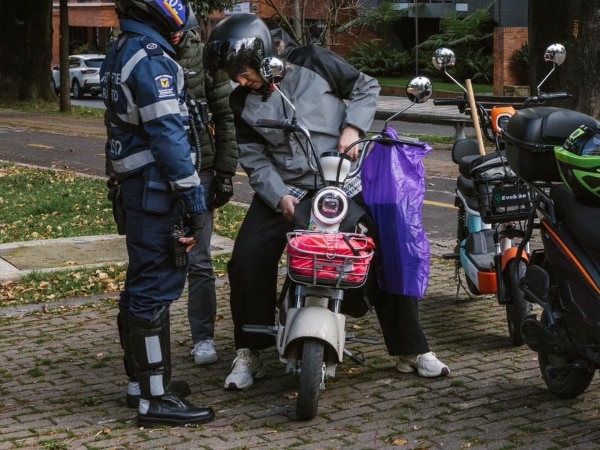
With Law 2486 of 2025, rules were established for the circulation of these vehicles in cyclorrutas and authorized roads.
News Colombia.
The rise of Scanes, scooters and electric bicycles It has transformed mobility into several cities in Colombia. More and more citizens are opting for these light vehicles to avoid traffic, reduce costs and mobilize sustainably. But, given its deregulated use and the growing conflicts on the road, the country already has a regulation that seeks to put order and guarantee the safety of all road actors.
However, its growing popularity has also generated discussions about road safety and coexistence with pedestrians, cyclists and motor rates. Before this panorama, the past July 17, 2025the president Gustavo Petro sanctioned the Law 2486a regulation promoted by the senator Julio Alberto Elías Vidalwhich seeks to order the use of these vehicles under a clear legal framework.
What regulates Law 2486 of 2025?
The law officially recognizes Light vehicles of urban personal mobilitydefined as those for individual use, with a weight less than 60 kilos, a power that does not exceed the 1,000 watts and maximum speed of 40 km/h.
Among them are:
- Electric bicycleswhich attend the user while pedaling and reduces physical effort.
- SCOOTERS AND ELECTRIC SCAINETSthat work agilely in short distances.
- Electric mopedsused especially in urban tours.
These vehicles, according to the law, can only circulate in Cyclorrutas or, in his absence, by the Right lane of the roadalways respecting pedestrians and cyclists.
Basic standards of use
The new regulation establishes specific conditions that users must meet:
- Have a minimum 16 years To drive.
- Wear safety helmet and, at night, garments retroreflective.
- Do not travel on sidewalks, platforms or pedestrian areas.
- Respect speed limits: 25 km/h in cyclorrutas and 40 km/h on allowance.
- Caring lights: Blanca forward and red behind.
- Do not drive under alcohol or psychoactive substances.
In addition, it is forbidden to transport another person, except in vehicles designed and authorized for it.
Fines and sanctions
Failure to comply with these standards can be expensive. The law includes fines of up to Six (6) current legal minimum wages (SMLDV)in addition to the vehicle immobilization In severe cases such as circular without a helmet or driving in a state of drunkenness.
Infractions include:
- Transmit on sidewalks or pedestrian areas.
- Exceed speed limits.
- Do not wear helmet or reflective garments.
- Transport objects that affect visibility or safety.
With this regulation, Colombia seeks to promote more sustainable and safe transport alternatives. Although the law does not require registration, SOAT or driving license for these vehicles, it does establish clear rules that seek to reduce risks and guarantee a better coexistence in public space.
For many citizens, this measure represents an advance in urban mobility, but also generates questions about the ability to control and pedagogy by traffic authorities.
https://www.youtube.com/watch?v=ka2admcgro4
You can also read: