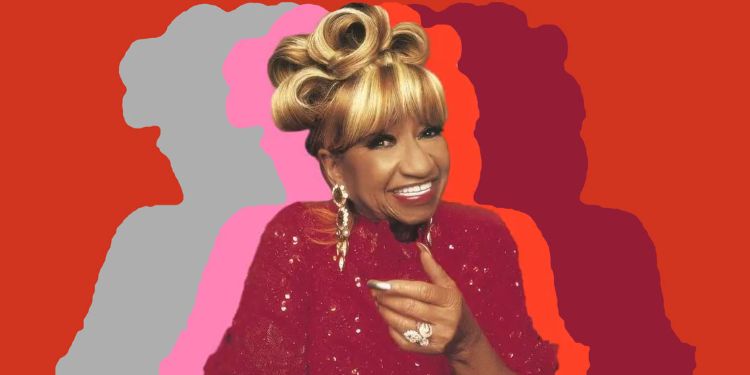
The list of Cuban artists forced into forced migration, or subjected to ostracism to this day would be endless.
HAVANA.- Fidel Castro’s revolution, which seemed like the end of a dictatorship, very soon became the beginning of another with a markedly totalitarian profile. The nationalization of foreign companies and small private businessess, as well as the dismantling and control of cultural institutions, media, recreational centers, religious and union societies, caused the exodus of countless forced immigrants, including many artists.
The owners and workers who opposed state intervention or the closure of their work spaces were forced to emigrate due to the impossibility of obtaining jobs related to their vocation or professional profile, under the siege and control of the new authorities.
It was necessary to adapt to the “order, command and obey”. Abuses of power, blackmail, whims and acts of arrogance surfaced in all labor sectors of the country, to condition permanence or access to a job on unconditional obedience to the regime, converted into a kind of maquiladora where the only employer was the State.
In that sense, the culture sector has been the most affected. And also one of the best-known cases, because it is made up of people with greater visibility due to their presence on radio and TV through music, theater and dance.
With all the recreational or cultural spaces where they usually performed before 1959 closed or under total control of the regime, thousands of artists and art and cultural workers were forced to carry out “voluntary work” and perform in sugarcane camps, farms, military units, penitentiaries and other places to endorse their humble character and unconditional loyalty to the State.
The artists who refused to participate in these humiliating proletarian crusades saw their employment contracts end, their faces disappear from television, their voices disappear from radio programs, and the press stopped mentioning them. Given the magnitude of the ostracism to which they were subjected, they had no other alternative but to go into exile.
If in the first years of the communist regime, a singer as renowned as Celia Cruzthe Guarachera of Cuba, was forced into exile for refusing to sing for Fidel Castro in a private space. In the following decades, these conflicts increased and, consequently, the imposition, for non-work reasons, of measures that violate the right to work.
In those fateful 60s and 70s, Castro’s totalitarianism restricted, with all the punitive means at its disposal – including imprisonment and forced exile – the freedom of association, expression and creation of Cuban artists, writers and intellectuals, who were retaliated not only for refusing to replicate the official discourse, but also for their sexual orientation or religious beliefs.
The closure of the cultural supplement “Lunes de Revolución”, the Editorial El Puente, the Guiñol Nacional, as well as the confiscation of the documentary PM, the Padilla Case and the Parameterization, cast a shadow over Cuban culture and left hundreds of artists and writers unemployed for racist, homophobic and ideological reasons.
Renowned creators such as the writer Guillermo Cabrera Infantethe filmmakers Orlando Jiménez Leal, Sabá Cabrera Infante and Nicolás Guillén Landrián; the poets José Mario Rodríguez, Ana María Simo, Heberto Padilla and Belkis Cuza Malé, and the Camejo brothers (from the National Guiñol), among others, were censored, banned for life or sent to prisons, asylums or exile.
The list of Cuban artists forced into forced migration, or subjected to ostracism to this day, would be endless if technicians, assistants, scriptwriters and other workers in the sector who have suffered the same fate and for similar reasons as those mentioned above were included.
More than six decades after the first events that forced thousands of Cuban artists and creators into exile for denying them the right to work, the situation does not stop, but rather worsens, as is happening in the cases of the actor Ulises Toirac and the writer Jorge Fernández Era, just to mention the best-known cases.