Madrid/A sepulchral silence has surrounded the death of the renowned neurologist and professor Néstor M. Pérez Lache, a famous figure in Cuban and recognized revolutionary medicine. The circumstances of his death, after launching the bridge of Santa Catalina and Vento, in Havana, could be behind the low visibility that his death has had.
The news has been confirmed by the Facebook profile lovers of the FAR (Armed Forces), which announced the loss this Wednesday. “The Medical Services of the FAR, the Central Military Hospital Carlos J, Finlay and the Cuban neurology are mourning. With the heart sorry, we announced the death of Dr. Néstor M Pérez Lache, flagship professor of our institution and a colossal figure of national medicine,” they lamented in a lowly shared post in some related pages.
“Not only do we lose a doctor; we lose an era of Cuban neurology. He was not simply a colleague, it was an institution. His name will be forever inscribed with gold letters in the history of Cuban neurology, thanks to his multiple and innumerable scientific contributions,” the text continues. His facet as a pedagogue also stands out, since, he adds, “more than a teacher, it was a guide and a mentor whose passion for neurology was contagious.”
“Not only do we lose a doctor; we lose an era of Cuban neurology. He was not simply a colleague, it was an institution”
In the post, where condolences to the family and loved ones are sent, there is talk of how their legacy will last in future generations, especially from their investigations.
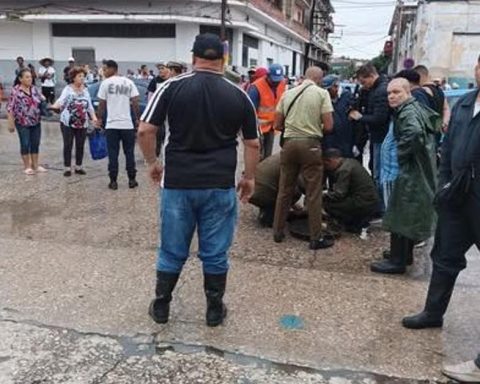
Nothing in the message presages the cause of death, which has been disclosed in social networks. On Tuesday, early in the morning, a striking emergency and police operation caught the attention of the neighbors. “Does anyone know what happened on the bridge (elevated) of Vento and Santa Catalina? There was a body covered already and the police in the place. I passed at 7:30 am and was already,” asked a user on Facebook.
In similar terms, a Havana was expressed that responded to a post of condolences of also Dr. Héctor Bayarre. “I live in the vicinity and I saw the police movement and the rumors that he was an advanced medical, but never imagining that he was the teacher. What a shame,” he said.
The silence of the Ministry of Public Health and other authorities has been eloquent. Dr. Pérez Lache was an eminence in his specialty and he himself defined himself as “son of the revolution”, since he belonged to the first promotion of medical students who graduated with Fidel Castro in power, – who appeared, in fact, at the ceremony, in the Cuba Pico, in Sierra Maestra, in 1965 -.
This circumstance was frequently claimed by him, since his family did not belong to an intellectual or university class: his father was driving a bus and his mother was a housewife. According to his biography in Ecured – La Wikipedia Cuban – was an only son because his mother wanted to pay her studies.
Pérez Lache graduated in the School of Medicine, after spending a season in the Armed Forces. Subsequently, he was informed that instead of going to a rural area as a doctor he would continue his specialized studies. Thus, he entered the National Institute of Neurology and Neurosurgery and completed his training in 1970 in Japan, with a course at the University University, in Tokyo, where he deepened his knowledge about Parkinson’s disease.
In 1971, he was transferred to the Military Military Hospital Doctor Carlos Juan Finlay, for his status as a military, where he was the only neurologist at the time. At the end of that decade he was part of the group of scientists who conducted medical research of the joint space flight between Cuba and the then Soviet Union, conducted in 1980. His studies explore the tactile threshold, very relevant to the pilots, and hence the neurodynamic method is arising, a neuropsychological clinical method created by him and with whom he obtained his second doctorate.
In 1986 he was granted, therefore, the scientific degree of Doctor of Medical Sciences. In addition, he has traveled abroad on numerous occasions to represent Cuba in congresses of his specialty, while giving classes of the central nervous system at the School of Stomatology.
Prize to scientific merit for the work of a lifetime, the reasons that led him to such a sad ending, but, in the midst of speculation about a possible incidence of labor overload in their guild, some nearby people have asked to stop speculating and use their death with partisan motifs.