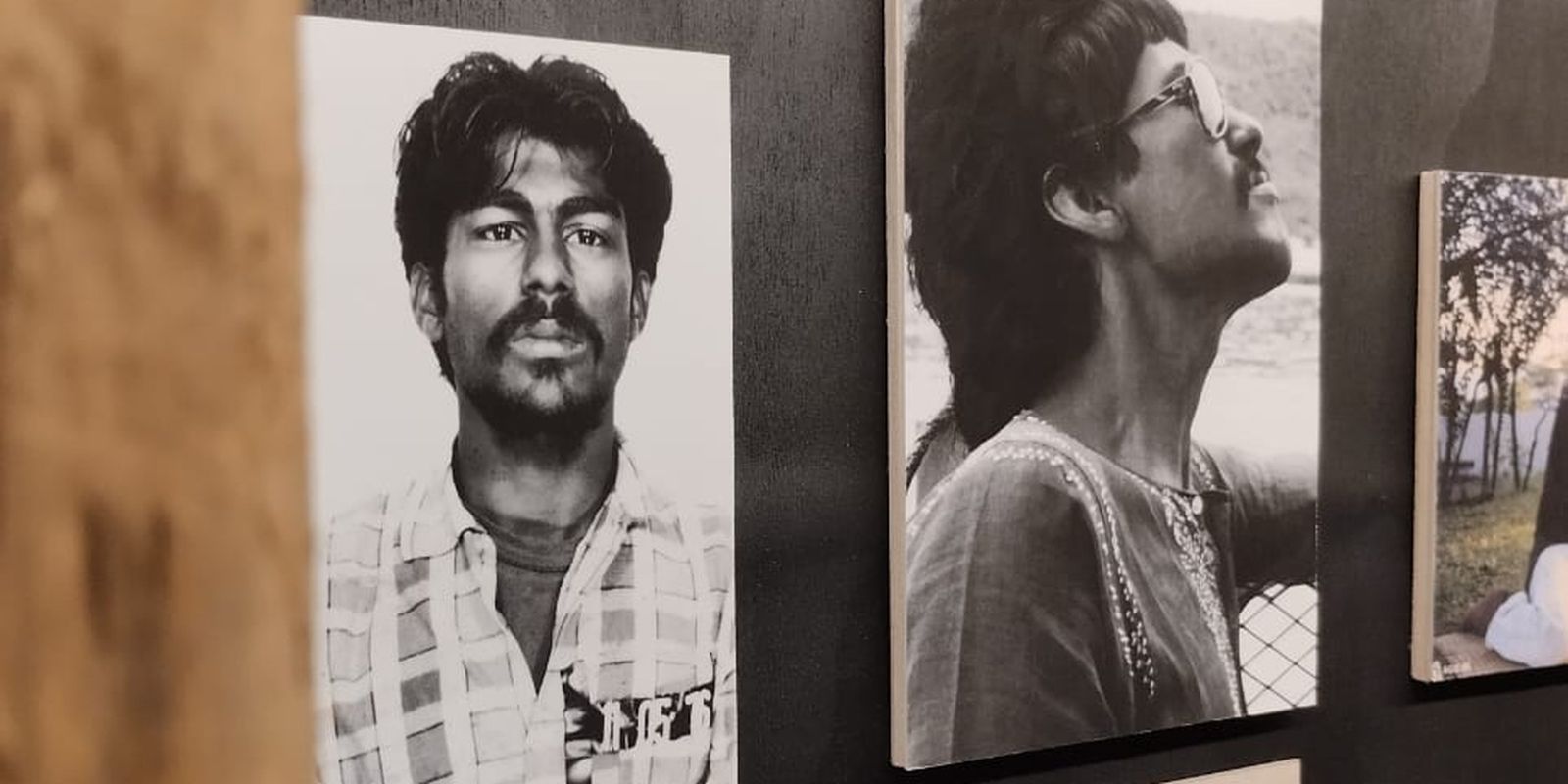
Unpublishedly, Itaú Cultural, in São Paulo, honors an indigenous person through its occupation project. The chosen one is Ailton Krenak, with his singular militancy. 
Indigenous leadership, which turned 72 on September 29, recalls that there is no separation between the human being and the environment.
Ailton Krenak gained even more prominence by painting his face with Jenipapo ink at the 1987 Constituent Assembly in protest to Amerindian rights violations. Visitors of the show will also have access to a Krenak without the aura of fame, sitting in front of a desk. The miner was became immortal by the Brazilian Academy of Letters, in October 2023.
The occupation totals more than 90 pieces, including photos, videos, newspaper clippings, notebooks, drawings – some of which are excited and displayed to the sound of Ailton’s calm voicepaintings, classic and haic poems.
Behind the scenes, for the exhibition to materialize, a team of three women’s professionals: the artist and indigenous rights activist Moara Tupinambá and the Integrative Therapist and cultural producer Ingrid Tupinambá, the journalist, writer and cultural producer Angela Cappioni and writer, actress, illustrator, director of film and theater Rita Carelli.
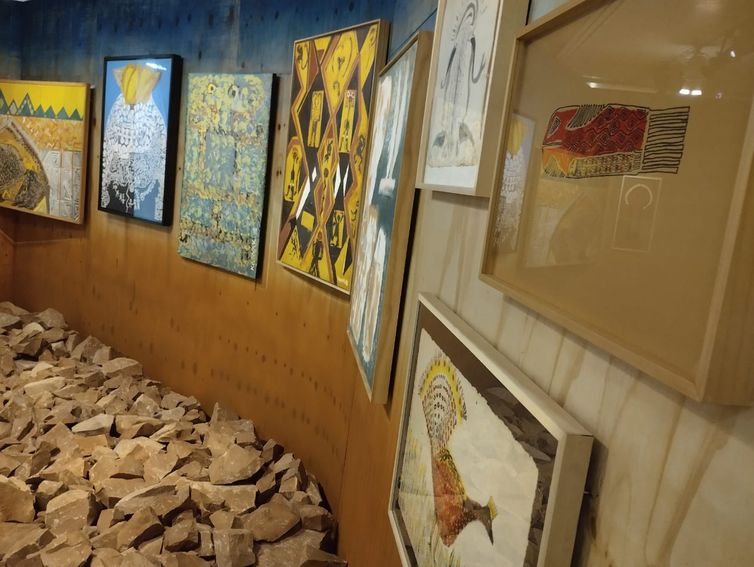
Occupation Ailton Krenak, from Itaú Cultural, honors indigenous people for the first time. Photo: Lettycia Bond/Agência Brasil
Ailton’s works are available to be flipped. Poet and writer, he is also present in children’s literature, with the book Kuján and the Sabida boys, who tells the story of the meeting between the Creator, coming to Earth in the form of an anteater, and his human creatures.
One of the photos eternalizes moments shared by him and Ní Krenak, his companion in everyday life and resistance. Another, moment of strengthening connections between his daughters Maira Poppiani Lacerda and Inimá Poppiani Lacerda, he and leader Yanomami Davi Kopenawa, in 1987. Long before the process of Yanomami indigenous land, in 1995, his exchange with the Yanomami population that lives in the portion in Roraima.
Visitors may also have contact with Ailton’s visual arts works. One of the paintings, from 1998, was created to be reproduced as the cover of the book Forest Voiceswho speaks of the unionist and rubber tapper Chico Mendes.
Ailton also illustrated the book by establishing foot in the territory: indigenous theme in schools, and writing it.
“The people originating from the state of Minas Gerais are known to many as hostile, brave, barbaric. Like all other indigenous peoples, we go through the so -called ‘righteous wars’ – name given to the violent process of dominance and invasion of our territories. There is no other word: invasion,” says Lidiane Damaceno Krenak in the show’s dissemination folder.
About one of your Makiãma term that refers to leadership, she further states: “Our relative had a difficult walk, away from her land. He learned from the non -indigenous people, filtered everything with her warrior soul and turned this experience into a form of struggle, by her people and many others that, throughout the colonization process, were almost extinct in body and memory.”
Lidiane still remembers the numerous battles faced by Krenak throughout her militancy.
“He slept in square benches, ate harsh bread and cold lunch boxes with other warriors, and, alongside them, fought for the demarcation of our territory, so that our rights were guaranteed and respected. He never forgot his origins. From a young age, even living in another land, he never stopped seeking his roots,” she says.
“A painful story, from which he took strength to return and fight the floor he treads today. With a broken heart, he still walks to the edge of the old Watu [nome dado pelos krenak ao Rio Doce] To talk to him, listen to the silence of the soul the answers that relieve the ills of life and ask for direction not to make a mistake. “
The Krenak occupation continues until November 23rd at Itaú Cultural in São Paulo, with free admission.
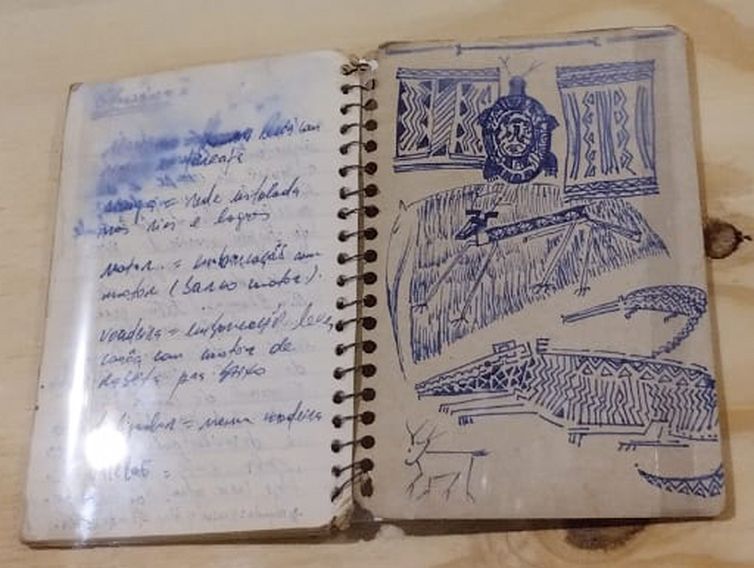
Occupation Ailton Krenak, from Itaú Cultural Photo: Lettycia Bond/Agência Brasil