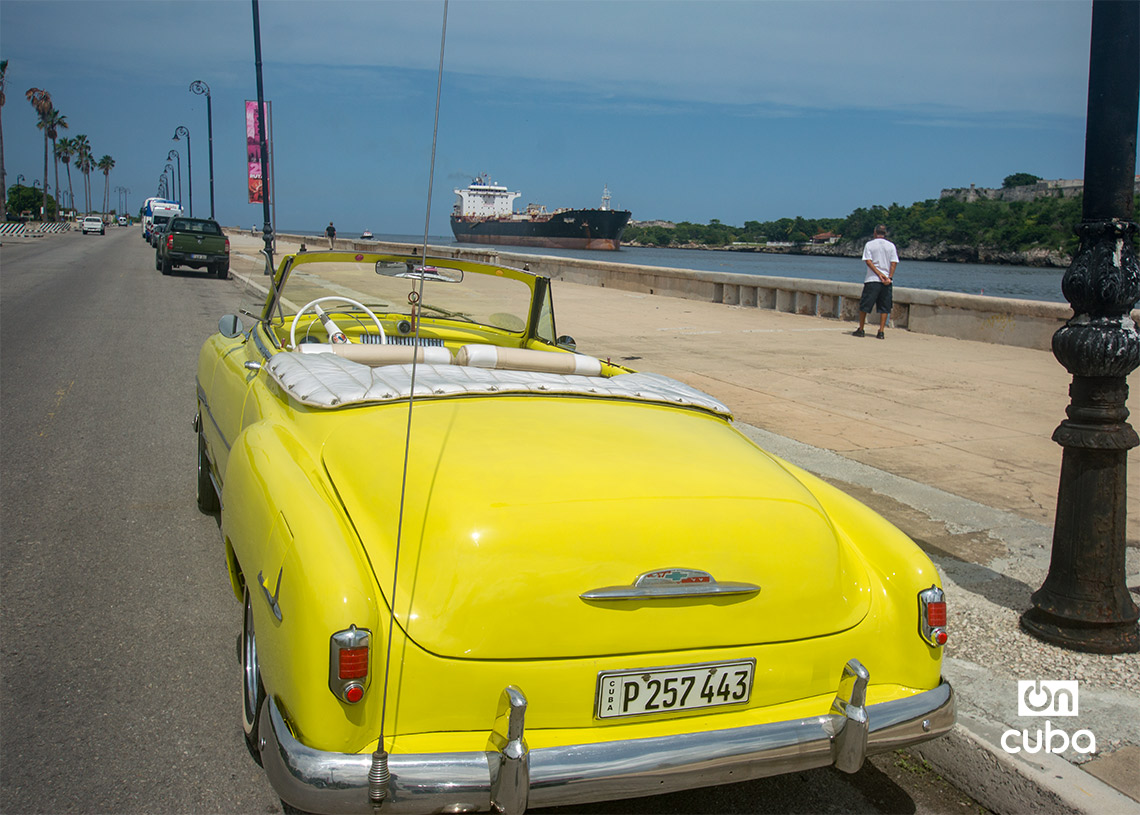
A ship with 330,000 barrels of russian crude oil It arrived on the northern western coast of Cuba as part of that country’s support for the Caribbean island that is going through a serious energy crisis, according to data from the Energy Institute of the University of Texas (USA) provided to EFE this Wednesday.
This is the Jasper oil tanker, sanctioned by the European Union and the United Kingdom, which is adrift 15.7 nautical miles (about 29 kilometers) north of Matanzas Bay (western Cuba), according to ship tracking data from the Energy Institute.
“The Jasper, sailing under the flag of Vanuatu, set sail from the Black Sea on approximately November 14, 2025. Based on its draft, the vessel is fully loaded with approximately 330,000 barrels of oil,” the source said.
This would be the third ship to arrive in Cuba in less than a week after the previous two sent by Mexico at a critical moment for the Caribbean island, which suffers power outages of 20 or more hours a day in large areas of its territory.
The country has suffered a deep energy crisis since mid-2024 due to the frequent breakdowns of its obsolete power plants and the lack of State currency to acquire the fuel necessary for its generation units.
In just twelve months, the national electrical system has suffered five total collapses and several partial ones.
Crisis relief
These 330,000 sent by Russia would somewhat alleviate the island’s one-day crude oil deficit. Cuba needs around 110,000 barrels for its basic energy needs, of which about 40,000 come from national production.
According to the National Office of Statistics and Information of Cuba, 60% of the fuel consumed on the island is imported. And of the total that the country needs, 65% is to feed the country’s thermoelectric plants.
Meanwhile, independent studies indicate that about half of Cuba’s fuel needs are covered thanks to the import of crude oil from Venezuela, Mexico and, to a much lesser extent, Russia.
Analysis by the Energy Institute and other similar centers, Venezuela had contributed around 50,000 barrels per day to Cuba in recent years, but since 2024 the average volume has decreased to between 10,000 and 30,000. Neither Caracas nor Havana make this data public.
Good night with bad energy forecast: 1990 MW deficit during peak hours
However, the US naval deployment off the Venezuelan coast and the decrease in shipments from Mexico (from an average of 22,000-25,000 barrels per day to approximately 5,000) have led the island to its current extreme situation.
The announcement by US President Donald Trump of a naval blockade of the sanctioned oil tankers of the ghost fleet threatens to aggravate the situation for Havana.