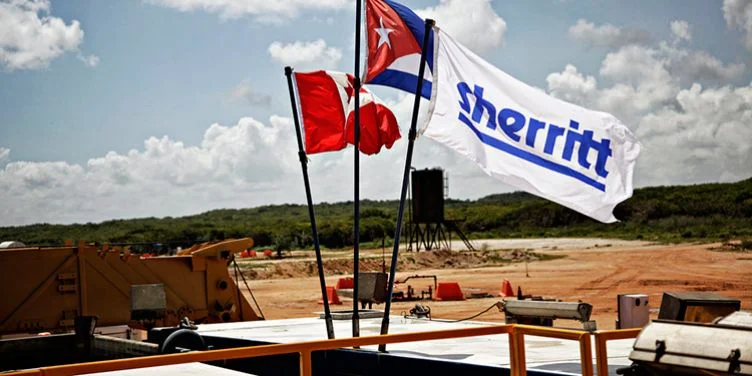
MIAMI, United States. – The Canadian mining company Sherritt International Corporation announced in a statement the reduction of its operations in Moa, Holguín, due to the fuel shortage on the Island. In addition, the company assured that it plans to pause its processing plant “in the next week”, a period that it will take advantage of to carry out planned maintenance.
In its operational update, the company said it had received notification that “the fuel deliveries planned for Moa will not be met and the schedule for resuming them is unknown at the moment.”
Sherritt said he is “actively engaging with relevant counterparts” and evaluating “all options” for input.
The company said that, for now, there is no immediate impact on its Fort Saskatchewan, Canada, refinery, which continues to produce nickel and cobalt for sale, and that available feed inventory would allow it to operate “until approximately mid-April.”
The company also indicated that the operations of Energas SA – its energy business in Cuba – continue “as planned” and “without impact.”
In the same statement, the company said it is evaluating options to sustain operations and prolong production in Moa and Alberta, while applying measures to preserve and maximize liquidity, including expense management and exploring possible sources of temporary financing; and added that it hopes to update its guidance by 2026 when it has greater certainty about the supply chain and timelines for fully resuming operations at Moa.
Until the fall of Nicolás Maduro, the island’s regime covered most of its energy needs with supplies from the South American country and Mexico, one of Havana’s main energy allies. However, the Aztec country suspended fuel shipments to the island following the presidential decree launched by Donald Trump earlier this month to impose additional tariffs on products from countries that supply crude oil to the Cuban regime.
In this way, the largest of the Antilles has entered an unprecedented energy crisis.
This Monday, transcended that Havana would have allowed private companies to import fuel in an attempt to alleviate the serious crisis facing the country.
Sources consulted by Martí News They assured that diesel shipments were already being made in isotanks from different countries. “About 24,000 liters can be transported in each isotank and delivery is made in the port of Mariel directly to consumers,” indicated one of them.
Isotanks are cylindrical stainless steel containers mounted within a rectangular structure with standard dimensions, which allows them to be transported on ships, trucks or trains under the same logistics as a conventional container. Specialists cited in the report pointed out that this format allows for fractional and more discreet shipments than traditional shipments in large tankers.
last week transcended that the United States would be considering sending small amounts of fuel to Cuba—gas for cooking and diesel to keep the hydraulic infrastructure running—with the aim of avoiding a humanitarian crisis.
the british magazine The Economist He also noted that the White House does not seem willing to go that far and, instead, hopes that the fuel shortage will force the Cuban government to sit down to negotiate. Until now, Cuban officials have rejected the idea that there is any substantive progress and have indicated that the talks have been preliminary. They have also reiterated that, although they are open to dialogue, they will not modify their communist one-party system.