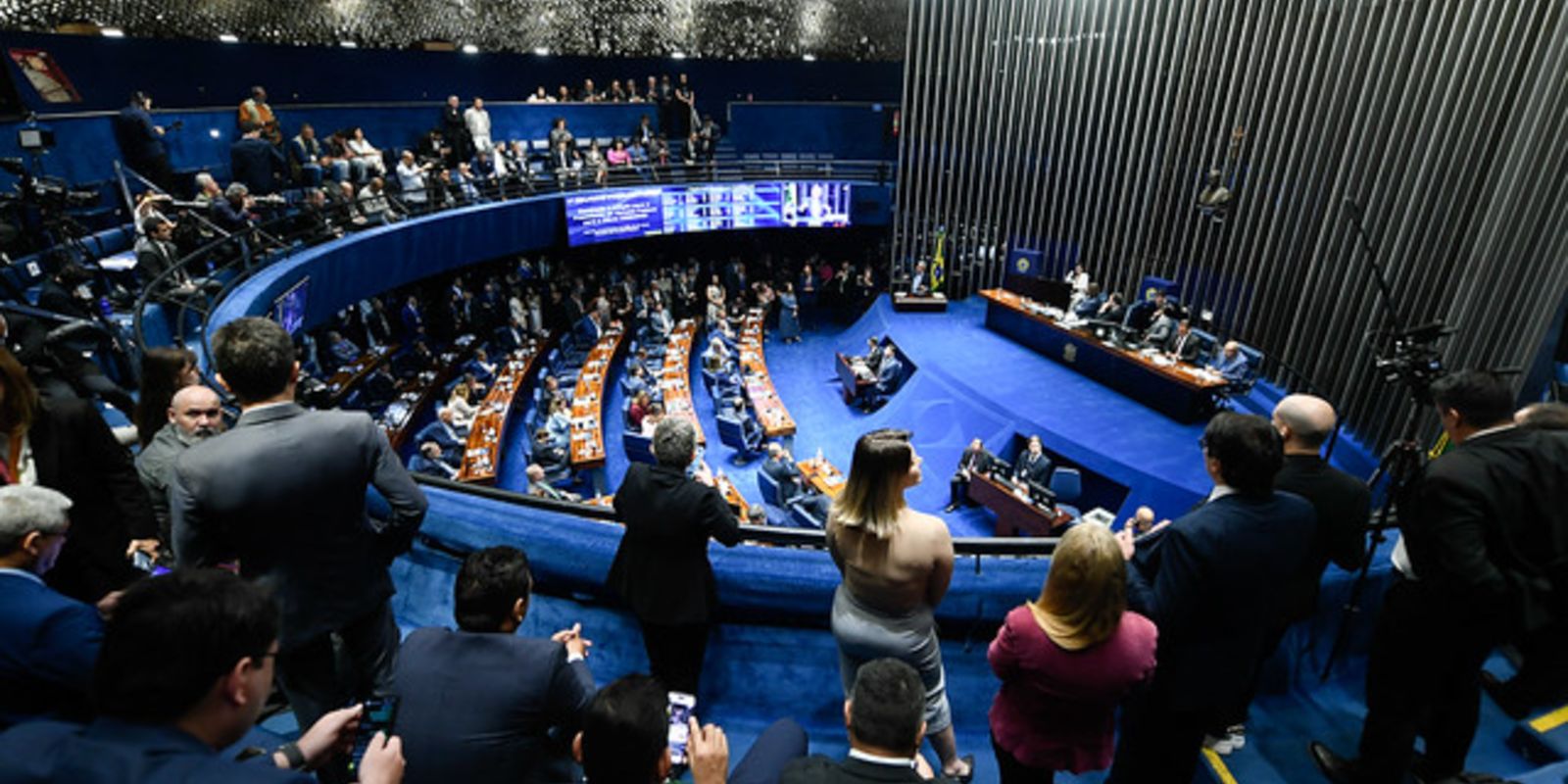
Politicians condemned to ineligibility by Clean Record Law (Law 134/2010) They are forbidden to dispute elections for a maximum of 8 years from the conviction. Is what defines the Complementary Bill 192/2023 Approved this Tuesday (2) by the Senate Plenary by 50 votes to 24. Now the text goes to presidential sanction.
The project anticipates the beginning of time counting to serve the sentence and unifies in 8 years the period of ineligibility, with a limit of 12 years in case of multiple convictions, even in different processes, and prohibits the possibility of more than one conviction for ineligibility in case of actions filed by related facts.
The period of 8 years of penalty will be counted from:
- the decision that decrees the loss of the mandate;
- of the election in which abusive practice occurred;
- the condemnation by collegiate body; or
- of renunciation of the elective position.
In practice, deadlines reduce the time of loss of political rights.
Currently, in the case of lower electoral offenses or administrative misconduct, ineligibility lasts throughout the term and 8 years after the end of the term in which the politician was convicted, which may extend for more than 15 years.
For more serious crimes, it is worth the current rule, in which the 8 -year ineligibility period begins from the end of serving the sentence.
Among these crimes are against the public administration, the money laundering or concealment of goods, drug trafficking and related drugs, racism, torture, terrorism, crimes against life, against sexual dignity, committed by criminal organization, gang or pack.
For the project rapporteur, Senator Weverton (PDT-MA), “it is not reasonable for us to allow ineligibility to be ad eternum”, but maintaining the rule for serious crimes helps preserve “the main spirit of the Clean Record Law”.
Authored by Deputy Dani Cunha (União-RJ), daughter of former Deputy Eduardo Cunha, revoked in 2016, the text also defines that the changes should apply to cases of ineligibilities already defined, not just for the next convictions.
Senate President David Alcolumbre supported the bill.
“I make a point of this modernization, this update of the legislation of the Clean Record Law to give the spirit of the legislator when voting on the law. Ineligibility cannot be eternal! It is in the text of the law: 8 years. It cannot be nine or twenty,” he said.
Parliamentarians contrary to the project understand that it would be a weakening of the legislation.
“The Spirit of the Clean Record Law is that those who have been punished with ineligibility stay for two elections out of the election. With this law that we are approving now, no one, for electoral crime, will be more for two elections outside the election, because it is being extended, to the date of diploma, the measurement of the 8 years of serving the penalty, which I understand is an anomaly,” said senator Marcelo Castro (MDB-PI).
* With information from the Senate Agency