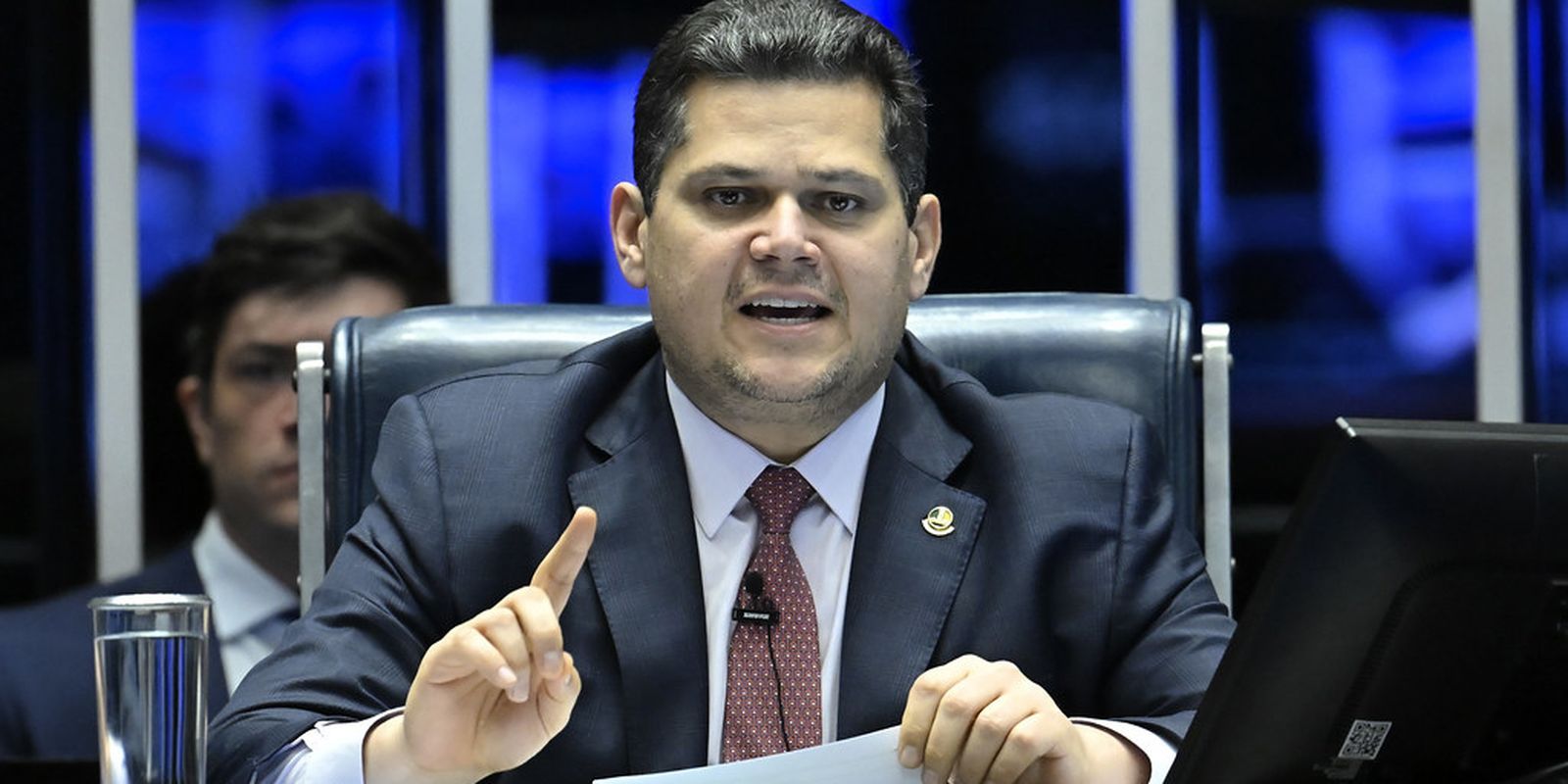
The president of the Senate, Davi Alcolumbre (União-AP), removed this Tuesday (21) from the voting agenda the bill for Complementary Law (PLP) 168/25which establishes mechanisms to reduce the impact of tariffs applied by the United States to Brazilian exporters.
The basic text of the project was approved on September 24th and two highlights of the text still need to be voted on. Alcolumbre argued that the withdrawal from the agenda occurred due to the low quorum in the plenary presence. To approve or reject the highlights, a minimum of 41 votes was required. Of the 81 senators, there were 53 present at the session.
“The presidency, ex officio, removes the matter from the deliberation agenda, due to the very low quorum for deliberation”, announced Alcolumbre, stating that the measure was taken with the agreement of party leaders.
“It turns out that, with 53 senators present, it will be difficult for all those who defend the highlight to reach an adequate quorum, and this presidency will be demanded by those who defend or are against the highlight on the appropriate quorum”, he explained.
The project had already been on the agenda previously, but was also not voted on due to the quorum. The president of the House committed to putting the project back to a vote once again, during an in-person session, which should take place in November, as, next week, the sessions will be semi-in-person.
>> Follow the channel Brazil Agency on WhatsApp
Project
The measure was forwarded by the federal government and provides for around R$30 billion in loans and tax waiversto contain the socioeconomic effects of the additional 50% tariffs applied by the President of the United States, Donald Trump, on Brazilian products. Around 700 exceptions have been established by the American government.
According to the justification of the project, authored by Senator Jaques Wagner (PT-BA), taxation reaches what corresponds to 36% of the total value of products exported to the North American market in 2024 ─ around US$ 14.5 billion ─ and can “generate losses to companies in production chains present in all regions of the country and put the jobs of millions of workers at risk”.
The senator, who is also government leader in the Senate, agreed to postpone the vote.
“Effectively, asking for 41 votes out of 53 present is bad. The matter is important, it is government assistance for those who were affected by the United States tariffs”, he said.
According to the project, these expenses and tax waivers will not be considered in the primary result targets set out in the Fiscal Responsibility Law and in the expense limits set out in the New Fiscal Framework.
Furthermore, the project will help to make the Provisional Measure (MP) 13/2025which established the Brasil Soberano program. The measure still depends on a vote in the National Congress.
Announced by President Luiz Inácio Lula da Silva, on August 13the resources will be contributed to the Export Guarantee Fund (FGE) for credit at affordable rates. Priority is given to companies that do not have alternatives to exporting to the United States, depending on revenue, type of product and company size.
Small and medium-sized companies will also be able to use guarantee funds to receive credit, and access to the lines will be conditional on maintaining the number of jobs.
Senator Rogério Marinho (PL-RN) criticized the project, arguing that the measure is not exceptional to be removed from the tax expenditure limit.
“The government needs to show our creditors that we will honor our commitments. We, here in the opposition, voted in favor of the bill, but we cannot agree that at all times the government, which voted here for the fiscal parameter process, the framework, wants to exceptionalize these resources at all times under the pretext that this is exceptional”, he said.