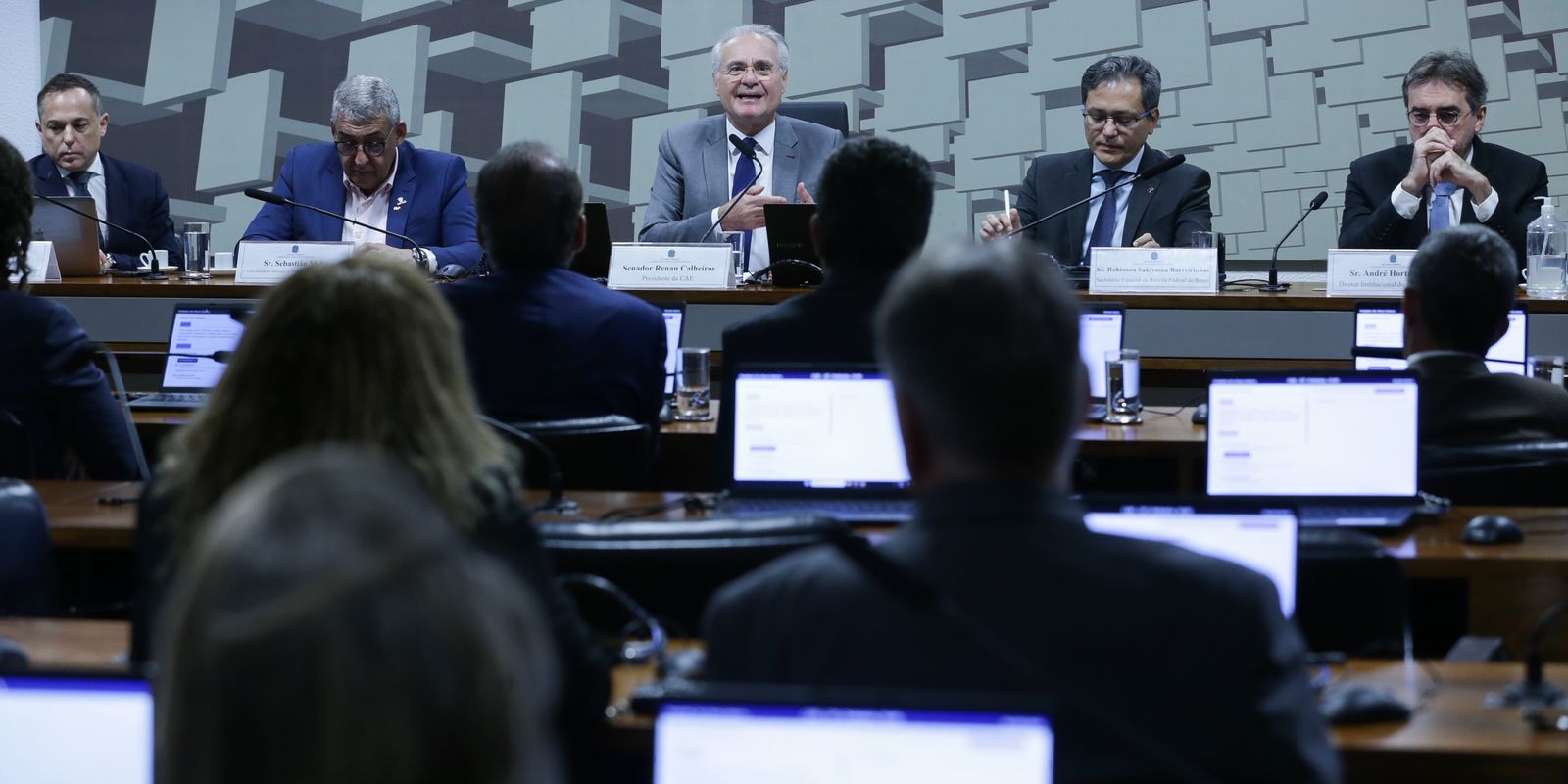
Unanimously, the Senate Economic Affairs Committee (CAE) approved, this Wednesday (5), the Executive bill (PL) which exempts workers who earn up to R$5,000 per month from Income Tax (IR). The measure also gradually reduces income tax for those who earn between R$5,000 and R$7,350.
The text goes to the Senate plenary with a vote expected this Wednesday. If approved, it goes to presidential sanction. If sanctioned by the end of the year, the IR reduction will take effect from January 2026.
Currently, anyone earning up to two minimum wages (R$3,036 per month) is exempt from IR.
The government estimates that around 25 million Brazilians will pay less taxes, while another 200,000 taxpayers will see some increase in taxation.
>> Follow the channel Brazil Agency on WhatsApp
The CAE rapporteur, senator Renan Calheiros (MDB-AL), rejected the 11 amendments presented, claiming that the measure could delay the sanction of the project and postpone, to January 2027, the start of the new rules.
“All we don’t want is for it to return to the Chamber of Deputies. Given the short deadline and the recent processing history, the atypical processing in the other house of the National Congress, sending the matter back to the initiating house represents, without a doubt, a fatal risk. We would undoubtedly frustrate the population that is anxiously awaiting this relief in their domestic budgets, denying benefits to millions of workers next year”, explained Renan.
The rapporteur recalled that the legislation requires that tax changes be made in the year before the one applied, which requires that the topic be sanctioned by the end of this year.
To compensate for the loss of revenue, the project provides for an extra progressive rate of up to 10% for those who receive more than R$600,000 per year, or R$50,000 per month. The text also establishes taxation for profits and dividends remitted abroad at a rate of 10%.
Opposition
Rapporteur Renan Calheiros’ decision not to accept changes to the text from the Chamber of Deputies was criticized by the opposition, which would like to see its proposals analyzed.
“We are going to put the Senate’s fingerprint here. We are the reviewing House, we cannot lose this function and be afraid to exercise this function”, criticized senator Carlos Portinho (PL-RJ).
The senator criticized the taxation of independent professionals who become legal entities (PJ) and who will have to pay on profits and dividends.
“The legal entity will pay and the self-employed professional will pay when they receive their dividends, is that really what they want? Are these the super rich? They are not”, he complained.
In the report, Renan Calheiros pointed out that the cases of independent professionals who will have to pay the tax will be “residual”. “As a rule, self-employed professionals with an income of R$1.2 million per year pay IRPF above 10%. If they do not pay, they will be subject to minimum taxation”, he explained.
Rich
The maximum extra rate of 10% will be charged to those who earn from R$1.2 million per year, or R$100 thousand per month. The 10% taxation on dividends sent abroad provided for in the Executive’s original project was also maintained.
Dividends are the portion of profit that companies pay to shareholders and, since the 1990s, they have been exempt from income tax. However, the Chamber established three exceptions to the collection of dividends: when remitted to foreign governments, as long as there is reciprocity of treatment; remittances to sovereign wealth funds and remittances to entities abroad that administer social security benefits.
The proposal also provides for compensation mechanisms for possible losses in Income Tax collection for states and municipalities and the Federal District.
According to calculations, the federal government will achieve, between 2026 and 2028, a revenue surplus of around R$12.27 billion, an amount that should be used to compensate, if any, losses in states, the Federal District and municipalities due to the reduction in Income Tax collection levied on the income of its own employees.
Check out information about approval on Repórter Brasil Tarde, from TV Brasil