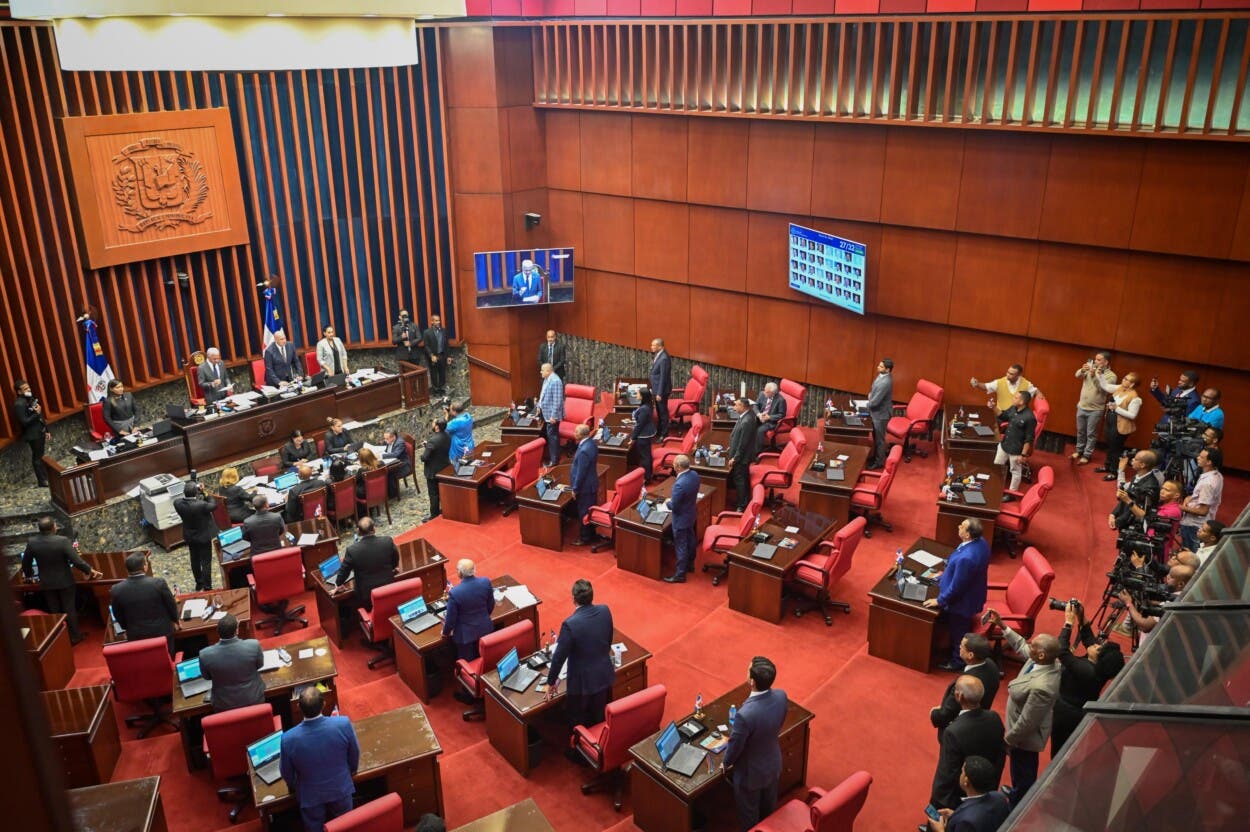
Santo Domingo.– The Dominican Senate approved on Thursday, in the only reading, the 64 modifications introduced by the Chamber of Deputies to the organic law that institutes the new Criminal Code of the Dominican Republicthus marking a legislative milestone after more than 25 years of debates and studies in the National Congress.
With 26 votes in favor of the 27 senators present, the piece was accepted in the first session of the extraordinary legislature, consolidating a structural transformation of the Dominican criminal system.
This approval represents a transcendental step for the update of the legal framework in criminal matters, by establishing more severe sanctions for complex and emerging crimes, such as terrorism, sicariato, feminicide, genocide, forced disappearance, war infractions, chemical attacks (devil’s acid), among other crimes of high gravity.
You may also be interested:
The new Criminal Code also includes novel provisions such as the accumulation of sentences – with a maximum limit of up to 60 years in prison -, the penalty of bullying and its aggravated form, induction or cooperation to suicide, and the criminal responsibility of legal persons for crimes such as reckless or commercial attacks against children and adolescents.
At the beginning of the session, the president of the Senate, Ricardo de los Santosexpressed his pride in the work of the National Congress, while recalled that the period of Vacatio Legis It will allow to introduce new proposals for modification before its entry into force.
Of the saints also thanked the legislators, the judicial system, the Bicameral Commission, to technical advisors and the social sectors that contributed to the advance of this reform, considered one of the most anticipated and debated in the last decades.
The initiative was presented to Plenary by Senators Ramón Rogelio Genao, Alexis Victoria, Félix Bautista, Cristóbal Castillo, Jonhson Encarnación, Moisés Ayala, Guillermo Lama and Odalis Rodríguez.
With this approval, the Dominican Republic takes a decisive step towards a more effective, equitable and adjusted criminal system to the challenges of contemporary crime.