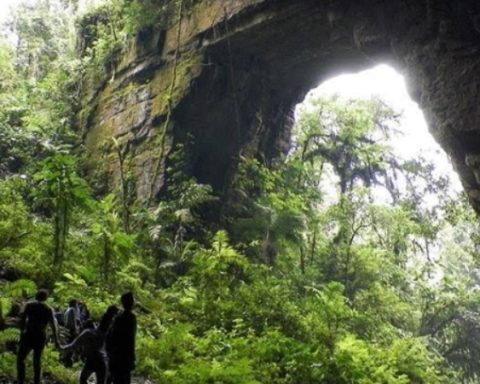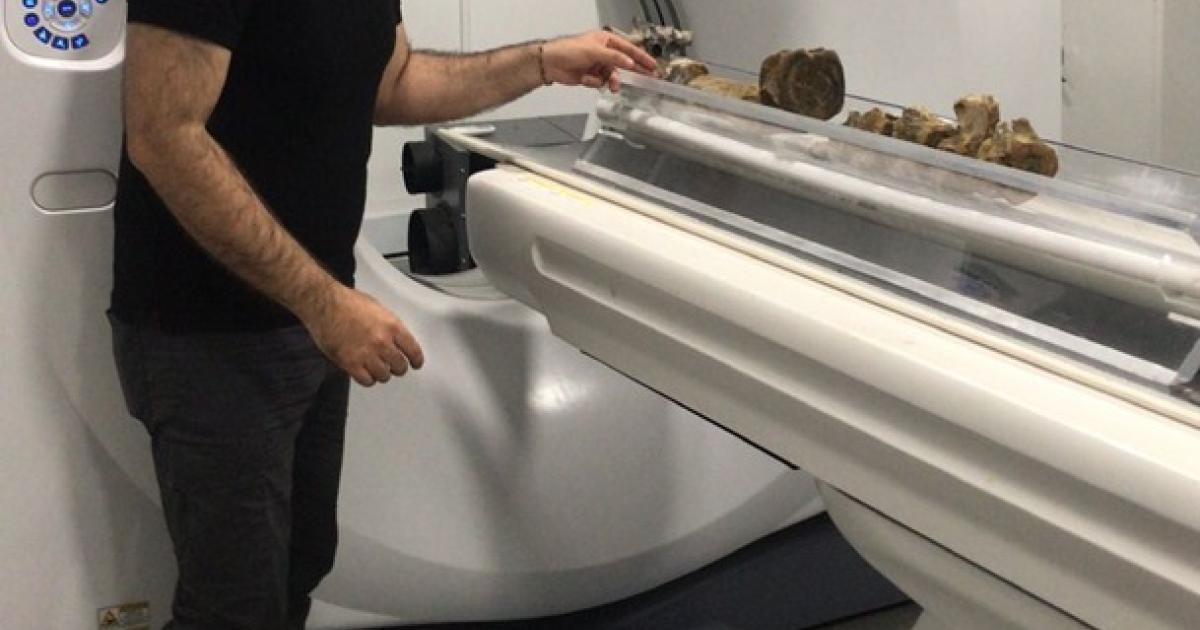
In the Zapatoca region, Santander, a pliosáurido vertebra of 135 million years was discovered.
A paleontological discovery in Colombia will allow to expand knowledge about the great marine predators of the Early Cretaceous.
This is a team of national and international researchers documented the finding of a fossil vertebra of Pliosáurido In the Zapatoca region, Santander, with an estimated age of 135 million years.
According to researchers Javier García Guerrero (Agricultural University Foundation of Colombia – Uniagraria) and Edwin Alberto Cadena Rueda (University of the Rosario), together with the collaboration of investigators and international institutions such as the Smithsonian Tropical Research Institute (Panama) and the Field Museum of Natural History (United States), the fossil comes from the white pink formation (Late Valanginiano, Late Cretaceous, CREDIAL CRED.
Loading …
Read more: Renovation of the driving license: how often it should be done and key requirements
The age of seniority of this fossil vertebra of Pliosáurido of approximately 135 million years, makes it the registry older of this species reported so far in Colombia.
This study expands the known distribution of pliosáuridos in northern Gondwana and provides key information to understand the evolutionary history of these reptiles during the transition from the Jurassic to the Cretaceous.
The study, entitled Evidence of Large Pliosaurids in the Late Valanginian of Colombia, was accepted for publication in Cretaceous Research magazine (Elsevier, Q1).
According to scientists, Pliosáurids were large marine reptiles that occupied the top of the trophic chain in the tropical seas, feeding on fish, turtles, hibodontid sharks, ichthyiosaurs and even smaller plesiosaurs.
“The vertebra recovered in Zapatoca corresponds to a large specimen that inhabited during the Late Valanginiano, an early stage of the Cretaceous.” One of the scientists said.
He stressed that until now, Pliosáuridos fossils in Colombia had only been found in Villa de Leyva, Boyacá, in the Formation of the straw, with ages close to 115 million years.
“The new finding of Zapatoca is, therefore, 20 million years older, which makes it the earliest record of these reptiles in the country.
It may interest you: 2026 elections: Uribismo and Radical Change confirm ‘Opposition Summit’
For Javier García Guerrero, “the discovery of a vertebra of a great marine predator in Zapatoca is the oldest evidence of these reptiles in Colombia and expands its presence in northern Gondwana. This new fossil shows that the tropical marine ecosystems of the early cretaceous Pliosáuridos in the transition from Jurassic to Cretaceous ”.
He stressed that the finding not only expands the geographical and temporal distribution of the pliosáuridos in the continent, but also provides key information to reconstruct the evolutionary history of these reptiles and the dynamics of marine ecosystems in northern Gondwana, more than 100 million years ago.
The scientists said that this new fossil adds to the growing list of discoveries that position Colombia as a Key territory to understand the evolution of life on the planet.
“Zapatoca vertebra represents a window to the remote past, when the seas that covered the territory were inhabited by gigantic predators who dominated the oceans for millions of years. With this finding, the Colombian paleontology reaffirms their leading role in the study of prehistoric biodiversity and in the reconstruction of the natural history of South America,” he said.
Pliosáurido vertebra of 135 million years, Zapatoca, Santander
Pliosáurido vertebra of 135 million years, Zapatoca, Santander
Source: Integrated information system