The proportion is even lower, than in 2018, the year in which the scholarships of the Prospera program reached a coverage of 17%, according to an analysis of the Institute of Inequality Studies, based on the results of the National Survey of Income and Household Expenses (ENIGH) 2024.
This is the broader coverage drop among priority social programs of the previous government, which generally decreased in that same period, from 34% of households that received some support to 32%.
Household scholarships with lower income
In basic education, the Benito Juárez scholarship only allocated to the homes of the poorest and most marginalized towns. That is why Jana López, Jimena’s mother, accepted that her school, located in the municipality of Ecatepec, in the State of Mexico, was not considered among the priority towns.
However, the children of other neighbors did have the scholarship. According to the program of beneficiaries of the program, 11,067 Ecatepec students were registered in the period from January to June 2024.
“My daughter never gave that support. Even the primary end and they never gave her the scholarship,” he explained through a message.
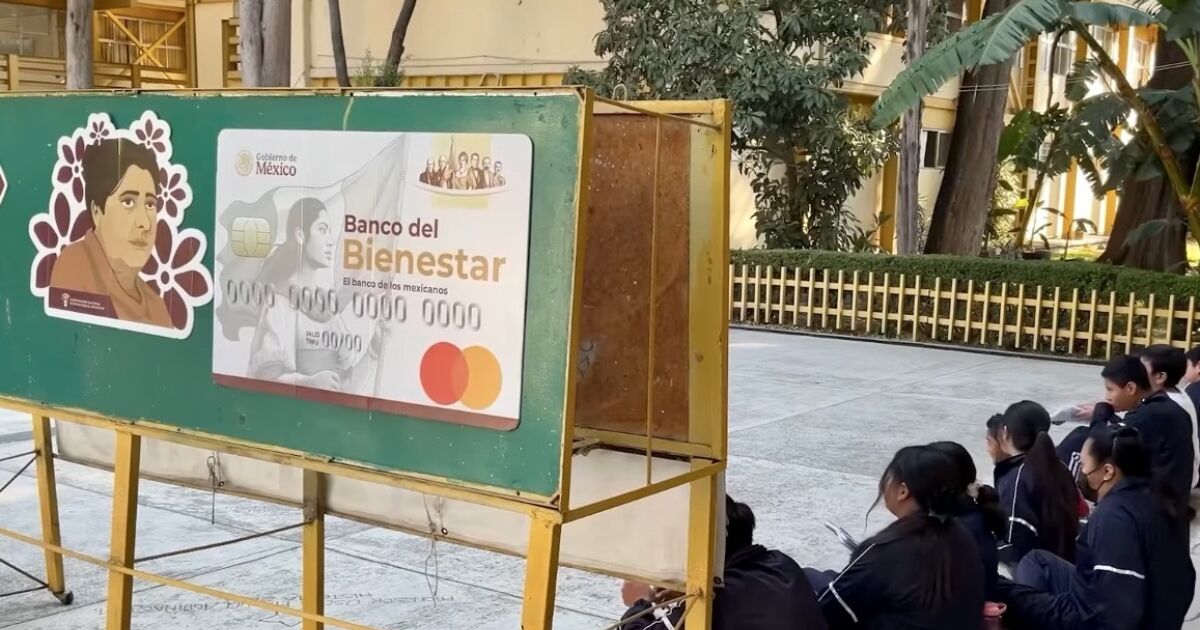
In September, Jimena will begin secondary education. Jana, a 36 -year -old autonomous mother, hopes that at that educational level she will access a scholarship. This happened with his other daughter, Montserrat. Nor did he have a scholarship in primary school, but this year he entered another social program, that of Scholarships Rita Cetina, established by President Claudia Sheinbaun from 2025.
There are some differences between those two supports. The Benito Juárez scholarship replaced the Prospera program and that is why it focused on lower income families. The Rita Cetina scholarship is universal, that is, it seeks to reach all basic education students, starting with those who study high school.
Máximo Jaramillo, director of the Institute for Inequality Studies (INDESIG), is positive for social programs to universalize and reach more homes. But he regrets that his arrival is not reinforced to the poorest.
“For a social program that is supposed to be a right, which is supposed to be in the Constitution, since it is very worrying, being that it is also a very important component of income, especially in the poorest homes,” he explains.
The Rita Cetina program, which will progressively cover all basic education students, started among high school students, but perhaps the convenient would have been to start in the first school grades to prevent students from the poorest families from abandoning school from that level. Many of them do not enter high school.