The work of the future is nothing more than understanding the change in the sectors of the economy, those that will be felt in five years. The Meeting “Trampos do Futuro: Art, Culture and Education” tried to join, in São Paulo, actors and institutions that are in the practice of these sectors in two days of open activities for four thousand elementary, middle and technical students of São Paulo and nearby cities.
“We came to do networking [técnica muito utilizada no mundo corporativo para desenvolver negócios e construir uma carreira]see how is the proposal of activities and what may have interesting for our professional future, “said 18 -year -old Giovana Midori, who takes a programming course on the Proa Proa, at Lapa. She and Friends, Luana And Rafaella, arrived at the end of the event, on the afternoon of the 20th, when part of the activities was ending.
For Rafaella Santos, 20, the most interesting thing was to follow the ideas and discussions, as they managed to follow some of the lectures. And of course, they were enchanted by a robot dog, remote control, part of the state -of -the -art technologies displayed to participants.
The event featured practical robotics workshops, promoted by the Social Service of Industry (Sesi), media workshops, with teams from the Kondizilla Institute and discussion spaces promoted by partners such as the Geledés Institute. Part of the space was also dedicated to the preparation of work curricula, with practical presentation tips, as well as a small opportunity fair with some of the institutions that supported the best style of internship fairs.
Dialogues
“A youth event for young people talking, where we could bring them something that may be outside the universe of most of them, which is how the new economies are organizing, where there are new work fronts. So, so, What can you do in terms of work? . Challenges and everything else are you who will create. “, explained Ana Inoue, superintendent of Itaú Educação e Work, arm of the Itaú Foundation that organized the activities.
It has shown a realistic view that there is not much practical condition to change the fact that most young people will not do higher education for lack of access or interest, and that this need not necessarily be a problem.
For Inoue, the main issue is around the new axes of production, such as the economies of care, environmental and creative, covering areas ranging from health to local production, with natural products, and the entire range of cultural activities that can be explored. Part of them was demonstrated with some of the trained by the Kondizilla Institute recording a podcast Live, in a kind of continuous coverage and pairs for the meeting.
Universe of Culture
“We seek to make this bridge between the universe of culture, creative economy and entertainment and the universe of social, economic and especially young developmental development, the expansion of opportunities for young people. Here at the event we created an immersion experience in creative careers, so we have chat with professionals of peripheral origin who stand out today in the creative economy and a podcast being recorded in real time that we call Young cast. They are young people who have recently graduated as content creators and are producing young people to young people, interviewing executives, speakers and guests, “said João Vitor Caires, founder and executive director of the Kondizilla Institute.
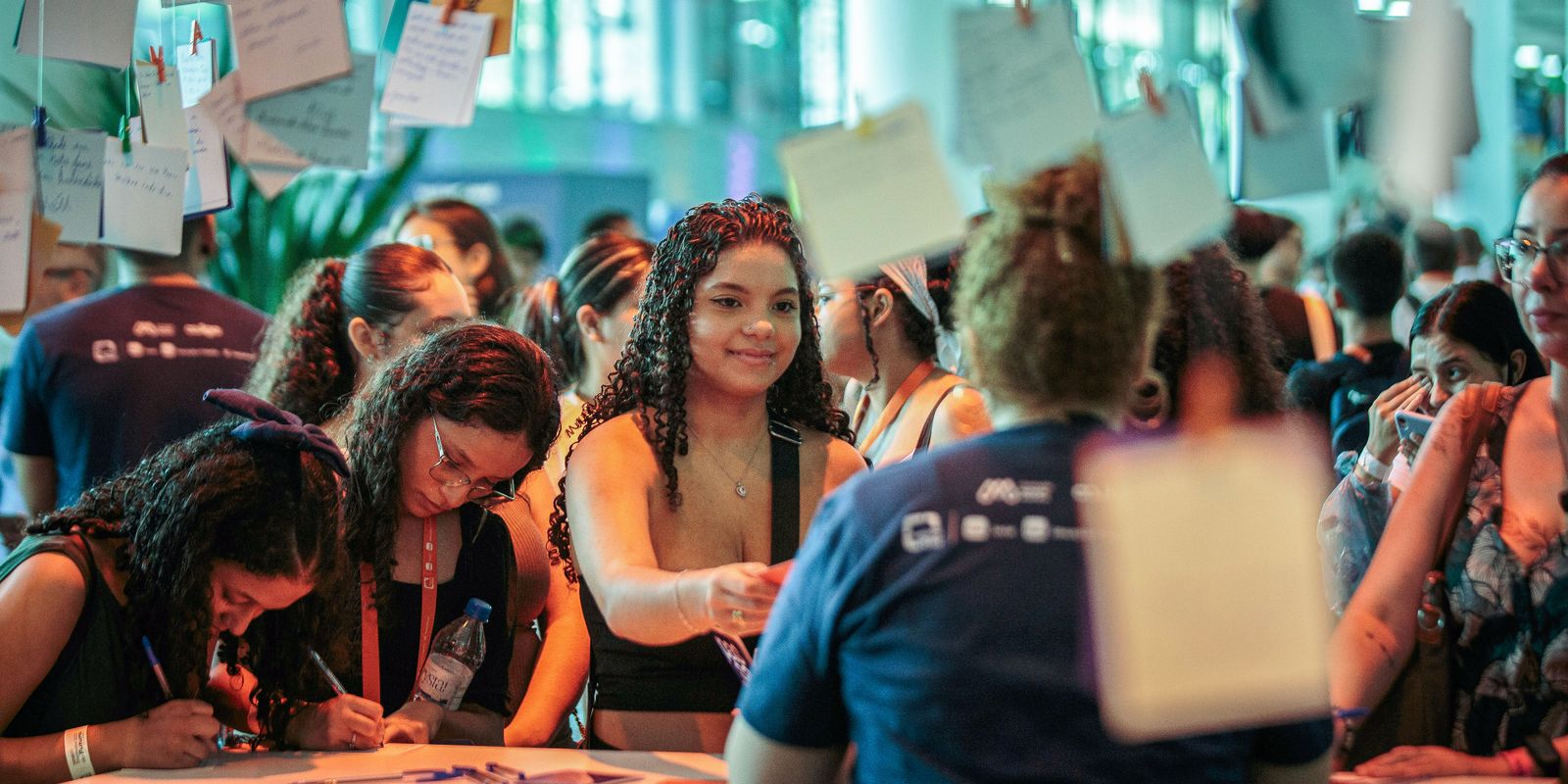
Students also found a tree -shaped structure in the middle of the biennial, a building that hosted the activities. Who presented this structure was Rebecca Câmara, 21 years old, student of performing arts and assistant production at the meeting.
THE Tree of Tomorrowso baptized, it brought together several tickets in which those who passed there recorded what they wanted to do and what they expected of the future. They wrote about family. “I really want a family and I want to have a present father. My mother raised me solo, I am the daughter of a solo mother. And then, young people who come from where I came from, we look in the mirror, it’s like a mirror. And then I say, they can go elsewhere, “he explained, thrilled.
Rebecca participated after applying in a coalition platform notice, which offers free, short and practical courses. The promotion is from the Roberto Marinho Foundation. Besides mediating the activities of Treethe artist also explained about the platform and guarantees: she and her generation are very fond of studying, but have some difficulty with repetitive content, and platforms like this understand it and put the content differently, something more dynamic with strategies like polls, forums, podcasts and videos combined with content.
Breno Piros and Caio Guedes, 17, students of the Development Course Softwareaccompanied panels and activities. Although they felt a lack of a clearer and more interconnected course of activities, they liked the workshops and got excited. “The lecture was interesting, although I had the idea that it would be closer to my interests, deeper in my area,” said Breno.
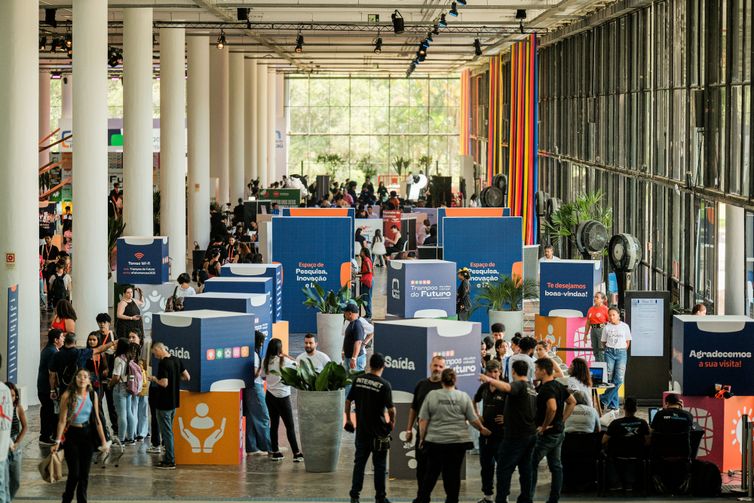
Robotics, media workshops and discussion spaces brought together four thousand people in São Paulo – Ophelia Agency/Disclosure
“I really enjoyed an artificial and robotic intelligence course applied to mental health, a tool to value simple acts, such as smiling, from programming. It has many interesting ideas,” said Caio.
Willingness to learn
“The young man’s desire to learn is huge. They are wanting the conversation, they are talking. We open the questions [nas oficinas]. What are the doubts you have? What do you want to know? There is a minute of shyness and then they come with very interesting questions and a great desire to give testimony. To speak, Look, I wanted to say that I lived it. In the matter of mental health, several young people opened their hearts and went out things. The importance that this had, the service work that the school itself offered? “, Said Inoue. The meeting was built from research with young people of these partner institutions, who opined about who would like to see and what interested them. The same way, the Itaú Foundation and the other institutions that composed the event intend to continue, not only with a new meeting, which intend to open to more participants in the coming years, but providing lectures and other content that were part of the two days of programming.
“The starting point, now, is understanding that taking care of our youth is to take care of a commitment that Brazil needs to have with this kids. It is taking care of the gift of this country for us to have an even more inspiring future. What I have to Doing now? It’s not expected to grow up, it’s now. so that the next year we can do greater, and longer in the period of days and maybe in more states, “he explained to Brazil agency Eduardo Saron, president of the Itaú Foundation.
Imagined future
Some of the event, besides the memories and animation of young people, was consolidated in a “youth letter about their future imagined”, consisting of an overview of the contributions of the tree, and summarizes what they try to pass on what they organized to its four thousand guests:
“We believe that youth can contribute to the realization of these dreams and utopias, if they have the opportunity to be protagonists of their own lives. We know that when these conditions are made available, young people are fully able to evaluate what is offered and formulate proposals relevant.
Schools, companies, and various institutions could create spaces for interaction and listening to young people so they can bring suggestions. Exchange spaces, knowledge sharing and ideas are also an opportunity to promote diversity.
Finally, paraphrasing some of the dreams of Tree of Tomorrow: Dear future, we look forward to you! We think of you every day and expect all the best and the best. We will not let the fear of making mistakes prevent us from achieving our dreams and a more egalitarian, more respectful and welcoming society! We wish a future full of joy and peace for us! “