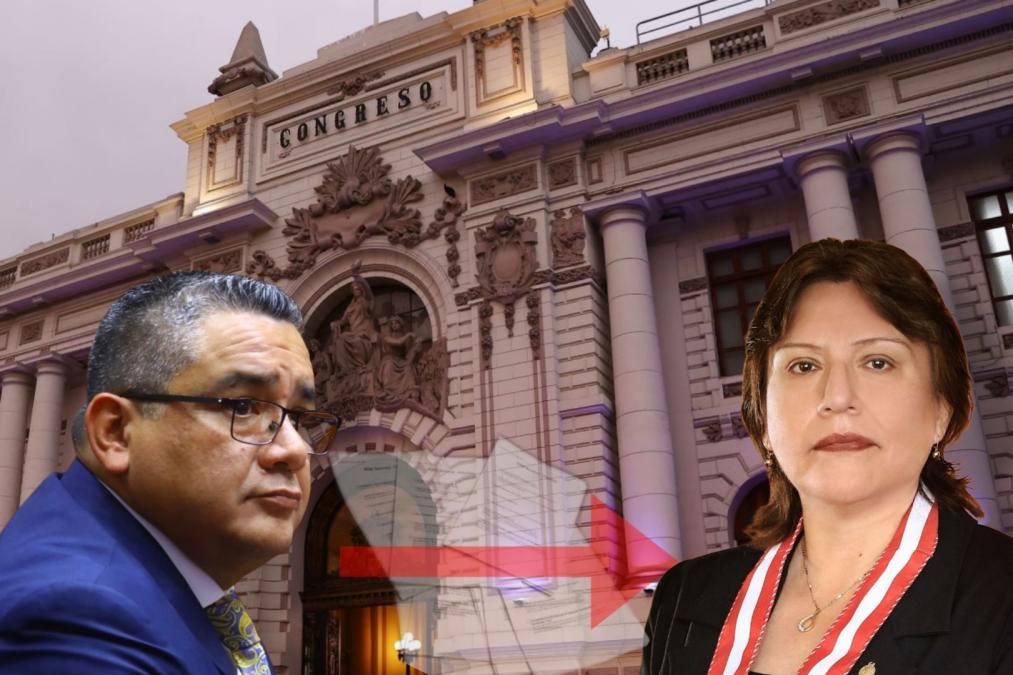
Shock of powers. In less than a week, Interior Minister Juan José Santiváñez made a constitutional complaint against Delia Espinoza, the prosecutor of the Nation.
The accusation stands on the alleged constitutional infraction and an abuse of authority that, if proven, could mark a before and after in the current relationship between the Executive and the Judiciary.
The complaint, filed before the subcommission of constitutional accusations of Congress on Monday, February 17, is an act loaded with implications.
Santiváñez not only questions the actions of the prosecutor, but goes beyond, requesting his disqualification for a period of 10 years, a strong blow that could move it away from the exercise of its public function in case it is given course.
The thread of the accusation is weaved based on a recent incident that involves the National Board of Justice (JNJ).
The head of the Interior had already filed a complaint against Espinoza a week ago, when the prosecutor demanded, under a pressure of 48 hours, access to his Icloud account to obtain cell phone information that he had previously delivered formatted. An order that has unleashed a whole judicial storm.
The constitutional appeal, more than a simple act of denunciation, becomes a crossroads between legality and the supposed abuse of power.
Santiváñez believes that the prosecutor’s request exceeds his powers, and it is this perception of abuse that has led him to file the complaint.
The decision adopted by the subcommission of constitutional accusations could not only alter its professional future, but also reconfigure the dynamics of power in the judicial and political sphere in Peru.
Recommended video