Although the MINSAP does not include Santiago de Cuba among the provinces most affected by arboviruses, on the street reality rebels against the official reports.
SANTIAGO DE CUBA. – Although the official reports of the Ministry of Public Health (MINSAP) do not include Santiago de Cuba among the provinces most affected by arboviruses (these are Havana, Matanzas and Cienfuegos), the reality experienced by neighborhoods and hospitals in the province is different. Every day serious patients arrive with high fever, dehydration, respiratory problems or other conditions, even more serious, due to their comorbidities.
Every day people die who could be saved if there were enough resources. The discrepancy between official figures and local experiences reveals a saturated and violated health system, while the epidemic advances.
On November 17, Valery Rodríguez, a three-year-old girl, was admitted to the North Children’s Hospital (known as “La ONDI”) in critical condition due to a respiratory crisis. He needed mechanical ventilation, his only hope. The available equipment, however, did not work. For hours, medical staff manually supported the little girl’s breathing, a heroic human effort that could not replace an actual ventilator. Valery’s heart could not resist. In the first instance, the news of his death was shared on the social networks of his relatives and in the WhatsApp group of the Faculty No.2 of Medicine of Santiago de Cuba, to which CubaNet had access.
Three days later, on the night of Wednesday, November 20, passed away Little Sheila Sinai Escobar Puente, one year and two months old, was in the same hospital. Allegedly, the little girl arrived at the emergency room with fever, vomiting and diarrhea. The doctor on duty determined that he had moderate dehydration, which is why he was given a 30% dextrose solution. After the medication, Sheila was discharged, but soon her family had to take her to the hospital again, this time with quite severe metabolic shock, which became critical and irreversible.
The fact that 30% dextrose was used in a case of mild dehydration has raised doubts within the medical community. It has been said that the girl arrived at the hospital with the beginnings of type 1 diabetes, suggesting that she was already showing the symptoms of this disease. However, his uncle, Richard Puente Barreiro, who denounced on his Facebook profile what happened, he declared to CubaNet that except for the vomiting, fever and diarrhea that day, the girl was completely healthy and, consequently, the diabetic ketoacidosis that was diagnosed, as well as the tachycardia and persistent seizures that she suffered, were after the administration of the serum, as an adverse reaction that caused her death.
“On the 17th, they took the girl with vomiting, fever and slight dehydration. They gave her the wrong medication and it caused her death. The girl did not have any type of illness,” explained the minor’s uncle, while stating: “I made the complaint from here, the United States, but my family made one there, which includes a letter to the hospital management. We all want justice,” he said.
So far, neither the hospital nor the Provincial Ministry of Public Health have commented on the matter.
This Friday, MINSAP reported that 79 children and adolescents were in intensive care rooms throughout the country. Of the total of 95 patients in intensive care, there are 77 in serious condition, 63 of them under 18 years of age, and 18 in critical condition, of which 16 are under 16 years of age.
Dr. Francisco Durán, director of Epidemiology at MINSAP, described this panorama as “worrying”: “Be very careful with children, with young people, who are more susceptible,” he asked.
For example, Daisy Lorena Gómez Avillud, a student at Faculty No. 2 of Medicine, originally from Songo La Maya, was hospitalized after experiencing discomfort associated with arbovirus. During his admission, he was diagnosed with myeloid leukemia. Days later, while recovering from the viral symptoms, he reported severe abdominal pain and suffered projectile vomiting of blood. A few minutes later he died, on Thursday, November 13. This case shows how the disease is behaving in a lethal manner even in young and previously healthy people.
Another vulnerable group is made up of patients with associated chronic diseases. In Palma Soriano, Yurisleidis Suárez Suárez, 41 years old and diabetic, died “because of the virus,” she told CubaNet an aunt of his who asked to protect her identity. “She was admitted to the Palma hospital on November 2, with symptoms compatible with chikungunya. Two days later, she fell into a coma and was connected to mechanical ventilation. She died shortly after and what they told us was that the virus, it is not known which one, had decompensated her diabetes and she could not overcome it.”
In this case, as in most confirmed cases of arbovirosis, the lack of precise diagnosis—PCR and serology are not available due to a shortage of reagents—not only makes treatment difficult, but also puts patients at risk of death. Yurisleidis died on November 14. His case reflects how a virus that could normally be controlled becomes deadly when the system cannot determine exactly what it is.
Precisely, what is making chikungunya so lethal in Cuba is not mutations of the virus, but rather the structural conditions faced by the population: malnutrition, shortages of food and medicine, hospital saturation and a weakened health system. The WHO reports that more than 67% of essential drugs in Cuba are in short supply.
Santiago de Cuba facing the epidemic
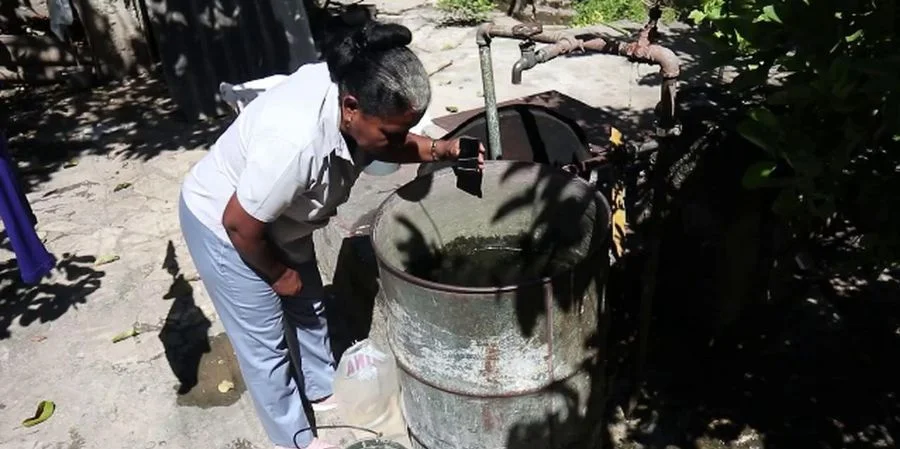
Hurricane Melissa, which hit the eastern region on October 28, further aggravated the crisis. Fallen trees, accumulated garbage and areas with difficult access make fumigation and community investigation, which are already deficient, difficult. Although a fumigation protocol was authorized in the province, it is partial and does not reach all affected communities. On the other hand, stagnant water becomes a breeding ground for mosquitoes and multiplies the risk of contagion.
Despite Dr. Francisco Durán’s calls to the population to keep streets and yards clean, the regime does not guarantee garbage collection or basic sanitation, which multiplies mosquito breeding sites and contributes to the spread of arboviruses. The responsibility falls on citizens while state action remains insufficient.
Hospitals in the province, such as Ambrosio Grillo, La Colonia, Hospital Infantil Norte and Hospital Infantil Sur, report full rooms, insufficient ventilation equipment and lack of supplies. Children have serious respiratory problems; Adults with chronic diseases, especially hypertension and diabetes, face a particular risk.
According to official MINSAP figures and PAHO estimates, approximately 25% of the Cuban population is hypertensive and 10% has diabetes, which significantly increases mortality when these patients contract arboviruses. The lack of diagnostic tests also limits the accurate identification of the virus and the possibility of applying appropriate treatments.
Cuba: regional epicenter of chikungunya
Cuba has become an unprecedented epidemiological focus. PAHO reported 700 new daily cases of chikungunya between October 11 and November 1.
Currently, the Island has a cumulative incidence of 183.43 cases per 100,000 inhabitants, the highest in America, even surpassing countries where the disease was endemic, such as Brazil. Today, a total of 31,513 suspected cases of chicunguña have accumulated in 14 provinces, 99 municipalities and 164 health areas. However, the figures aim to be higher, if we take into account that the majority of people choose not to go to health institutions, motivated by lack of resources.