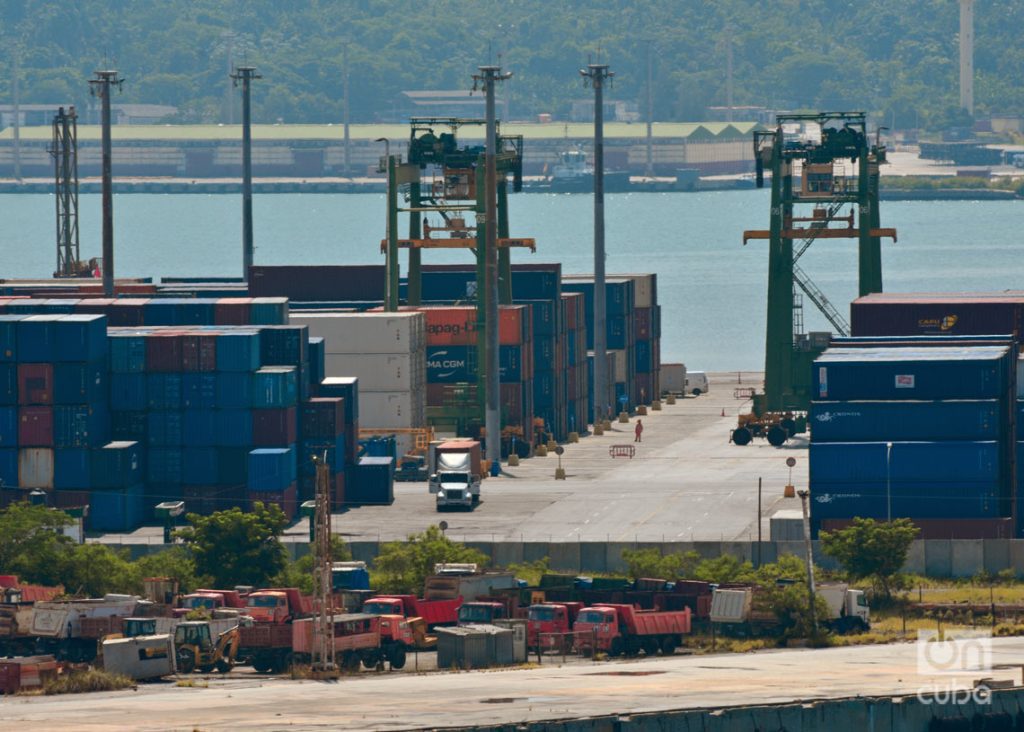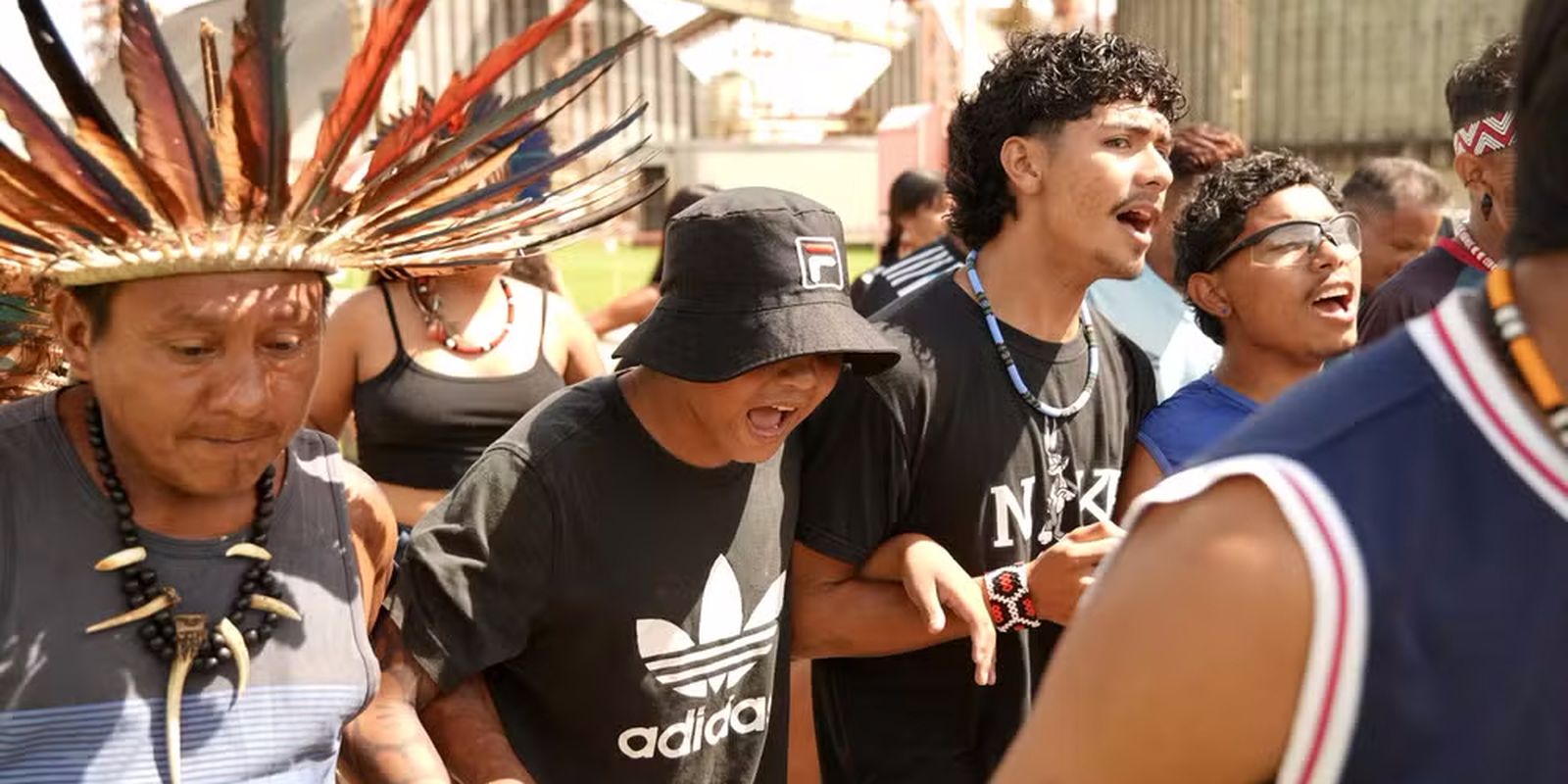
A group of indigenous people occupied, in the early hours of this Saturday (21), the office of the terminal that the multinational Cargill operates in the Port of Santarém, in Pará. 
According to the Tapajós and Arapiuns Indigenous Council (Cita), the act is part of the series of protests that the indigenous movement has been promoting for more than a month against the Decree No. 12,600from August 2025, which includes the waterways of the Madeira, Tocantins and Tapajós rivers in the National Privatization Program (PND).
While representatives of indigenous communities from Pará and Mato Grosso linked to Cita blocked access to the terminal, around 3,200 kilometers away, in São Paulo, environmentalists and members of social entities protested in front of Cargill’s central office, blocking two lanes of Avenida Chucri Zaidan, in Vila São Francisco, in the south zone of the capital of São Paulo.
In a statement, the multinational classified both actions this Saturday as “violent”. According to Cargill’s press office, protesters have been blocking truck access to the Santarém port terminal for 30 days, despite the Court having already ordered the area to be vacated.
Also according to the company’s press office, given the imminent occupation of the terminal in Pará, the employees who were working sought shelter in a closed location where they remained safe until they were removed from the location.
So far, there are no records of injured workers or protesters, and the company said it is checking whether machines or equipment were vandalized.
“Furthermore, the company, which already has a court order [favorável] to vacate [do terminal]remains in contact with the authorities so that the measures for eviction are taken in an orderly and safe manner”, added Cargill.
Indignation
Through social media, the Tapajós and Arapiuns Indigenous Council stated that the occupation of the multinational’s office after more than 30 days camped outside the terminal in Pará was motivated by indignation at the failure to fully revoke Decree No. 12,600, the effects of which “threaten water quality, fishing, food sovereignty and the integrity of the forest”.
“We are here because we defend the right to exist”, stated Cita, arguing that, during the occupation of the terminal yard, last month, it released, “in a peaceful and organized way”, the access roads and spaces necessary for the loading and unloading operation.
“We do not want to treat this issue as a police case. Our fight is not about public security, but about socio-environmental justice, constitutional responsibility and human rights.”
The indigenous entity also said that it demands that the responsible federal authorities provide explanations about the criteria adopted to authorize the “privatization of the region’s rivers”, as well as carrying out studies to evaluate possible social, environmental and cultural impacts resulting from the projects.
“We will remain mobilized until there is a concrete commitment to the revocation of Decree nº 12,600 and with the guarantee of prior, free, informed and good faith consultation before deciding on any undertaking that advances in our bodies and our territories”, concluded Cita.
In a note sent to Agência Brasil, the General Secretariat of the Presidency of the Republic reported that it was monitoring the mobilization of the indigenous peoples of Pará and Mato Grosso.
The ministry stated that it recognizes and defends the right to peaceful demonstrations and reiterated its commitment, together with other federal bodies, to consult, in advance, the communities that live under the area of influence of the projects on possible social and environmental impacts.
“The technical conditions for the installation of an interministerial working group – with the participation of federal bodies and representatives appointed by the indigenous peoples of the region, to organize and conduct the consultation processes – are already guaranteed and, as agreed in a meeting with the movement’s leaders, awaits the approval of these leaders, at the moment they deem appropriate”, assured the general secretariat.
Suspended dredging and public consultation
On the 6th, when indigenous and social organizations were already protesting in different locations across the country, the federal government announced the suspension of the process selection and hiring of a company to dredge the Tapajós River, in Pará.
At the time, the federal government informed, through a note, that the suspension of the works was a “gesture of negotiation”, even though the dredging was not directly related to the project to grant the waterway to private commercial exploration.
“It is important to mention that the dredging works announced by the Ministry of Ports and Airports constitute a routine action, carried out in previous years, and respond to the need to guarantee river traffic on the Tapajós Waterway during periods of low water levels”, argued the government.
In addition, it made two other commitments: establishing an interministerial working group with the participation of bodies and entities of the federal public administration and representatives appointed by the indigenous peoples of the region, to discuss, systematize and guide the processes of prior consultation with affected communities; and present a schedule for carrying out the consultations, defined in common agreement with the representative entities.
In November last year, the minister of the General Secretariat of the Presidency, Guilherme Boulos, had already assumed the commitment to consult the people of the Tapajós River on the allocation of waterways.
“We are committed, and the federal government will carry out, in relation to Tapajós, a free, prior and informed consultation with all the people of the region, before implementing any project on the river. And we, from the General Secretariat of the Presidency of the Republic, will create a dialogue table with all these people, to welcome them to Brasília and build the solution.”
At the time, the indigenous people protest during the 30th Conference of the United Nations on Climate Change (COP30).
Also in November, the Civil House guaranteed that it would not carry out any intervention in the Tapajós, Madeira and Tocantins rivers without the due environmental licensing process, including carrying out impact studies.
“It is the commitment of this government to guarantee, throughout the study and licensing process, prior, free and informed consultation with local, indigenous, quilombola and riverside communities, following ILO Convention 169 [Organização Internacional do Trabalho]of which Brazil is a signatory.”
According to the Civil House, the purpose of transferring responsibility for maintaining the navigability of waterways to the private sector would be to guarantee “a safer and more environmentally protected flow”.
Article expanded at 6:35 pm to include a note from the General Secretariat of the Presidency of the Republic, in the 13th, 14th and 15th paragraphs