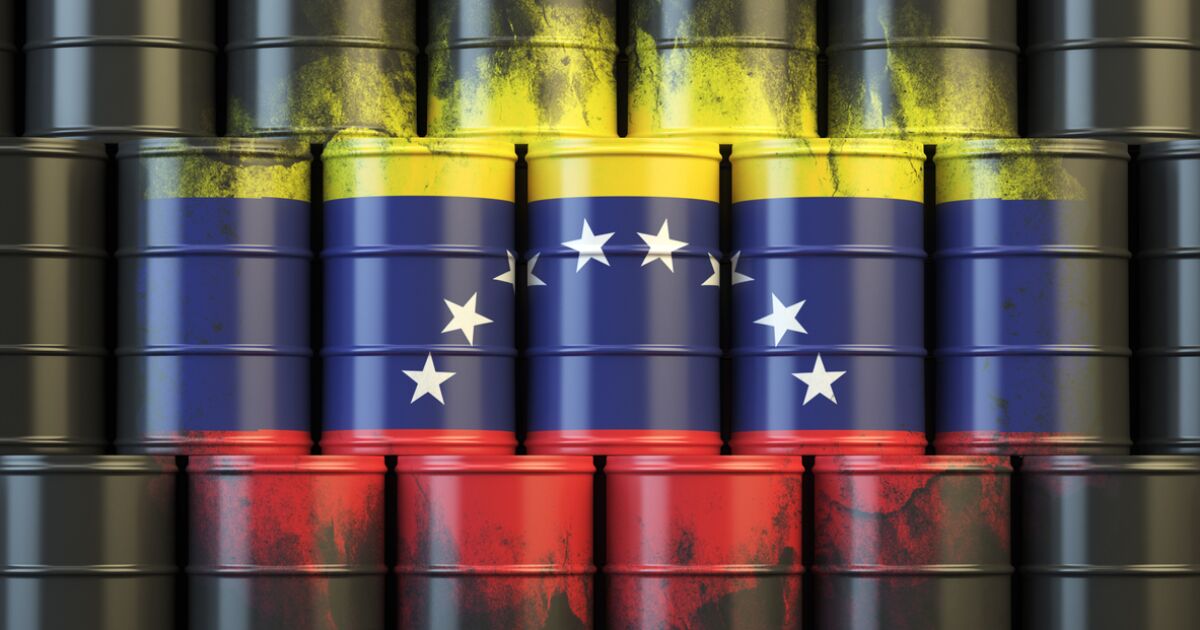
The structure of Venezuelan trade explains part of this fragility. The economy depends almost entirely on oil. Nine out of every 10 dollars that come in from exports come from that industry. Manufacturing, chemicals, iron and steel, as well as agricultural goods, occupy a marginal place.
Before Maduro and much of Chávez’s term, the United States was Venezuela’s main trading partner. Brazil, Colombia, China, Switzerland, the Netherlands and Argentina completed the board. With the sanctions and the closure of access to key markets, that map changed radically. Venezuelan trade was redirected towards China, Russia, Cuba, Türkiye and Iran, in a narrower network and with lower absorption capacity.
In 2017, Venezuela took its claim to the World Trade Organization. He denounced what he described as an “economic, commercial and financial war” driven by “imperial powers” that, in his opinion, acted outside the organization’s rules. José Gregorio Vielma, then Minister of Foreign Trade, accused those countries of deliberately hindering the economic relaunch and of subordinating other nations to their interests. He also maintained that the sanctions violated international law and human rights, and that they sought to impose an absolute siege on the country.
Since 2005, the United States has imposed sanctions on Venezuelan individuals and entities linked to criminal, undemocratic or corrupt practices. As time went by, these measures were expanded. During the first Trump administration, sanctions included financial and sectoral restrictions targeting the Maduro government. The Biden administration granted limited relief with the expectation of encouraging free presidential elections in July 2024. Maduro claimed victory even though the results indicated the victory of the opponent Edmundo González, according to information from the US Congress.
In January 2025, Maduro began a third term. A month later, the Trump administration designated criminal groups linked to Venezuela as terrorist organizations, subject to sanctions and military action. At the same time, the Treasury Department allowed the expiration of licenses granted in the Biden era to energy companies with operations in the country.
The collapse of the commercial link with the United States illustrates the scope of the break. US purchases from Venezuela reached a high of $51,424 million in 2008. By 2020, that flow fell to a low of $167 million. Although it later registered a slight recovery, the amounts remain at low levels, according to data from the United States Department of Commerce.
Since 2009, the United States stopped appearing as the main destination for Venezuelan exports, according to the WTO. Even Mexico, which once ranked among the top 10 partners, left that list in 2013.
The commercial relationship with Mexico also shines, since the United States included the country as one of the channels indicated in the accusations of drug trafficking and criminal networks linked to the environment of Nicolás Maduro, which also suffered a marked decline. In Chávez’s last year it was from 189 million dollars to 35 million in 2024.
Venezuelan foreign trade reflects more than declining numbers. It exposes the economic cost of an isolated country, trapped between sanctions, oil dependence and an increasingly reduced network of partners.