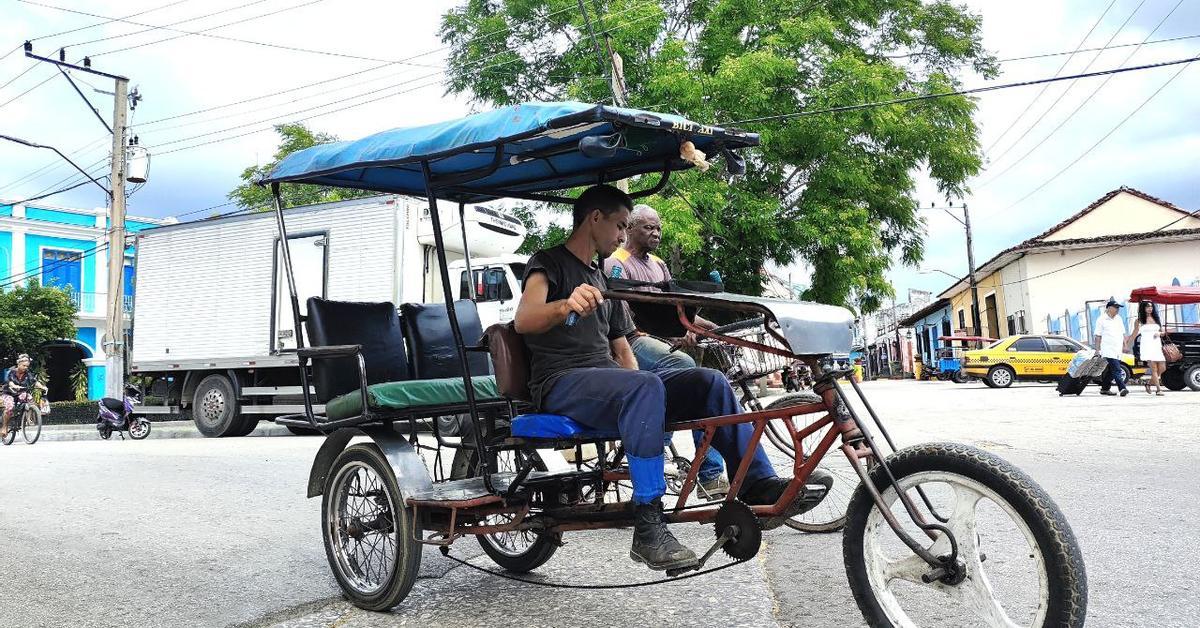
Mayabeque/Months ago, the rattling of chains replaced the roar of engines in San José de las Lajas. On 37th Street, on the uneven cobblestones that cross the center of town, the pedicabs move slowly, their awnings patched and their seats worn by the sun. The energy crisis that Cuba is going through has reduced the transportation of passengers and goods to a minimum, and in this municipality of Mayabeque the fuel shortage translates into more pedals, more walks and fewer options to move.
From the back of one of those adapted tricycles you can see the town at a different speed. The low houses, the half-painted fences, the poles with their tangles of cables and the palm trees that appear over the walls pass by without the shock of a horn. David, who has been driving since seven in the morning, says he has never had to stretch his routes so much.
“Since there are no trucks leaving for El Cotorro, people rent me to take them to the Jamaica neighborhood, which is at the exit of town. You have to pedal quite a bit to get there, but the effort is made,” he says. He has been in the trade for almost ten years and knows how to measure fatigue in kilometers. Jamaica, Pastorita, the area near the national highway: destinations that were previously covered by a private truck or an inter-municipal bus now depend almost exclusively on leg strength.
The fuel shortage has practically paralyzed state passenger transportation. At the bus terminal, departures are spaced out or suspended without prior notice. The trucks that linked with Havana reduced their trips and those that transported goods arrived late or did not arrive at all. In the agricultural market, several sellers complain that the lack of diesel delays supply and makes products more expensive. Less travel means less supply, and less supply means higher prices.
The fuel shortage has practically paralyzed state passenger transportation
On the boulevard, in front of the pizzeria where the only officially recognized piquera is located, pedicabs wait in the morning sun. Some drivers prefer not to stay there. “If we stay stopped, we can spend an hour or two without making any passage,” explains David. “Sometimes people who pass by here have already walked more than half the way home.”
Regulations also matter. “It is established that we cannot travel on the Central Highway. So, if someone rents me a trip to the Reparto Pastorita, I have to make a huge turn. That makes the route longer and, therefore, a little more expensive,” he details. The contradiction is evident: while public transportation is reduced due to lack of fuel, private transportation faces restrictions and fines that can reach up to 10,000 pesos for violations that make little sense on roads deserted by cars.
Yoandry, 23, drives a rented pedicab. His blue tricycle, with the canvas roof held in place by wires, travels down 39th Avenue empty until someone flags him down. “I have to pay 3,000 pesos a day to the owner, until I can save money to buy my own. It is not easy to get more than 3,000 pesos out of these three wheels when the average of the routes is over 200,” he says.
When the day is slow, he goes to the terminal or the provincial hospital. There is always a patient there who needs to get home quickly or a family member carrying bags. Although they involve more effort, long stretches are worth it. “Between the drivers themselves we have reached an unwritten agreement on how much should be charged for each place. Customers know more or less the prices. Anyone who tries to exaggerate is left without a trip. Bicitaxis are the ones that are superfluous in this town,” he emphasizes.
Private parties face restrictions and fines that can reach up to 10,000 pesos for violations that make little sense.
In the central park, as the afternoon falls and some neighbors sit on the benches to talk, another pedicab slowly crosses with two passengers in the back. The driver, in a sleeveless shirt, pedals with his torso leaning forward. The scene summarizes the new rhythm of the municipality: shorter, slower and more expensive trips in proportion to the average salary.
The energy crisis has not only changed the way we move; It has also changed schedules and routines. Workers who previously depended on a bus get up even earlier to walk to the center. Merchants adjust their orders to what can arrive on an available truck. Families organize outings based on the decreasing certainty of finding return transportation.
In San José de las Lajas, the daily map has shrunk to the rhythm of the empty tanks. Where motors once circulated, pedals now predominate. The transportation of passengers and goods depends, to a large extent, on these tricycles that defy potholes and distances. As long as there is not enough fuel to reactivate state and private routes, the municipality will continue to advance at the speed allowed by the connecting rods and the resistance of those who drive them.