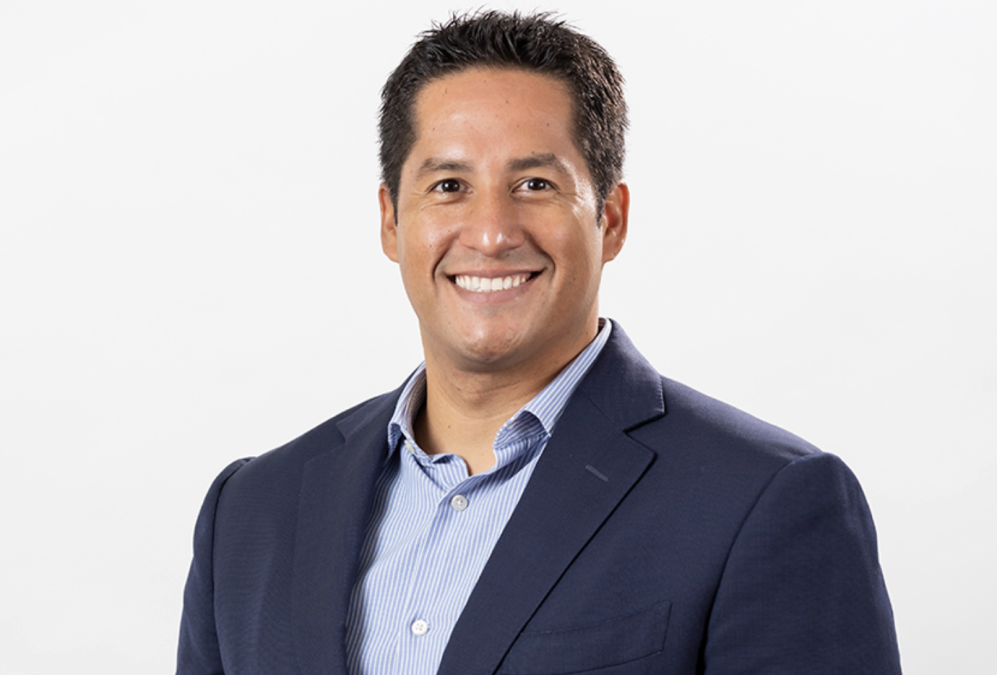
Despite the improvement in employment and real income, the majority of Peruvians do not perceive a sense of progress. For José Carlos Saavedra, partner and main economist of Consulting Supportthe explanation lies in the deterioration of citizen security and public services, factors that overshadow economic growth and condition expectations towards a 2026 marked by the electoral process.
What are the reasons why Peruvians do not perceive a sense of progress?
Currently, about half of the population perceives that the country is going backwards; only 9% feel they are making progress. This occurs despite the fact that in 2025 private formal employment grew at its highest rate since 2012 (discounting the pandemic). What is behind it, in our opinion, is the deterioration of other aspects that are very relevant to the well-being of the population: citizen security and the quality of public services. The origin of both is a dysfunctional political system that ignores citizen demands.
What you mention is a problem that was also present last year…
2025 was marked by a contrast. On the one hand, there was an improvement in the purchasing power of the population due to the increase in real wages and employment. On the other hand, there was a marked deterioration of the public sphere, where there is citizen insecurity, paralyzed works and the advance of illegal economies, among other factors.
Although the perception of progress does not take off, the Apoyo Consultoría report shows that the perception of regression has decreased. How is this explained?
Exactly two years ago, 75% of the population perceived that the country was going backwards; a very high percentage that has not been seen since 1991. Now that figure has dropped to 52%, although it is still above the average before the pandemic and, above all, before the high rotation of presidents began in 2016.
The decrease in the perception of setback in the last two years has occurred mainly in the segments of the population most affected by the recession and the El Niño phenomenon that occurred in 2023, who have seen some normalization in their economic situation in 2025. This is the case of the population of the north coast, women, young people and lower-income households.
How do you explain that there are three times as many people who feel that their personal economy has improved compared to those who believe that the country is better?
Since last year, it has been happening that the gradual improvement of economic conditions, after the disaster of the Pedro Castillo government and the recession of 2023, is perceived as an individual and not a collective achievement. Thus, we have seen that the perception and expectations related to one’s own family situation improve more than the evaluation at the country level. This surely has to do with the contrast that I mentioned earlier, there are economic improvements that have been felt more generally, especially in 2025, but they occur at the same time as public services that worsen.
The pace of growth also has to do with…
In the purely economic sphere, this contrast between the individual and collective improvement of the last two years is also related to the intensity of the economic growth that we have had and its composition. A 3% growth is insufficient to reduce the poverty rate or increase the middle class at a significant speed.
At the same time, although growth has been increasingly widespread, in 2025 it has been strongly driven by specific sectors such as mining, modern agriculture and fishing, sectors that have a marked regional concentration. The commerce sector, which is more decentralized, has had growth very close to the average of total GDP (3%). We need to grow at higher rates and in a more generalized way so that it is perceived as a more collective improvement.
How do we ensure that that third that feels that their economic situation has improved rises to more than 50%?
An important lesson that emerges from the results of this survey is that the population differentiates very well what is, on the one hand, “improvement in economic conditions” and, on the other, “improvement in living conditions.” The first is related to economic growth, job creation and macroeconomic stability to ensure that salaries do not lose value.
The second, although it includes the economic component, takes into account additional aspects such as the feeling of security, the ability to start a business, the dignity with which one is treated in a medical post or, in general, the feeling that the political system responds and efficiently attends to the most basic needs of the population.
The first aspect, the economic one, has been improving. The second is clearly getting worse. So, I think it is very difficult for the sense of progress to improve without a significant change in the current political balance, which is neither representative nor accountable. The electoral process that we will have this year, 2026, is an opportunity to change this balance.
What are the sectors that are emerging as the most dynamic for private investment in 2026?
2026 will be marked by presidential and subnational government elections. As of today, it is impossible to know whether the next government will promote adequate reforms, seek to improve public services or scare away private investment.
What we do know today is that business expectations for 2026 are optimistic, despite the electoral period. We see it in the confidence to invest and in their expectations of growth in their sales. That somehow anticipates that this year’s summer will remain relatively dynamic. The rest of the year will depend on the electoral result.
What are the projections of Apoyo Consultoría for this year?
It is possible that the international environment will be favorable for the Peruvian economy throughout the year, due to the expected weakening of the dollar and the high prices of the metals we export.
At the same time, there are some large mining and infrastructure investment projects that are already underway and that will be a source of dynamism this year. Therefore, if an orderly political transition and a government that does not scare away private investment is assumed, the base scenario is that the Peruvian economy could sustain a growth rate close to or slightly greater than 3% in 2026.
Receive your Perú21 by email or WhatsApp. Subscribe to our enriched digital newspaper. Take advantage of the discounts here.
RECOMMENDED VIDEO