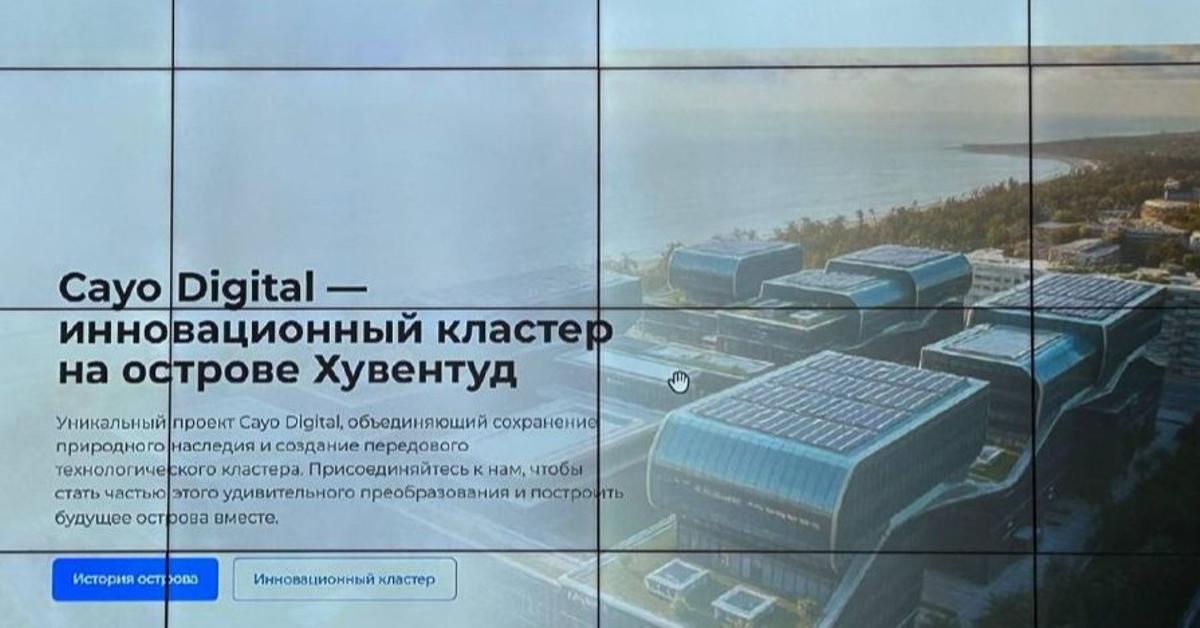
Havana/The most recent cooperation proposal between Moscow and Havana raises the creation of a technological pole on the island of Youth, under the name of “Cayo Digital”. The project, presented by the Russian company Genit – with a presence in Cuba since 2023 and supported by the Moscow government -, aspires to build a tropical “silicon valley” that would house about 15,000 residents, including 12,000 experts and 3,000 students, dedicated to the development of software and hardware destined for Latin America and the Caribbean.
According to Cubadebatehe Technology Center It would occupy about 450 hectares and include offices, laboratories, educational centers, sports facilities and residences. The execution phases would extend until 2032, and the first operations are expected to begin between 2026 and 2028. However, the ambitious plan clashes with the hard realities of the environment in which it is proposed to develop.
The island of youth, epicenter of the project, barely manages to generate 18 megawatts, despite having an installed capacity of 48 MW, which causes frequent blackouts. This situation reflects a broader national energy crisis, which led Cuba to generate in 2024 only 14,334 GWh, a 25 % drop compared to 2020. Cuts of electricity, which have been extended for months, have affected most of the provinces of the country, including the island enclave where the digital pole is now projected.
The announcement evokes previous initiatives promoted between Cuba and Russia that have not gone from the theoretical plane
The fragility of electrical infrastructure is not the only obstacle. Internet connectivity remains limited, with frequent interruptions, slowness and high prices, which compromises any serious attempt to create a competitive digital ecosystem.
The announcement also evokes previous initiatives promoted between Cuba and Russia, such as the modernization of the Cuban rail system, which, despite having generated numerous holders, have not gone from the theoretical plane or have had a marginal impact on everyday life. In that sense, analysts and independent media, such as this newspaper, have on several occasions that many of the Russian investment promises in Cuba have been stagnant, without visible execution or specific results.
/ Cubadebate
The presentation of “Cayo Digital” comes at a time when the island crosses one of its worst economic crises in decades, with energy deficit, low productivity, inflation and a sustained fall in foreign investment. In this context, the proposal to raise a high -tech center contrasts with the precariousness of basic services, the deterioration of infrastructure and lack of resources to keep the country’s industrial plants operational.
Despite this, the Cuban official press celebrates the announcement as a sample of strategic cooperation with one of its main geopolitical allies. However, so far no details have been disclosed on the financing of the project, nor have studies of technical or energy feasibility have been presented.
While the official discourse is committed to the image of a futuristic, connected and technological cuba, the reality of the country is still dominated by cuts of light, falling services, low connectivity and uncertainty about the fulfillment of similar promises in the past.