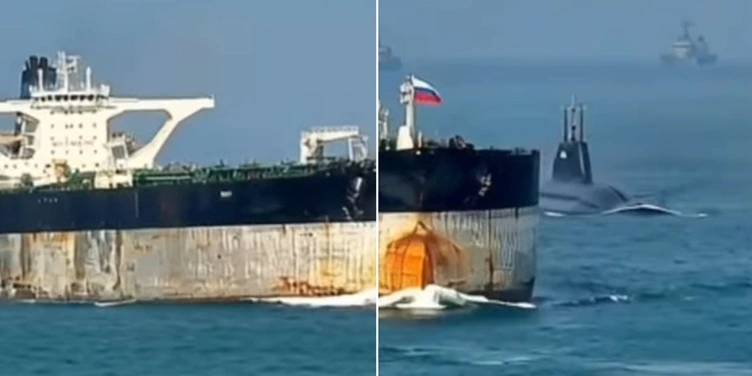
The ship is escorted by units of the Russian Navy in the North Atlantic after refusing an inspection by the US Coast Guard and in the middle of a seizure operation linked to sanctions against the Venezuelan regime.
MADRID, Spain.- Russia has deployed a submarine and several ships of its Navy in the North Atlantic to protect an oil tanker linked to Venezuela that the United States is trying to seize within the framework of the application of international sanctions against the regime of Nicolás Maduro. The movement confirms Moscow’s support for Caracas in a scenario of growing diplomatic and military pressure.
The ship, formerly known as Bella 1 and recently renamed Sailorhas been followed by US authorities for several weeks, according to The Wall Street Journal. The vessel would have tried to evade the partial maritime blockade imposed by Washington on oil operations linked to Venezuela, which led to a court order for its arrest.
According to data from the tracking system Marine Traffiche Sailor It advances towards the northeast of the Atlantic, between Iceland and the United Kingdom. Analysts cited by international media indicate that the ship could head to the Baltic Sea or continue towards Murmansk, a strategic port in the Russian Arctic that remains operational throughout the year.
The incident originated on December 21, when the United States Coast Guard intercepted the then Bella 1 in the Caribbean Sea. According to the official version, the crew refused to allow an inspection on board and left the area, heading into the Atlantic. From that moment on, Washington began a sustained follow-up operation to carry out the seizure of the ship for violations of the sanctions regime.
After that episode, the tanker changed its name and began sailing under the Russian flag, a maneuver that Moscow has used as an argument to justify its naval intervention. The deployment of Russian forces seeks to deter any attempted boarding, reinforcing the protection of a ship accused of transporting crude oil associated with networks that benefit the Venezuelan regime.
For Russia, the case is part of its strategy of political, military and energy support for Venezuela, one of its main allies in Latin America. Moscow has been key to supporting Caracas in the face of international isolation, whether through oil cooperation, financial agreements or diplomatic support in multilateral forums.
The Russian naval deployment in international waters raises tension with Washington, but also shows the extent to which the Venezuelan regime depends on its allies to keep its oil industry afloat, despite sanctions. Analysts warn that the use of military escorts to protect ships questioned by the international community sets a worrying precedent and exposes Russia’s role as external guarantor of Chavismo’s energy operations.