SANTO DOMINGO.- The conflict raised by the reduction of limits of the Jaragua National Park After a ruling by the Superior Administrative Court (TSA), it would have originated in the National Congress with the approval of Law 266-04 of 2004 that creates the Tourist Pole of the Southwest Region, through which the idea of economically injecting the southern region was sold.
Said legal text altered the limits of the protected area, but they continued to be considered by the Ministry of the Environment as part of the park, which led the company Inversiones del Sur SRL to file an amparo action before the court, the results of which are already known and have been rejected by different sectors.
That is to say, the TSA’s decision was based on a legal text that, although its primary intention was to develop the south of the country, the active lobbying ended up influencing the alteration of the limits of a protected area.
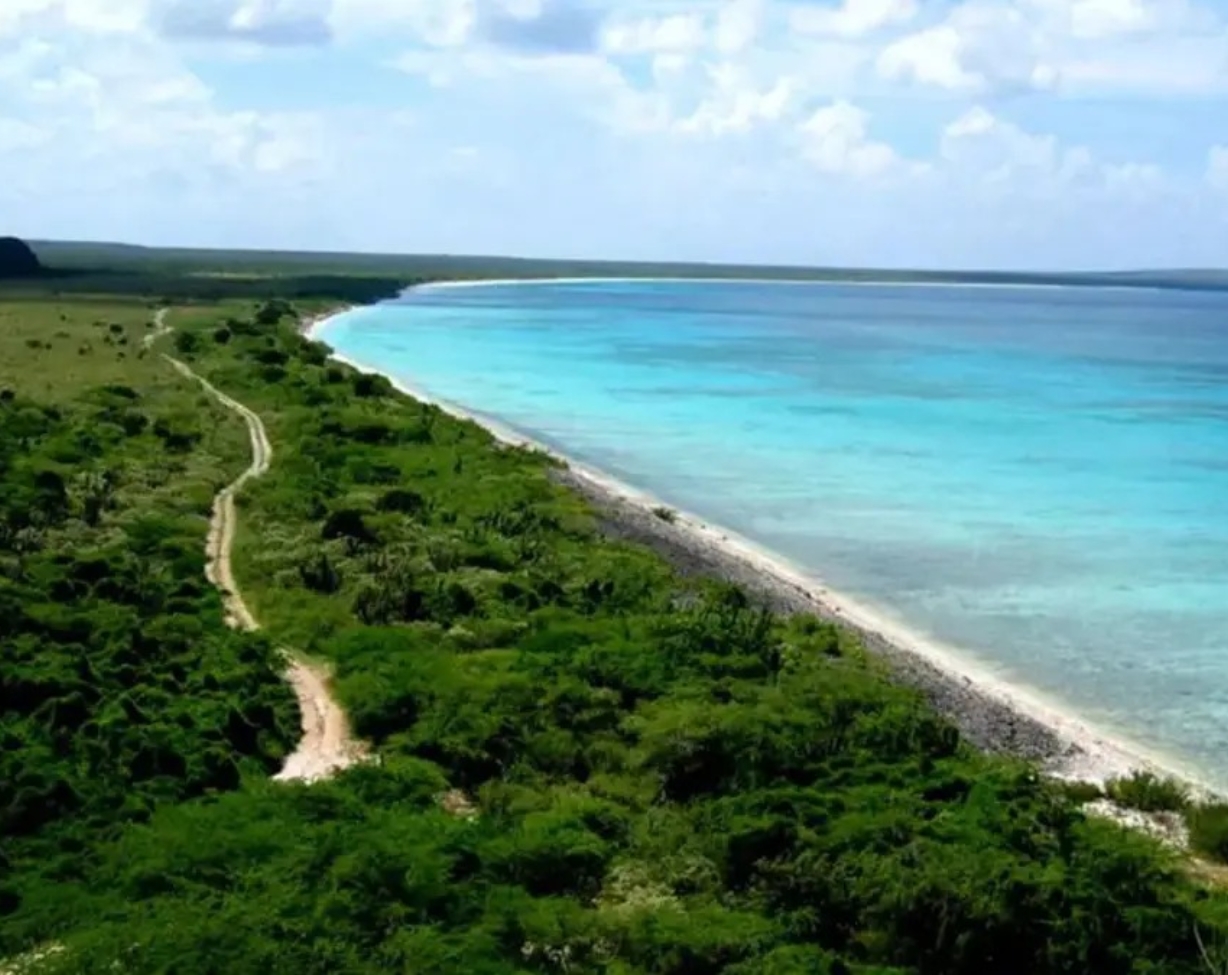
In total, there are four plots that would be modified after ruling 0030-1643-2025 issued by the court, with an average surface area of 12 square kilometers.
You can also read: Codue expresses concern and rejection of the court ruling that reduces the Jaragua National Park
All these plots are located in the municipality of Oviedo, province of Pedernales.
The court explicitly ordered the Ministry of the Environment to update the National Cadastre of Protected Areas (SINAP) to reflect that these properties are located outside the limits of the Jaragua National Park.
The Ministry of the Environment has already announced that it will seek the annulment of the ruling, using among its arguments that the areas declared as a National Park correspond to the highest category of environmental protection.
The point here is that the Public Ministry began to “connect cables” that could reveal a large-scale scam not only in the aforementioned area, but at the national level and in other protected areas.
The Attorney General of the Republic, Yeni Berenice Reynoso, announced the carrying out of a criminal investigation into illegal occupations and possible fraud in protected areas.
“I have conducted a criminal investigation into illegal occupations and possible fraud, and formed a special team to investigate the facts, establish responsibilities and charge charges,” the judge said in a publication in X.
It would not be the first time that the State must face the attempted theft of protected areas in the country. At the end of 2018, a group began to create palisades in the vicinity of the Baní Dunes, which led sectors of the Catholic Church, at that time, to raise the alarm, which was finally dismantled, although without consequences for the occupiers.
The same thing happened with the Bahía de las Águilas lands, after dozens of supposed owners claimed ownership of said lands in the courts for years.
Ultimately, the courts rejected those claims.
More details about the sentence and the legal conflict
The ruling of the Superior Administrative Court dealt with an amparo action filed by the company Inversiones del Sur, SRL against the Ministry of the Environment, due to the failure of the authorities to update the National Cadastre of Protected Areas (SINAP) in accordance with the aforementioned Law.
According to the court, the lack of cartographic updating prevented the company from fully exercising its property rights over lands that were excluded from the limits of the Jaragua National Park. The court determined that this omission violated fundamental rights, including the right to property enshrined in Article 51 of the Constitution.
Law 266-04, which creates the “Tourist Pole of the Southwest Region”, partially modified the protected areas declared by Law 202-04. Regarding Jaragua, it excluded a coastal strip with the aim of allowing private and foreign investment in properties that were previously under a strict protection regime.
In addition to ordering the immediate update of the SINAP to reflect that the company’s plots are outside the park boundaries, the court imposed a daily astreinte — a fine for each day of delay — as a mechanism to ensure effective compliance with the ruling.
The core of the conflict lies in the discrepancy between legal reality and administrative reality. While Law 266-04 modified the boundaries of the park, the Ministry maintained the plots in its cartographic records as if they were still part of the protected area.
In its defense, the Ministry of the Environment argued that it had not breached any provision and that a modification of that magnitude required a specific legislative process. However, the court rejected this position, considering that the modification was already made by law and that the only thing pending was the administrative procedure of updating the official map.