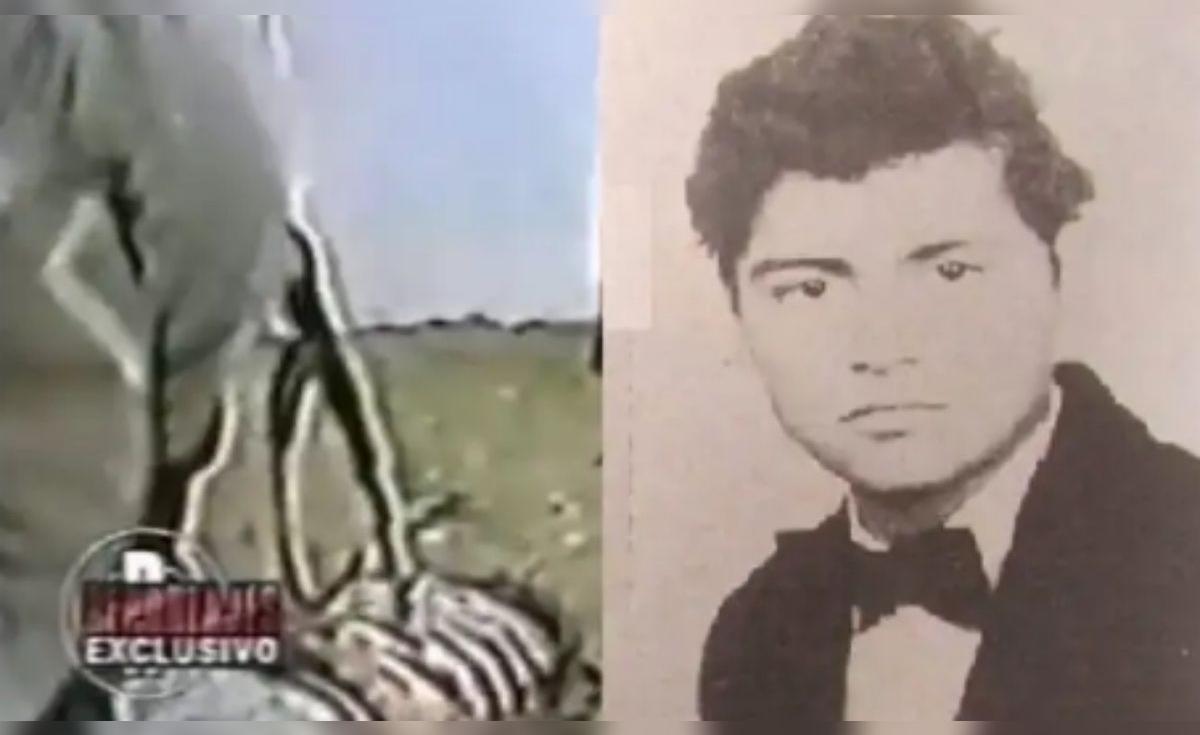
The sentence of the Inter-American Court of Human Rights (IAC Court) against the Peruvian State for the torture and extrajudicial execution of the medical student Freddy Rodríguez Pighi in 1991, reaffirms the position that there can be no impunity in serious human rights violations, warned lawyer David Velasco of the Ecumenical Foundation for Development and Peace (Fedepaz), which represents the victim’s relatives.
listen to the newsText converted to audio
Artificial intelligence
He reported that on June 21, 1991, Freddy Rodríguez Pighi, a fourth-year student at the Federico Villareal University, farbitrarily detained by police officers who were carrying out an operation in El Callao. That same group also detained the brothers Emilio and Samuel Gómez Paquiyauri, aged 14 and 17 respectively.
WE RECOMMEND YOU
TROY BURNS with JULIANA OXENFORD | PROGRAM for 12/29/25 | The Republic – LR+
These events were recorded by the press and served as important evidence of the arrest. In the images you can see the young student lying on the floor with a gun pointed at his back, and one of the minors being placed in the trunk of a patrol car. The three were left an hour later at the Callao Hospital morgue, without identification, with signs of torture and several shots to the body and head.
In 2014, the Inter-American Court found Peru responsible for the extrajudicial executions of the Gómez Paquiyauri brothers. And ten days ago, Rodríguez Pighi’s family found the justice they had long awaited, at least in the international arena.
“This sentence is of very relevant importance, because it means several things, among them a recognition of the fight that the family has developed against impunity. It was a tough battle of almost 35 years after which the State has been found internationally responsible for the extrajudicial execution, torture and arbitrary detention of the student,” the lawyer noted.
Dirty war anti-subversive policy
Velasco highlighted that the sentence is relevant because it has been shown that in those times and in those years “the State developed an anti-subversive policy that evidenced a policy of dirty war, of destroying anyone and violating the fundamental rights of all people under the pretext of fighting terrorism in any way possible.”
And they wanted to pass them off as alleged terrorists. Carlos Rodríguez Pighi, brother of the victim, told the Inter-American Court last January that to implicate him they put a backpack with terrorist propaganda, war grenades and even an Akm on him. He maintained that he was not subversive, and that is why the family decided to report what happened, to clear his brother’s name.
However, justice came from outside. The ruling of the Inter-American Court establishes that an investigation must be initiated to judge and punish all the authors and participants in the acts of torture and extrajudicial execution perpetrated to the detriment of Freddy; that the State publishes and disseminates the Judgment and its official summary; that the State carry out the public act of recognition of its international responsibility.
“This sentence means that there can be no impunity for serious human rights violations,” stated Fedepaz’s lawyer. He added that it takes on greater relevance in the current context and “it is a thread of hope in the face of this entire arbitrary situation of sentences, such as that of the Constitutional Court with the amnesty law to provide impunity.”
“But we believe that the magistrates of the Peruvian Judiciary are going to carry out a control of conventionality, a control that is above the Constitution itself and to which the Peruvian State has sovereignly, freely, submitted and has agreed to respect,” Velasco indicated.