Marco Rubio gave keys to the White House’s foreign policy in relation to Caracas and also to the Cuban regime after the capture of Maduro.
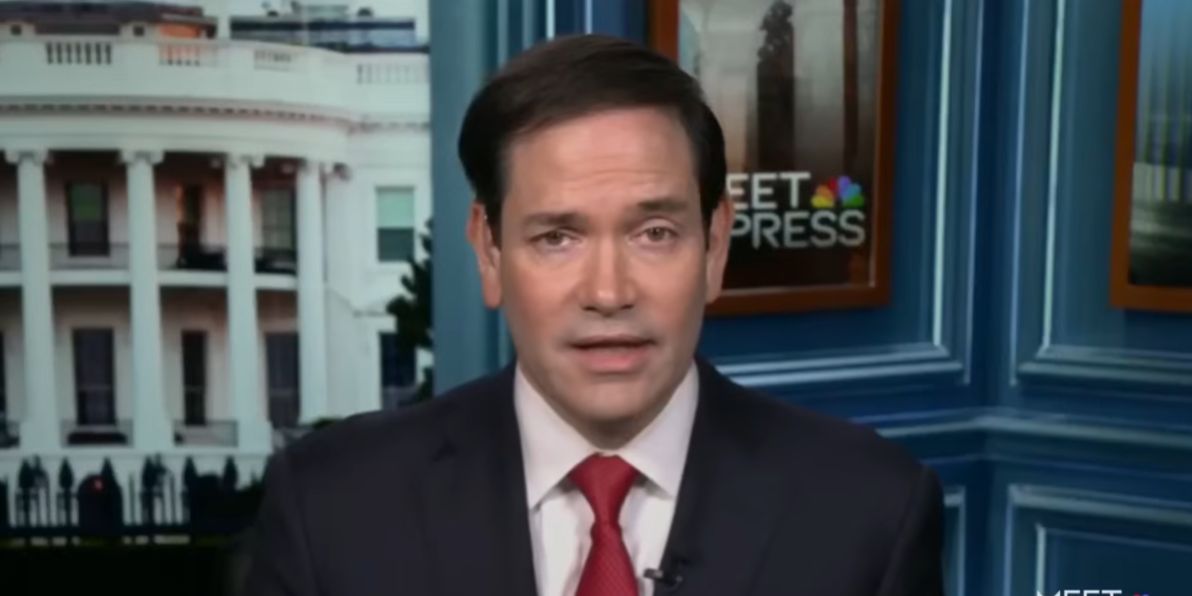
LIMA, Peru – The Secretary of State of the United States, Marco Rubio, had a pronounced presence this morning in the media of that country, where he appeared almost simultaneously in the space Face the Nation for CBS and on the show Meet the Press broadcast nationally.
As part of his appearances, the Cuban-American politician cleared up doubts about Washington’s position after the capture of dictator Nicolás Maduro in Venezuela, and gave clues to the White House’s foreign policy not only in relation to Caracas, but also to the Cuban regime and the hemisphere.
Cuban regime: the next objective of Donald Trump’s administration?
“The Cuban government is a big problem. But I don’t think people fully appreciate it (…) I think they are in serious trouble, yes,” said the Secretary of State.
When asked, Rubio said that he was not going to reveal the next steps or comment on the current policies towards the dictatorship in Havana, leaving the door open in that sense, although he did confirm that his rejection of Castroism, Maduro’s main ally, is no secret.
All internal security force of the detained dictatorits internal security apparatus, is completely controlled by Cubans, he warned. Rubió cited the narrative of colonization and rapacity that is attributed to the United States for its recent actions, stating that it is actually the tyranny in Cuba that has invaded Venezuela.
“Those who, at least within the regime, have colonized the country, are the Cubans. It was Cubans who guarded Maduro. He was not guarded by Venezuelan bodyguards. He had Cuban bodyguards. As for his internal intelligence, who spies on who inside to make sure there are no traitors, they are all Cubans.”
The United States is not at war against Venezuela
Rubio clarified that “there is no war” against the Caribbean country, but there is a battle against drug trafficking organizations such as the Cartel of the Suns, terrorism, and any affront that threatens the peace and security of Americans.
Likewise, he expressed the political will to maintain sanctions against oil companies operated by Chavismo, an industry that does not benefit his people and that he called “backward.”
“There is a quarantine right now on sanctioned oil shipments: if there is a ship and that ship is under US sanctions, we get a court order and seize it. That is still in effect, and it is a huge source of pressure that will continue until we see changes that not only promote the national interest of the United States, which comes first, but also lead to a better future for the people of Venezuela.”
The Republican representative warned that Washington hopes to see progress not only in oil management, but also in the cessation of drug trafficking, gang problems, expulsions of the FARC and ELN, and a cooling of collaboration with Hezbollah and Iran in the region.
Regarding the presence of North American troops within Venezuelan lands, Rubio denied their existence, while addressing the naval deployment on the Caribbean coasts.
“The president (Trump) always keeps all options open on any issue and on all of these issues (…) He does not consider it appropriate to publicly rule out options that are available to the United States, although that is not what we are seeing right now. What we are seeing now is an oil quarantine that allows us to put enormous pressure on what happens next.”
Why was the arrest limited to only Nicolás Maduro and Cilia Flores?
Although Nicolás Maduro, beyond his role as Chavista ruler, has been identified by the United States as the leader of the Cartel of the Suns, other top figures in Miraflores also have million-dollar rewards for their participation in narcoterrorism networks, including the Minister of the Interior, Diosdado Cabello, (25 million) or Valdimir padrino (15 million), who were not detained in the military operation on January 3.
“You’re not going to go in and solve everything at once. You go in and capture someone, but you can’t go in and arrest five people at once. They’re already complaining about this one operation. Imagine the screams and protests we’d have from everyone else if we really had to go and stay there for four days to capture four more people.”
Marco Rubio expressed satisfaction with the “sophisticated” and “complex” operation that cleared the primary objective, Maduro, who was arrested along with his wife Cilia Flores, also wanted by the US authorities.
“The guy lived on a military base: land in three minutes, kick down his door, capture him, put handcuffs on him, read him his rights, put him on a helicopter and leave the country without losing any American or any American asset. That’s not an easy mission.”
Despite the success of the actions, repeating the victory in five other military bases to arrest Cabello, Padrino and other defendants were not feasible limits.
Delcy Rodríguez and the transition
“We are going to see what happens from here on out,” said the Secretary of State, who recognized that the transition of power in Venezuela is an issue that requires “mature diplomacy,” while ensuring that the objectives of the White House “remain the same.”
In a press conference last Saturday, President Trump stated that the United States would run Venezuela until it was safe, and added that current Chavista Vice President Delcy Rodríguez had agreed to cooperate. The president’s statements contrasted with subsequent statements by the aforementioned leader, who called the operation to capture Maduro a “kidnapping” and supported the official position of the regime.
“The difference is that the person who was in charge previously, although not legitimately, was someone you couldn’t work with. You simply couldn’t work with him. He never fulfilled any of the agreements he made; he broke each and every commitment he made,” Rubio said.
“We are going to evaluate based on what they do, not on what they say publicly in the interim, nor only on what they have done in the past in many cases, but on what they do from now on (…) What I do know is that, if they do not make the right decisions, the United States will retain multiple levers of pressure to guarantee that our interests are protected, and that includes the oil quarantine that is in force, among other things,” he added.
The Secretary of State stressed that he wants Venezuela to move towards something completely different from what it is today. However, he admitted that it is a process that requires time and he does not expect it to happen in the next few hours at least.
“What we do hope is that progress will be made in that direction. We believe that this responds to our national interest and, frankly, also to the interest of the people of Venezuela.”