Ronin
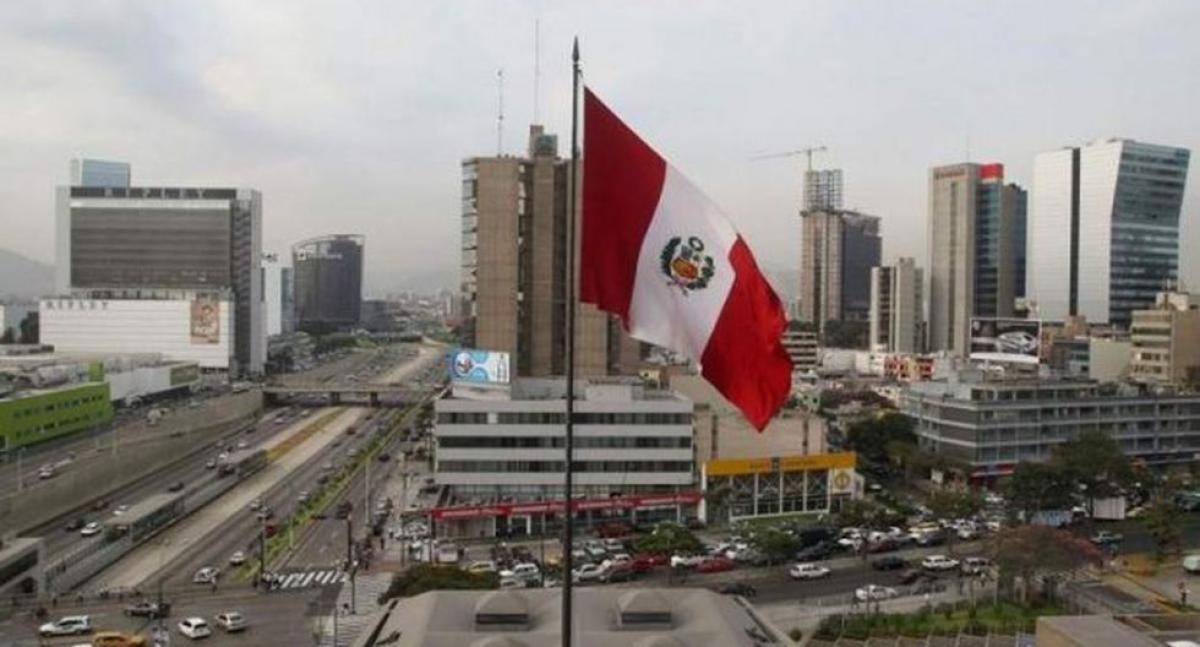
During the period 2002-2013, the Peruvian economy It grew to an annual average of 6.1%, one of the highest rates in the world at that time. This dynamism allowed to accelerate the gap in the face of high -income economies and gave the impression that the country had found a solid path to that goal. If this rhythm had been maintained as of 2014, today Peru would be at the gates of entering the group of high -income nations, according to the World Bank classification (see graph 2). However, reality has been another, and this raises the crucial question: what failed in that process?
By decomposing Peruvian growth, it is observed that, during the last decade, productivity (which determines whether a country can sustain that growth over time) has had a negative contribution (see graph 1).
This means that, even when workers and capital were added, the country was unable to use them more efficiently. With which, Peru fell into an “middle income trap” where easy growth engines – export of raw materials, urbanization and macro stability – were exhausted, but were not replaced by structural reforms that drive innovation, diversification and productivity.
If this inertial scenario was maintained, with stagnant productivity and decreasing population growth, Peru would take more than five decades to reach the high income threshold.
Options
Faced with this reality, what options does Peru have? A first strategy is to boost investment, improving the business climate and efficiently applying the recent Public-Private Association Law, in addition to increasing the quality of public works. Under this scenario, investment as a percentage of GDP would return to levels close to those observed in the rise of the 2000s. However, the studies show that, although the investment raises the capital per worker, its effect is exhausted without improvements in productivity. Therefore, even with this effort, Peru would take even more than four decades to reach the category of high income country.
The second strategy is to move towards a scenario of moderate reforms, politically viable and with direct impact on productivity. Here are the regulatory simplification, the reduction of procedures, labor and tax formalization, technical education and dual training, as well as the creation of more competitive markets and accessible financing mechanisms for SMEs. These measures would allow raising efficiency and reallocating resources to more dynamic sectors. In this case, Peru could reach the high income threshold in less than 20 years.
Finally, in a scenario of ambitious reforms, they would advance in critical dimensions such as the reform of the justice system, the integral modernization of the educational system and the construction of a meritocratic civil service. These are institutions that allow countries to approach the technological border and sustain growth based on innovation and competition. With these reforms, Peru could become a high -income country in less than three governments, which would be equivalent to a horizon of less than 15 years.
The challenge of Peru: without productivity there is no progress
The growth of an economy does not depend only on having more workers or investing in works and machinery. What really makes the difference is how well those resources are used. This is explained by Isaac Foinquinos, chief economist of Ronin, who remembers that productivity is the engine that allows a country to sustain its advance and approach the levels of development of the most prosperous nations.
“We can invest more and that will help in the short term, but if we do not make human capital improve, that institutions work and that there is space for innovation, that growth will be exhausted,” he warns.
Foinquinos points out that the international experience shows a common point: the countries that managed to make the leap were those that knew how to reform and bet on productivity. Peru is no exception. “With the correct policies, we could achieve development in less than one generation. Without them, we will continue trapped in the so -called middle income trap, with the risk of retreating,” he concludes.
For Foinquinos, the dilemma is clear: either progress is made with background reforms or runs the risk of losing a historical opportunity.
Receive your Peru21 by email or by WhatsApp. Subscribe to our enriched digital newspaper. Take advantage of discounts.
Recommended video