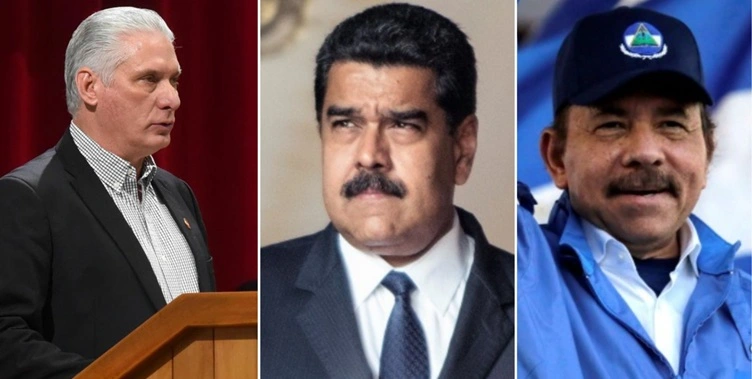
The elected president of Bolivia assured that his government will base foreign relations “on the basis of democracy” and described the three regimes as “clearly undemocratic.”
MADRID, Spain.- Rodrigo Paz Pereira, president-elect of Bolivia, confirmed that he will not invite the leaders of Cuba, Venezuela and Nicaragua to his investiture ceremony, scheduled for November 8.
In one interview given to Fernando del Rincón for CNN en Españolthe politician explained that his decision is due to the fact that these countries “are clearly not democratic” and that his government will base foreign relations “on the basis of democracy.”
“I would not want my country to be any of those three, it is clear,” he added, in reference to Miguel Díaz-Canel, Nicolás Maduro and Daniel Ortega.
During the dialogue, Paz Pereira responded directly when asked if she would invite any of them: “Are you not going to invite Maduro to the takeover? No. Are you going to invite Ortega? No. Are you going to invite Díaz-Canel? No.”
The elected president, of the Christian Democratic Party (Bolivia), insisted that Bolivia is “a democratic country” and that, although there are diplomatic relations that must be respected, their “condition of relationship is based on democracy.”
Paz Pereira’s position marks a change of course in Bolivian foreign policy, which during the governments of the Movement towards Socialism maintained close ties with Havana, Caracas and Managua.
“We Bolivians, if we are clear about something, [es] “You don’t eat ideology,” he stated, pointing out that his priority will be to strengthen democratic institutions and focus diplomacy on economic results.
Paz Pereira announced that his administration will reopen the United States embassy in La Paz, as part of its strategy to attract investment and boost the Bolivian economy. “We are going to open relations with the United States because I have asked about it throughout the campaign. Embassies once and for all,” he declared.
Likewise, he assured that his government will cooperate with international institutions in the fight against drug trafficking and that “all the institutions that help against illegal activity will be in Bolivia.”
The president maintained that his objective is for the country to regain credibility and stability in international markets.
With this positioning, Paz Pereira seeks to project Bolivia as a democratic State, open to trade and far from the ideological alignments that characterized foreign policy in previous years.