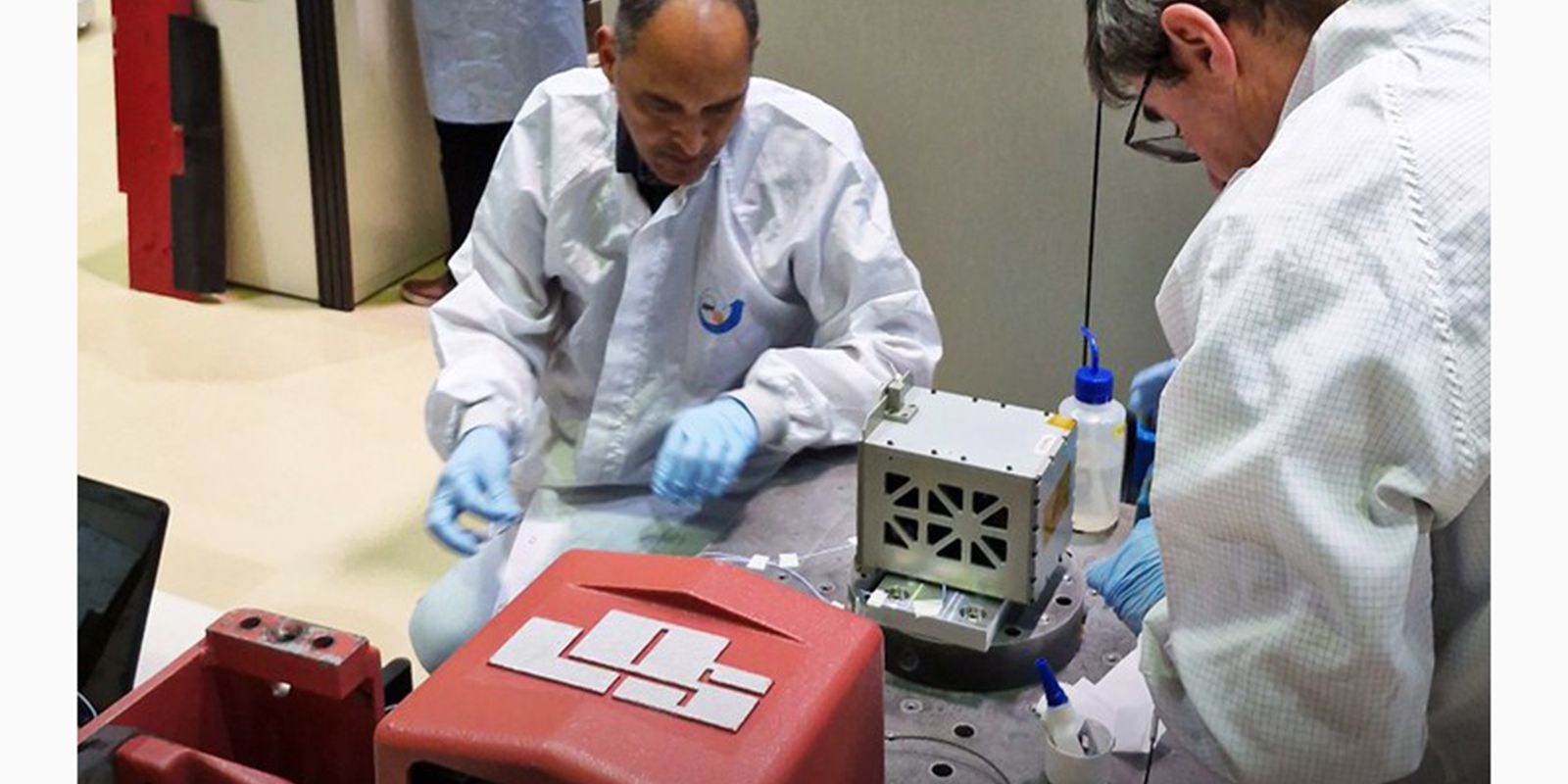
The launch in the early hours of this Monday (12) of the Indian rocket PSLV-C62, which carried 15 pieces of equipment on board, including the Indian Earth observation satellite EOS-N1 and five Brazilian satellites, failed and the vehicle was lost. The Indian Space Agency (Isro) has not yet provided information about where the rocket may have crashed. 
The launch took place at 10:17 am, Indian local time (1:48 am, Brasília time), from the Satish Dhawan Space Center, on the island of Sriharikota, India. Just over 6 minutes after launch, a failure was identified in the third of the rocket’s four stages, which led to a change in trajectory.
“The PSLV-C62 mission detected an anomaly at the end of the PS3 stage. A detailed analysis has begun,” informed Isro on a social network.
It was the rocket’s 64th flight. In addition to the Indian satellite, it carried on board the Aldebaran-I nanosatellite and four other Brazilian nanosatellites.
Developed by the Federal University of Maranhão (UFMA), with institutional and financial support from the Brazilian Space Agency (AEB), Aldebaran was a prototype to validate new technologies.
The project to build the satellite began 5 years ago. The name Aldebaran-I is a reference to the brightest star in the Taurus constellation, which has Arabic origins and means follower. Technically, the nanosatellite is a standard 1U cubesat, a device with a cubic shape and 10 centimeters on a side.
The device would help locate fires and assist the country’s coastal authorities in search and rescue missions for small fishing vessels that face difficulties at sea.
The nanosatellite is a proof of concept, that is, a prototype that will be used to validate a new space technology.
In addition to Aldebaran-I, four other Brazilian satellites were also placed into orbit: Orbital Temple, EduSat-1, Galaxy Explorer and UaiSat. The equipment is part of the National Space Activities Program (Pnae) 2022–2031, coordinated by AEB, which encourages the development of academic nanosatellites, of low cost and high social relevance.