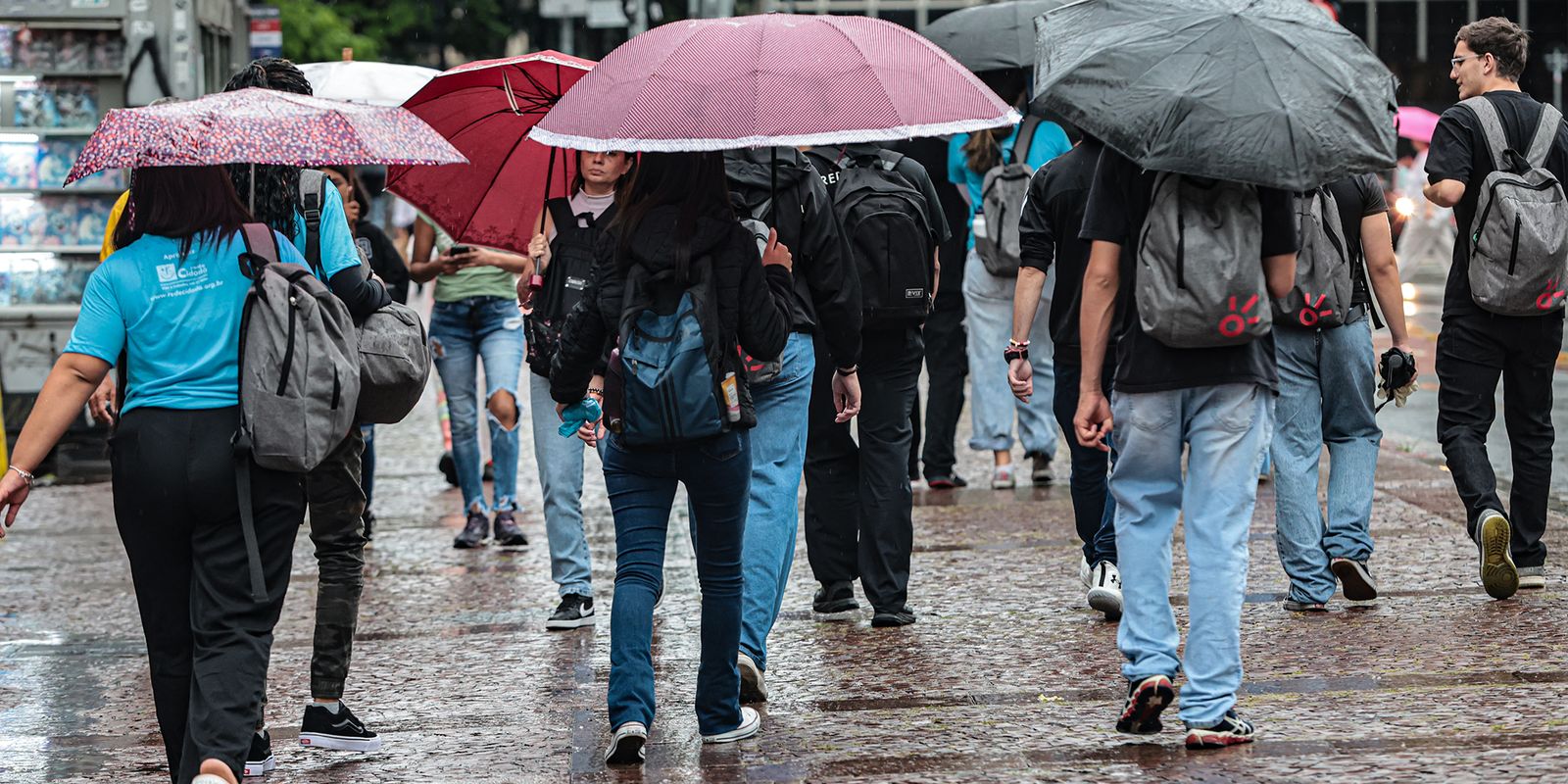
The National Institute of Meteorology (Inmet) issued today (7) warnings of great danger for intense rains in the states of Rio de Janeiro, Minas Gerais and São Paulo. Both this Saturday and Sunday (8), there is a risk of flooding, river overflows and landslides.
The main affected areas should be the South/Southwest of Minas, South of the state of Rio, Vale do Paraíba Paulista, metropolitan regions of Rio and São Paulo and Zona da Mata. Accumulations of more than 60 millimeters per hour or more than 100 millimeters per day are expected.
There are, in total, 123 municipalities listed on the red alert of “great danger”. Among them, the capital of Rio, Angra dos Reis, Volta Redonda and Vassouras in the state of Rio; Campos do Jordão, Aparecida and Ubatuba in the state of São Paulo; Wenceslau Braz, Gonçalves and São Lourenço, in Minas Gerais.
Meteorology has guidance for those who live in these locations:
. turn off electrical appliances, general energy supply;
. observe changes in the slopes;
. remain in a sheltered place;
. in case of flooding or similar, protect belongings from the water by wrapping them in plastic bags;
. obtain more information from the Civil Defense (telephone 199) and the Fire Department (telephone 193).
Other alerts
For regions in the North, Northeast and Central-West, Meteorology issued an orange alert, classified as dangerous. These are ranges that include part of Amazonas, Pará, Maranhão, Piauí, Tocantins, Mato Grosso, Mato Grosso do Sul and Goiás.
The municipalities include Manaus and Presidente Figueiredo (AM), Timon and Caxias (MA), Cametá and Altamira (PA), Teresina and Picos (PI), Araguaína (TO), Ponta Porã (MS), Nobres (MT) and Uruaçu (GO).
The forecast is for rain between 30 and 60 mm/h or 50 and 100 mm/day, and intense winds of 60 to 100 km/h. There are risks of electricity cuts, falling tree branches, flooding and electrical discharges.
In these cases, Inmet advises:
. in case of gusts of wind, do not take shelter under trees, as there is a risk of falling and electrical discharges and do not park vehicles near transmission towers and advertising signs;
. turn off electrical appliances and the general energy supply;
. obtain more information from the Civil Defense (telephone 199) and the Fire Department (telephone 193).