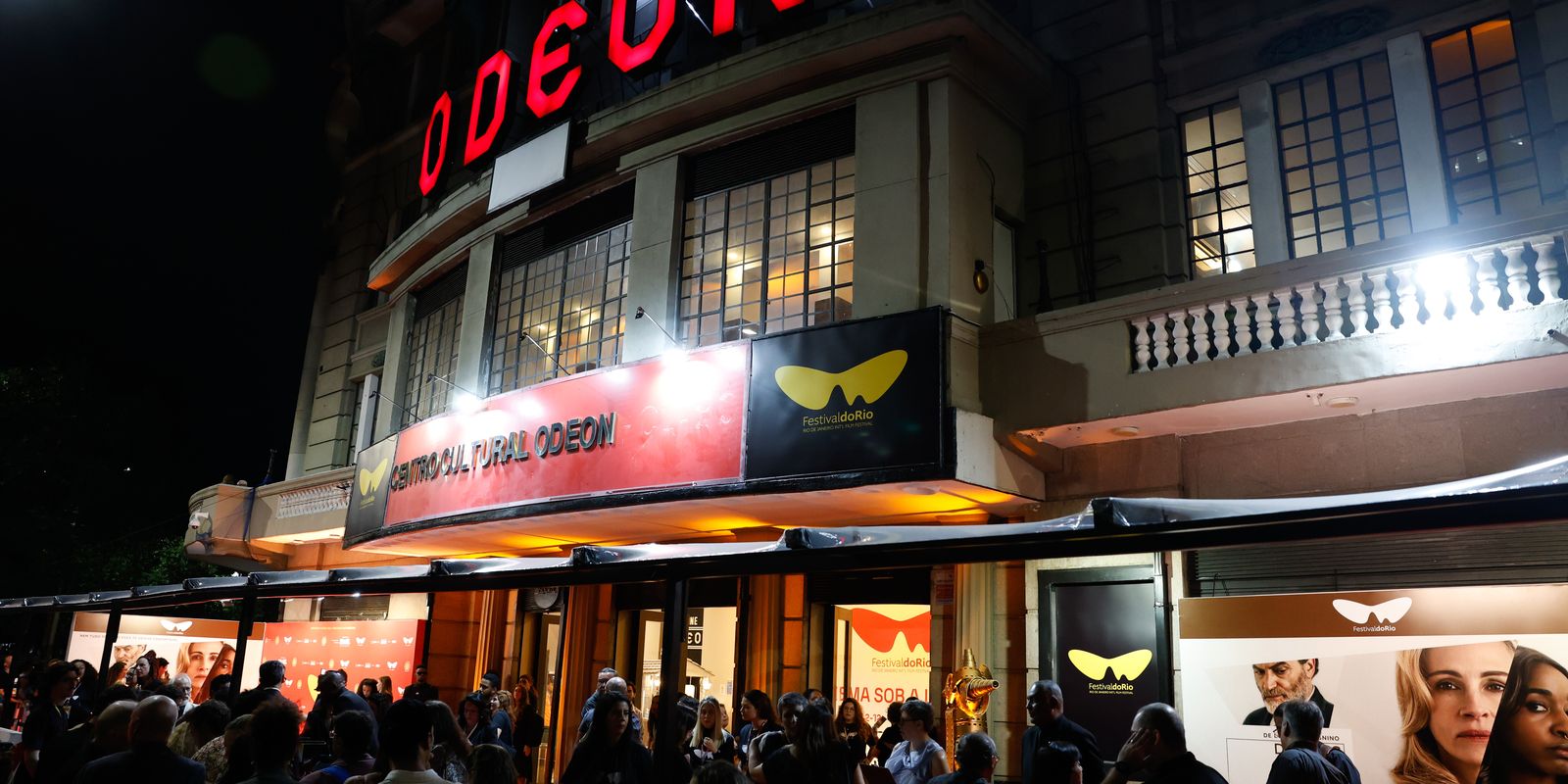
Cine Odeon, in the center of Rio, was the stage for a dedication night this Sunday (12). The closing of the 27th edition of the Rio Festival was presented by actors Clayton Nascimento and Luisa Arraes and included the return of popular vote awards.
The event brought together artists, producers and cinephiles in a celebration that confirmed the strength and diversity of Brazilian cinema. Over the course of ten days, the festival screened more than 300 films in a marathon atmosphere and attracted around 140,000 people who filled the movie theaters and several films passed through the party’s red carpet, setting an audience record and consolidating itself as one of the main audiovisual meetings in Latin America.
The festival’s director, Ilda Santiago, celebrated the vitality of this edition: “The Rio Festival remains an essential space for Brazilian cinema and for the meeting between directors and audience. It is a celebration of the diversity of views and voices in audiovisual”, she stated.
This year, when the country is still celebrating the Oscars I’m Still Herenational cinema was the main protagonist. Of the productions shown, 120 were Brazilian, distributed among competitive exhibitions, premieres and retrospectives.
In the main competitive exhibition of the event, the Redeemer Trophy for Best Fiction Feature went to Little Creaturesby Brasilia native Anne Pinheiro Guimarães. The director, still emotional after the announcement, spoke to Brazil Agency about the meaning of achievement.
“It was very emotional. I’m still getting used to the idea. This award belongs to the entire team. The film was born more than ten years ago, when I became a mother and started to revisit memories of childhood and my mother. It’s a work about motherhood, longing and time.”
The film, which had its world premiere at the festival, will be released in cinemas in the first half of 2026, distributed by Filmes do Estação.
Distributor Adriana Rattes celebrated the positive impact of the public’s reception: “The reaction at the sessions was a great barometer. Little Creatures arrived discreetly and won over the public. It’s an honor to distribute such a delicate and powerful film.”
Apolo marks Tainá Müller’s directorial debut
The award for Best Documentary went to Apollodirected by Tainá Müller and Ísis Broken. In her debut behind the camera, Tainá celebrated the recognition: “It’s an immense emotion and a very important validation. Apolo talks about diversity and giving a voice to those who are marginalized. Winning this award on Children’s Day has a very strong symbolism.”
The actress, known for notable roles in series and soap operas, also highlighted her desire to expand her career as an author and director: “I always wanted to have a more authorial voice. This award reinforces that we can occupy other spaces within the audiovisual field.”
The long Night Actby Marcio Reolon and Filipe Matzembacher, was one of the big winners of the night, as Best Brazilian Film at the Félix Awards and Best Screenplay at Première Brasil.
Klara Castanho was named Best Actress for #SalveRosawhile Gabriel Faryas received the Best Actor award for Night Act.
Among the documentaries, Diesel smellby Natasha Neri and Gizele Martins, received the Special Jury Prize and the Popular Vote.
Leandra Leal and Ângela Leal were honored with the Special Jury Prize for Nothing to Do. “This film is a declaration of love for my mother and the faith I have in art as a transformation,” said Leandra on stage.
Emotion also marked the speech of actress Ana Flavia Cavalcanti, winner of Best Actress in the Novos Rumos show for Maids: “My mom did a lot of cleaning for me to be here. This award is hers too.”
Diversity was another highlight. Diva Menner, awarded Best Supporting Actress for Streets of Glorystated: “I am a black transvestite and I dedicate this award to my ancestors who did not have the same opportunities.”
The female presence was felt in practically all categories. Directors such as Anne Pinheiro Guimarães, Suzanna Lira (#SalveRosa), Mini Kerti (Dona Onete – My Heart In This Little Piece Here) and Cíntia Domit Bittar (Virtuosas) reaffirmed the power of narratives led by women. Suzanna Lira, who won the Popular Vote for Best Fiction Feature, recalled the trajectory of resistance.
“15 years ago I won the popular vote with Positivas and it changed my life. Seeing the public embracing Brazilian cinema again is an immense happiness.”
Behind the scenes, the atmosphere was celebratory. Press officer Anna Luiza Müller, who has followed productions since the resumption of national cinema in the 1990s, highlighted the renewed enthusiasm: “The energy around Brazilian films has been impressive. The challenge now is to guarantee continuity and expand the reach of our cinema.”
The actor Vinícius de Oliveira, revealed in Central Brazilreturned to the festival with the international feature Almost Desertshot in Detroit. “It’s exciting to be here so many years later, with the same love for Brazilian cinema,” he said.
Foreign films
In addition to the national exhibition, the festival expanded horizons with new popular vote categories for foreign films. The International Félix Prize awarded The Galactic Shoe (Lesbian Space Princess), by Australians Leela Varghese and Emma Hough-Hobbs, while Brazilian Allan Ribeiro won Best Documentary for Copacabana, May 4th.
With sold-out sessions, debates and market meetings at RioMarket, the Rio Festival reaffirmed its role as a space of resistance and meeting between audiovisual generations.
For Walkiria Barbosa, one of the event directors, “The Festival is more than a showcase — it is a space for resistance, encounter and celebration of art.”
Between veterans and new talents, the 27th edition of the Rio Festival crowned national cinema and reaffirmed its vocation: celebrating plurality, creativity and the transformative power of Brazilian cinema.