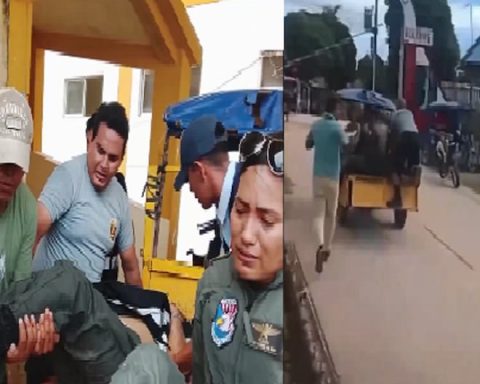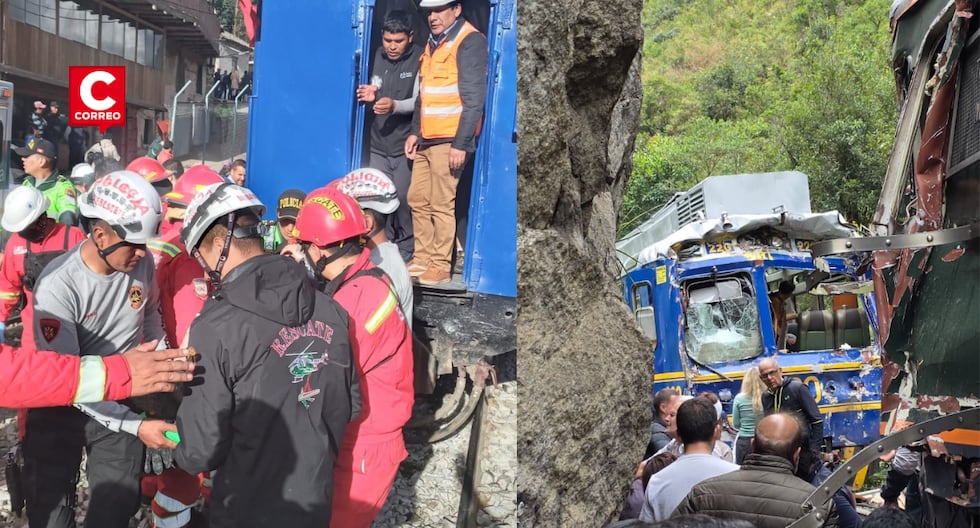
Almost a week after the unfortunate train crash on the Cusco – Ollantaytambo – Machu Picchu railway, which left one person dead and more than 100 injured, investigations continue, and authorities are seeking to truly establish what happened that afternoon of December 30.
Thus, after the evacuation, assistance and treatment of the injured, now the Cusco and national authorities are dedicated to carrying out all the investigations of order, which seek, in addition to establishing guilt, to generate protocols that prevent this type of accidents again.
In the midst of these investigations, Correo had access to a report presented to the Presidency of the Council of Ministers, where PeruRail, one of the companies involved in the accident, reports in detail, according to its particular investigations, what would have triggered the train crash.
“Regarding the circumstances in which the accident occurred, according to the Ferrocarril Transandino SA report, it is important to note that, as it is a single-line railway, The safe circulation of trains is carried out in sections, through Track Use Authorizations (AUV), which precisely establish the limits, indications and restrictions for each route. (…) “The Inca Rail train had an AUV that authorized it to circulate only up to Km. 93.8, in the Pampacahua sector, a point at which it had to stop and wait for the PeruRail train to enter the corresponding detour before continuing its journey with a new authorization,” quotes a part of the report verbatim.
Then it indicates: “However, the Inca Rail train did not stop at the indicated point, advancing towards an unauthorized section and, approximately 400 meters later, at kilometer 94.3, it collided with the PeruRail train. It should be noted that this was a usual itinerary, with instructions and a daily route and known to the train drivers, without any alteration being recorded in the schedule that day.”
This would reinforce the hypothesis that the police authorities and the Public Ministry handle, about an alleged human error that caused the fatal crash. Finally, the report sent to Ernesto Álvarez, president of the Council of Ministers, and signed by Laurent Carrasset, general manager of PeruRail, would still be evaluated by the corresponding official bodies, which so far have not issued an opinion on the progress of the investigations after this unfortunate railway incident.
Meanwhile, both railway companies reported that their passengers were evacuated and treated successfully in different clinics in Cusco, leaving only four people hospitalized so far, the rest having been evacuated to Lima and later to their countries of origin.