Trump administration officials maintained contacts with Interior Minister Diosdado Cabello before and after the January 3 raid. Washington warned him not to use the security forces against the opposition, according to sources cited by Reuters
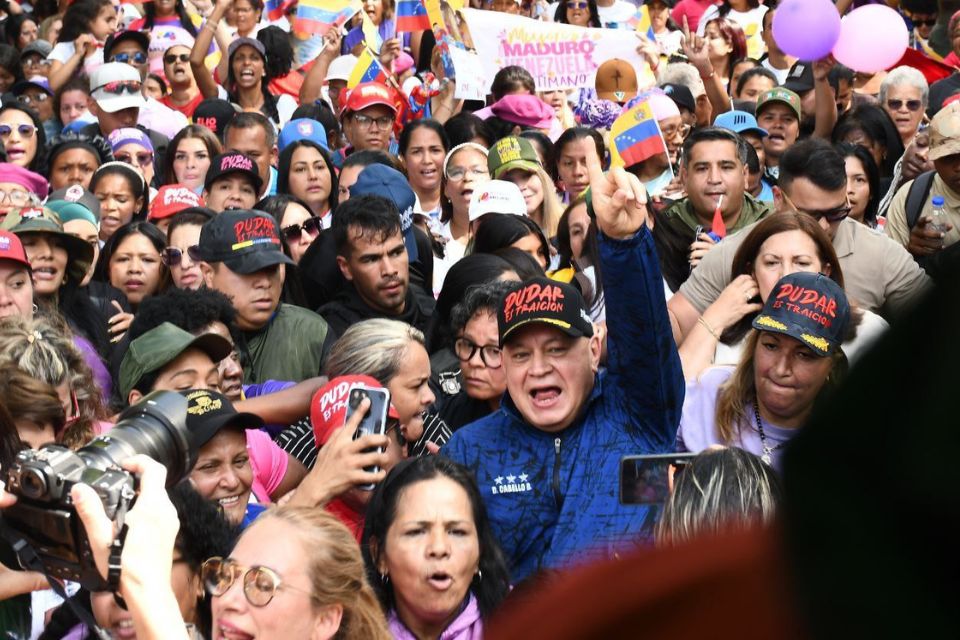
Officials from Donald Trump’s administration held talks for months with Diosdado Cabello, Venezuela’s Interior Minister and one of the toughest leaders of the ruling party, even before the US military operation that ended with the capture of Nicolás Maduro on January 3, as revealed by Reuters.
According to the agency, contacts began in the first months of the current Trump administration and intensified in the weeks prior to the operation. The talks continued after Maduro’s capture, according to several people familiar with the matter, who spoke on condition of anonymity due to the sensitivity of the communications.
During those exchanges, U.S. officials warned Cabello, 62, not to use state security forces or government party shock groups under his influence to act against the Venezuelan opposition. That apparatus, which includes intelligence services, police and armed forces, remains largely intact after the US incursion.
Cabello appears in the same federal indictment for drug trafficking in the United States that served as the basis for Maduro’s capture, but he was not detained during the operation. According to Reuters, the talks also addressed the sanctions imposed by Washington against him and the judicial process he faces in US courts.
Communications with Cabello are considered key to the White House’s strategy to avoid a scenario of violence or internal destabilization that complicates control of the situation in Venezuela and weakens interim president Delcy Rodríguez, who has been presented by Trump as the centerpiece of his plan for the post-Maduro period.
It is not clear whether the contacts included discussions about the country’s future governance scheme or whether Cabello has heeded Washington’s warnings. Publicly, the minister has expressed support for Rodríguez and has promised unity within the ruling party.
Reuters Remember that Cabello has been considered for years the second most powerful man in Chavismo. A former ally of Hugo Chávez and a key figure in Maduro’s power structure, he is identified as one of the main executors of repressive policies, with influence over intelligence agencies and armed civilian groups known as collectives.
Although the Trump administration has relied on a small group of ruling party leaders to guarantee stability while an undefined transition progresses and access to Venezuelan oil reserves is assured, sources cited by Reuters indicate that in Washington there is concern that Cabello, due to his record and internal rivalries, could become a destabilizing factor.
Cabello has been sanctioned by the United States for years. In 2020, the Department of Justice accused him as one of the leaders of the so-called “Cartel of the Suns” and offered a reward of 10 million dollars for information leading to his capture, an amount that was later raised to 25 million. The leader has publicly denied any links to drug trafficking.
After Maduro’s capture, some lawmakers in Washington questioned why Cabello was not detained. Days later, the minister condemned the US intervention and stated that “Venezuela is not going to surrender.” However, in recent weeks reports of internal control operations have decreased and the national Executive itself has announced the gradual release of people considered political prisoners by human rights organizations, a process that, according to these NGOs, is advancing slowly.
*Read also: NGOs register new releases in the country and confirm at least 116
*Journalism in Venezuela is carried out in a hostile environment for the press with dozens of legal instruments in place to punish the word, especially the laws “against hate”, “against fascism” and “against the blockade.” This content was written taking into consideration the threats and limits that, consequently, have been imposed on the dissemination of information from within the country.
Post Views: 666