Illustrious and exciting visit to the Regional Historical Museum of Melo
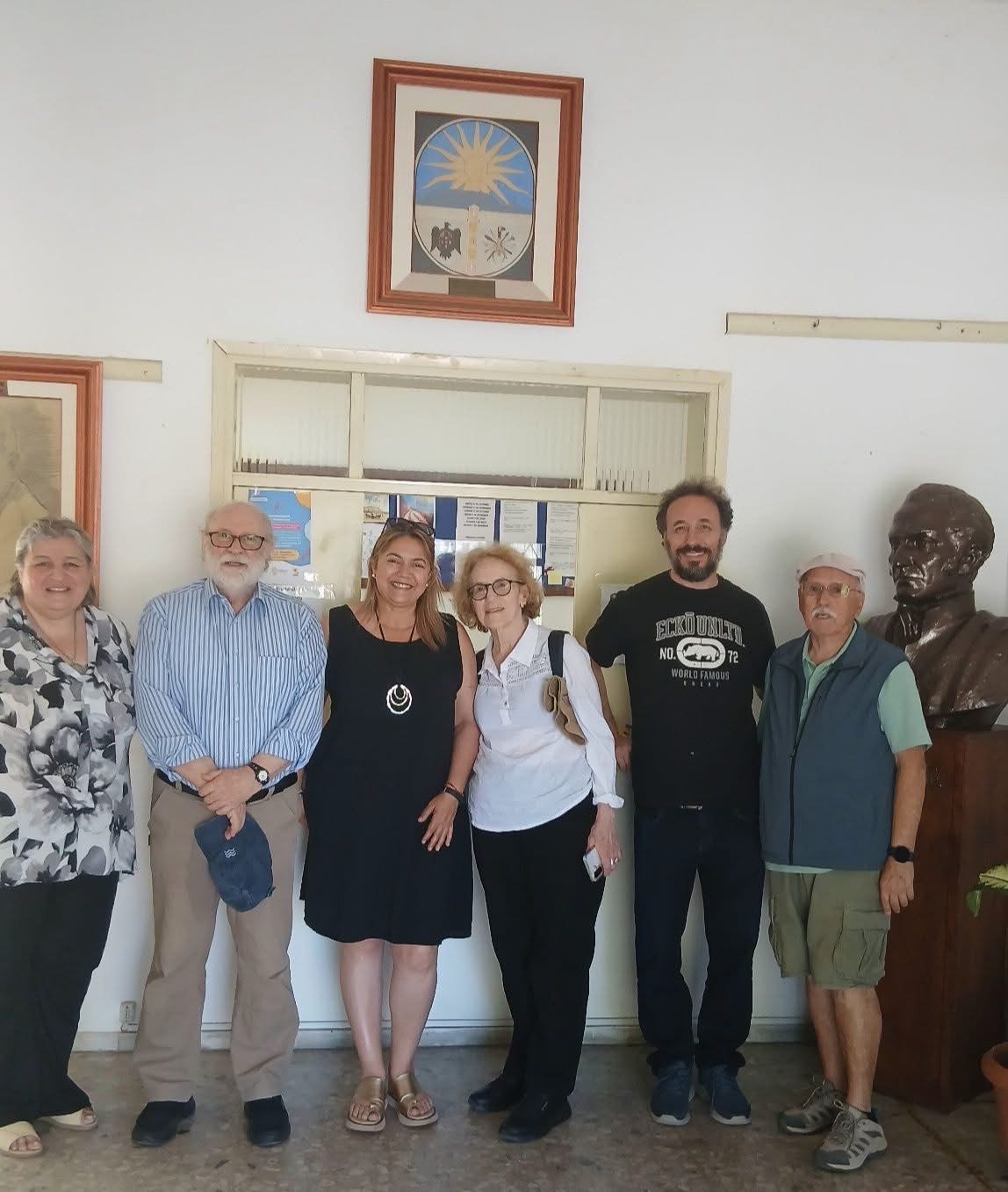
From Spain, the daughter of José Monegal Sorondo arrived to rediscover her father’s works, both full of emotion.
She was accompanied by a nephew, Monegal’s grandson, who, together with the Director of Tourism Lizet Ruiz, Professor Ary Ney Sorondo and Museum officials, showed her some of their works.
He toured the Museum, saw part of the collection of EL DEBER CÍVICO, a painting by Monegal that is in the conference room.
Monegal’s narrative revolves around the gaucho genre and takes place in the rural world of his country, particularly the border area with Brazil.
Together with his brother Casiano “Cacho” Monegal he began as a writer in the newspaper El Deber Cívico in Melo, founded in 1885 by his father, the local journalist Cándido Monegal (1854 – 1941).
Later in Spain, he began to dedicate himself to drawing and painting. Only two of his paintings are preserved in public collections, one in the Regional Museum of Cerro Largo, in Melo and another in the Municipality.
He studied Spanish guitar and received a scholarship from the Municipal Government of Cerro Largo to improve his skills in Spain in the mid-twenties. During those years he became interested in painting and drawing. There are almost no pieces of his paintings in public collections, except for two that are in the Regional Museum of Cerro Largo (Melo), among others. As a cartoonist, he illustrated his own stories (more than three hundred) for almost two decades for the Sunday Supplement of the Montevideo newspaper El Día. Many of his stories were compiled in various anthologies.
In addition to stories, he published novels, essays and wrote biographies. He also collaborated in Montevideo periodical publications with smaller circulation, such as Revista de ANDA and Revista Policia. He left unpublished a series of theater pieces, a film script and two essays that are kept in the collection of the Faculty of Humanities and Educational Sciences, University of the Republic. This Faculty has a collection of seven boxes with manuscripts, drawings and other elements of the author. Additionally, a book of poetry was published posthumously.