1
Between the late 1970s and mid-1980s, a new phenomenon began to emerge among Cubans in the United States, reflecting characteristic cultural processes of assimilation and what is known in sociology as the crossover [el cruce].
A group, descendants of the historical exile, began to vindicate the category of Cuban-Americans, thus with that script, in a similar sense to what had already happened before with the descendants of other emigrated ethnic groups such as Italians, Poles and Asians, in which the awareness of their own, specific and differentiated identity, was already part of the so-called melting pot, in correspondence with what the Brazilian Darcy Ribeiro once called “transplanted towns”that is, formed from a strong and dissimilar migratory component.
The process appears documented in several social instances, one of them—and certainly not the least important—in a joke by Guillermo Álvarez Guedeswho alludes to the new reality with a sense of criticism, sarcasm and distancing.
Because assimilate, enter that melting pot, It implied in some way de-exiling and putting down roots in the receiving culture, often through conjugal relationships with American citizens, or with other Latinos, a possibility that the Cubans did not have among their plans given the idea of soon returning to the island.
That generation, called 1.5 and located halfway between Cuban and American culture, would be reflected on a theoretical level, especially in the essayistic work of Gustavo Pérez Firmat in texts such as Life on the Hyphen. The Cuban-American Way (1994), translated into Spanish as Lives in suspense (2000), where the peculiarity of “living in the script” is highlighted. “To be Cuban-American,” he tells us, “is to inhabit the middle ground: neither completely Cuban nor completely American.” And the script is more than a punctuation mark: a bridge, a border and, sometimes, a wound.”
Its members are distinguished by their bicultural condition —“the two faces of the Cuban Juno,” as the professor codified it at the time. Eliana Rivero—, that is, by moving between two different systems of reference and values, although with tangents that are the result of a history and the peculiar American contribution to the Cuban identity of the island, as Louis A. Pérez, Jr. has studied unsurpassably in On Becoming Cuban. Identity, Nationality and Culture (1999).
Very young emigrants or born in the United States, their bearers were educated in English, they did not experience the construction of their Cubanness within the island, but the first was transmitted to them through the orality of grandparents and parents, memory and tradition, either inside or outside the enclave. And on many occasions they “cannibalized” her in a plurality of senses.
Perhaps because of its immediacy, cinema was, so to speak, in the testimonial lead with the film The super (1979), by director León Ichaso (1948-2023), an essential document on the generational processes of Cubans in the United States and, according to many, a work not artistically surpassed by Cuban cinema made later in the country.
But there are other primitive expressions of that identity card. In literature, the new sociocultural reality had its first realization in the anthology The Daring (1988), from Carolina Hospital, a sample of the work of a group of Cubans who HE they dared for the first time to write in English having been born on the island and taken to the North at an early age.
And the same in music. In the mid-80s, some young Cuban-Americans began to mix Afro-Cuban rhythms with Anglo pop, creating a fresh and original sound.
Having made the crossing mentioned at the beginning, Gloria Estefan and Miami Sound Machine managed to place in the mainstream songs that are still heard today on national radio stations. “Conga” (1985), “Bad boy” (1985) and “The rhythm is gonna get you” (1987) are just three of the most famous.
They were standing on the shoulders of musicians like Mario Bauzá (Havana, 1911–New York, 1993) and Machito (Francisco Raúl Gutiérrez Grillo, Havana, 1908-New York, 1984).
And also from Desi Arnaz.
2
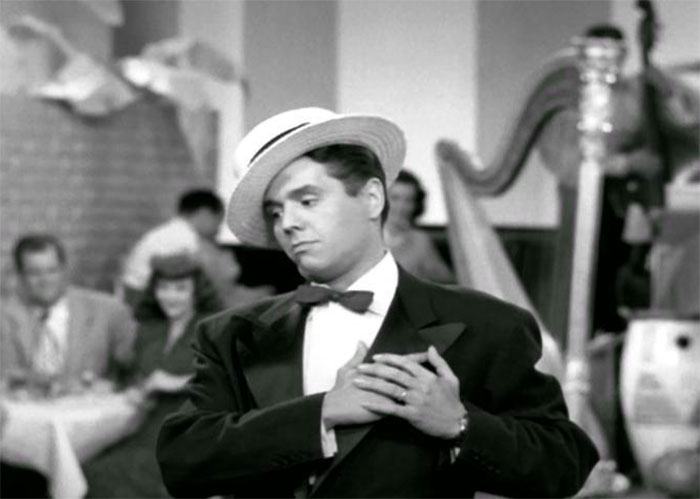
The Santiago native Desiderio Alberto Arnaz y de Acha III (1917-1986), better known as Desi Arnaz, was one of those hybrids, foundational if you will. Actor, producer and businessman who emigrated to the United States in the post-Machadato era, he saw fit to give life to the character of Ricky Ricardo.
Married to the actress Lucille Ball (1911-1989), a showy Anglo redhead, his figure shows that sometimes it makes sense to go against the current when there are previous ideas and prejudices in the middle.
In 1948 Ball was chosen as the star of the radio program my favorite husbandfrom CBS, but when it was decided to transfer it to a formidable new medium called TV, the actress wanted her husband to be the co-star. But they objected. They argued that viewers would notice Arnaz’s thick accent and would not find the couple credible. However, the results of several tours that both actors did together showed the opposite. The executives then relented.
That was the beginning of one of the most powerful TV programs in the world. I love Lucy It aired for the first time on October 15, 1951 and remained there until 1958 with outstanding ratings success. The most popular show in America for four of its six primetime seasons. Desi and Lucy went on to become big stars.
In the series, Arnaz played, in effect, Ricky Ricardo, the director of a Cuban orchestra that performed in nightclubs, especially one called Tropicana. The musician performed popular songs from his country and Latin America. And he was famous for his congas.
In his conversations, he certainly spoke with a strong accent, mixing Spanish with English, but he referred to his culture with pride. And he did it with a peculiar sense of humor, especially when situations got out of control. That Cuban accent was an essential part of the character and one of the reasons for his success, contrary to what those CBS executives thought.
The truth is that his figure has been claimed as their own not only by the first Cuban-Americans from more than thirty years ago, but also by newer ones. It’s not for nothing that the couple has been recycled in the film. Being the Ricardos (2021), from director Aaron Sorkin, with Nicole Kidman in the roles of Lucille Ball and Javier Bardem as Desi Arnaz, respectively. And in the documentary Lucy and Desi (2022), by director Amy Poeheler.
has written Rachel McDonald:
“Against all odds, Eisenhower-era America had accepted him and his unconventional alter ego. They adored him as the man who loved Lucy, the explosive Cuban conductor whose clumsy English and heterosexual man’s frustration at his crazy wife’s comic antics softened into a loving embrace at the end of each episode.”
And concludes:
“But Desi Arnaz was much more than Ricky Ricardo. If Ball’s brilliant clowning—her beauty, her mimicry, her supple face and her fearless ability for physical comedy—was the artistic spark that animated I love LucyArnaz’s pioneering acumen in show business was the essential driving force. “He was the man who invented television.”