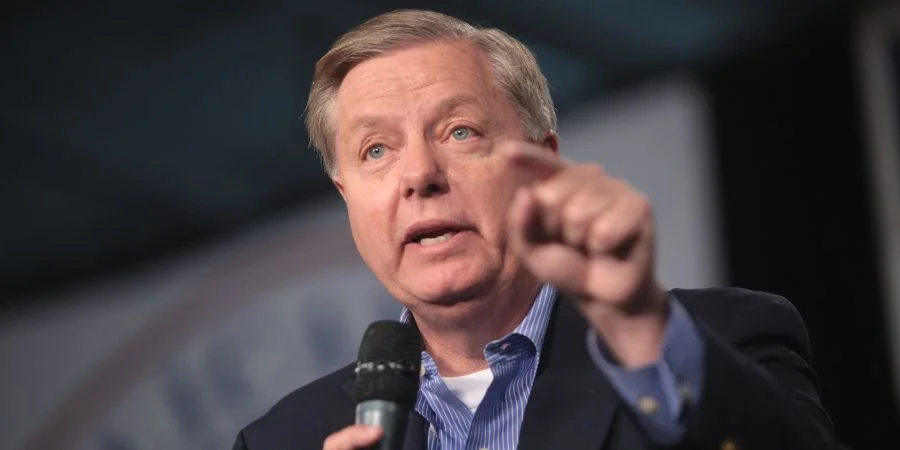
“Hopefully the end of Maduro’s reign of terror in Venezuela is near and then we can focus on Cuba,” wrote Lindsey Graham, a senator from South Carolina.
MIAMI, United States. – Republican Senator Lindsey Graham (South Carolina) urged Democrats in the United States to support “the efforts” of President Donald Trump to bring about the end of the regime of Nicolás Maduro in Venezuela and, later – “soon” – to concentrate on Cuba, a country that he described as “one of the most oppressive regimes” in the hemisphere.
The legislator maintained that he does not understand why, in his opinion, the Democrats seek a hard line against Russia but oppose “cleaning” their “own neighborhood” of “narcoterrorist states.”
In the publication, published on He also linked the Maduro administration to cocaine trafficking abroad and to what he described as “a conscious effort” to “dump” “hundreds of thousands of criminals” from Venezuela into the United States.
I completely understand why Democrats would want to be tough on Putin’s Russia given his history of oppression, instigating war and providing assistance to rogue actors like Iran. Count me in for that.
However, I do not understand why Democrats would oppose cleaning up our own…
— Lindsey Graham (@LindseyGrahamSC) December 12, 2025
“Hopefully the end of Maduro’s reign of terror in Venezuela is near and then we can focus on Cuba,” he wrote.
Graham presented Havana as a subsequent objective within that same political line. In his message, he noted that the island is “a state sponsor of terrorism designated” by the United States and described it as “a communist dictatorship” “very involved in narcoterrorism,” as well as a “client state” of Vladimir Putin’s Russia “for years.”
“To my Democratic colleagues: you should be supporting President Trump’s efforts to liberate Venezuela — and soon Cuba — instead of opposing them,” he added.
The senator’s statements come in a context of increased tensions between Washington and Caracas, with a Trump Government campaign focused on anti-drug operations and political pressure on Maduro. In recent days, as the US administration has intensified its stance in the Caribbeansenior national security advisors briefed Congress on the campaign against alleged Venezuelan drug traffickers.
In parallel, Havana denied contacts with the United States about the future of Venezuela and described versions attributed to anonymous sources as “absurd and false.”