The NGO Voces del Sur documented that the independent journalists who still live on the island “live with fear and self -censorship.”
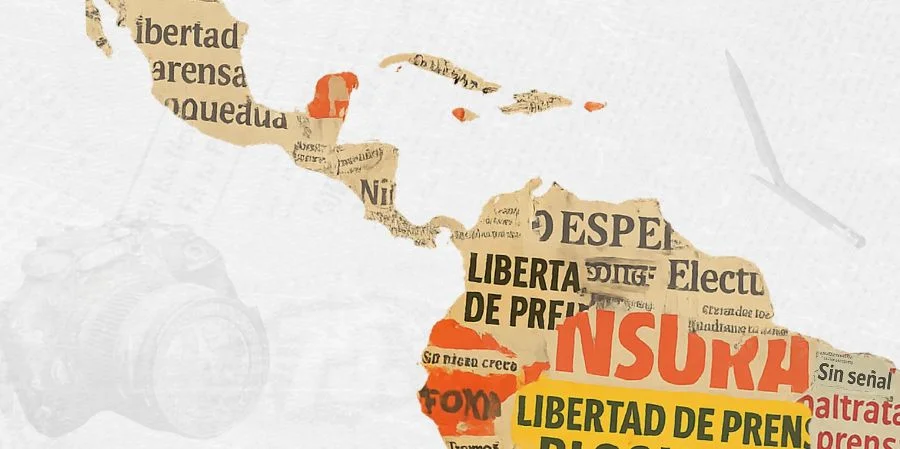
CDMX, Mexico. – Cuba registered in 2024 a total of 232 alerts of violence against the press, a 53.2% drop compared to 2023 that does not indicate an improvement of the informative environment, but the result of the forced exodus of journalists, fear and self -censorship within the country, according to the Cuba chapter of the report of the report Journalism, violence and persecution (Shadow report on press freedom in Latin America in 2024, prepared by the South Voces Network.
The data that correspond to the island were collected and analyzed by the Cuban Institute of Freedom of Expression and Press (ICLEP).
99% of the aggressions were perpetrated by state actors; Within them, state security concentrated 63.2% and the telecommunications company Etecsa 28.4%.
The report places the reduction of alerts in a context of structural collapse of independent journalism. “Repression has become a structural strategy of silencing,” he says. Those who remain on the island “coexist with fear and self -censorship”, while among those who emigrated “very few can sustain their work from exile,” he adds.
Criminal and police prosecution remained a central control method. The ICLEP documented 67 arbitrary arrests throughout 2024, with cases accompanied by threats and physical aggressions; He also registered two episodes of torture and eight judicial processes, an absent category the previous year.
At the close of the period, at least three journalists continued prisoners without procedural guarantees: Carlos Michel Morales Rodríguez, Yeris Curvelo Aguilera and José Gabriel Berrenechea Chávez. “These practices violate not only the right to freedom of expression, but also due process and physical and psychological integrity of victims.”
The digital component of the silencing acquired a decisive weight. In 2024, 63 restrictions were documented on the Internet (90% of them were executed by Etecsa), with blockages to independent sites and media, selective cuts of the service – including cuts to journalists during international interviews -, cyber attacks and cyberbullying. “These restrictions are not random. These actions show that technological control is not accidental, but planned, intensified on sensitive dates such as July 11, in order to prevent protests coverage and preserve the narrative hegemony of the State,” says the infiorme.
The repression also transferred the strictly journalistic scope and extended to the citizens that publishes information or opinions in social networks. “What was previously sanctioned with fines, now derives in arrests and judicial processes.” The case of Sulmina Martínez Pérez —Cusada of contempt and crimes against the constitutional order – illustrates this escalation: the Prosecutor’s Office requests 10 years in prison for a Facebook publication. Along the same lines, the nurse Arony Yanko García Valdés He was sentenced to a year and a half in jail for “aggravated contempt” after spreading a meme.
The report emphasizes that the state apparatus acts on three complementary fronts: security, telecommunications and justice. State security operated as a “main repressive arm” through citations, threats, arrests and intimidation acts; Etecsa “was consolidated as a pillar in digital control and informative isolation”; And the courts, “to the service of the Executive Power,” applied sanctions and denied procedural rights, turning the judicial system into a repression tool.
In terms of differentiated violence, ICLEP did not report alerts based on sex or sexual orientation during 2024; However, it warns that the absence of records does not imply absence of risks, but deficiencies of visibility and specific documentation for historically marginalized populations.
South voices monitors and documents “alerts” of violence against the press using a common methodology based on “indicator 16.10.1” of the Sustainable Development Goals of the 2030 Agenda. Alerts include acts that violate freedom of expression and are intended to obstruct or influence negatively on the exercise of journalism; Only facts are registered whose motivation is directly linked to the journalistic work of the affected person.
The decrease in alerts does not denounce the consolidation of a hostile ecosystem for informative work. The Cuban chapter describes a country with “practically suffocated journalism”, a repression that “expands to citizens” and planned technological control that intensifies in ephemeris or sensitive dates to prevent coverage and ensure control of the official story.