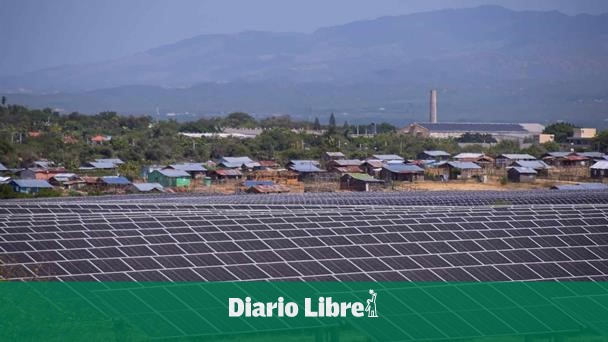
The Dominican Renewable Energy Association (ADER) this Thursday asked the Government and the authorities of the electrical sector comply with current regulations and stop practices that limit the integration of new electricity from those sources to the national system, despite the fact that the law grants absolute priority to its dispatch.
Through a statement, the guild warned that, in recent months, there has been “a sustained practice of limiting the injection of energy from renewable sources”, even when its use is more economical, sustainable and aligned with the climate commitments of the country. They reported that the situation has caused an increase in generation based on fossil fuels.
-
During this period, ADER identified operational decisions that do not comply with the established legal framework. The organization recalls that both the General Electricity Law 125-01, its regulations, and Law 57-07 on Renewable Energy Incentives, give explicit priority to the dispatch of energy generated from clean sources such as solar, wind and hydraulic.
ADER stated that there is no technical justification for moving the renewable energy when available. The entity cited article 118 of the Regulations of the Law 57-07which establishes the rules to integrate these technologies into the system, indicating that there are no criteria that allow them to be excluded from the system. preferential dispatch.
Higher economic cost
The association specified that replacing renewable generation with fossil plants represents a economic cost for the country and affects the competitiveness of the energy sector. Furthermore, he pointed out that this practice increases greenhouse gas emissions, in contrast to national climate mitigation commitments.
He guild also requested that any requirements related to security systems battery storage (BESS) is carried out within the legal framework and accompanied by compensation mechanisms and a clear schedule for its implementation.
ADER urged the Government to guarantee full compliance with laws 125-01 and 57-07 and reiterated its willingness to collaborate to strengthen the transparency and institutionality of the electrical system.
He indicated that the transition towards a energy matrix cleaner is key to reducing dependence on imported fuels and move towards a safer and more resilient system.